


Effect of Climatic Factors on Hand, Foot, and Mouth Disease in South Korea, 2010-2013
- PMID: 27285850
- PMCID: PMC4902224
- DOI: 10.1371/journal.pone.0157500
Effect of Climatic Factors on Hand, Foot, and Mouth Disease in South Korea, 2010-2013
Abstract
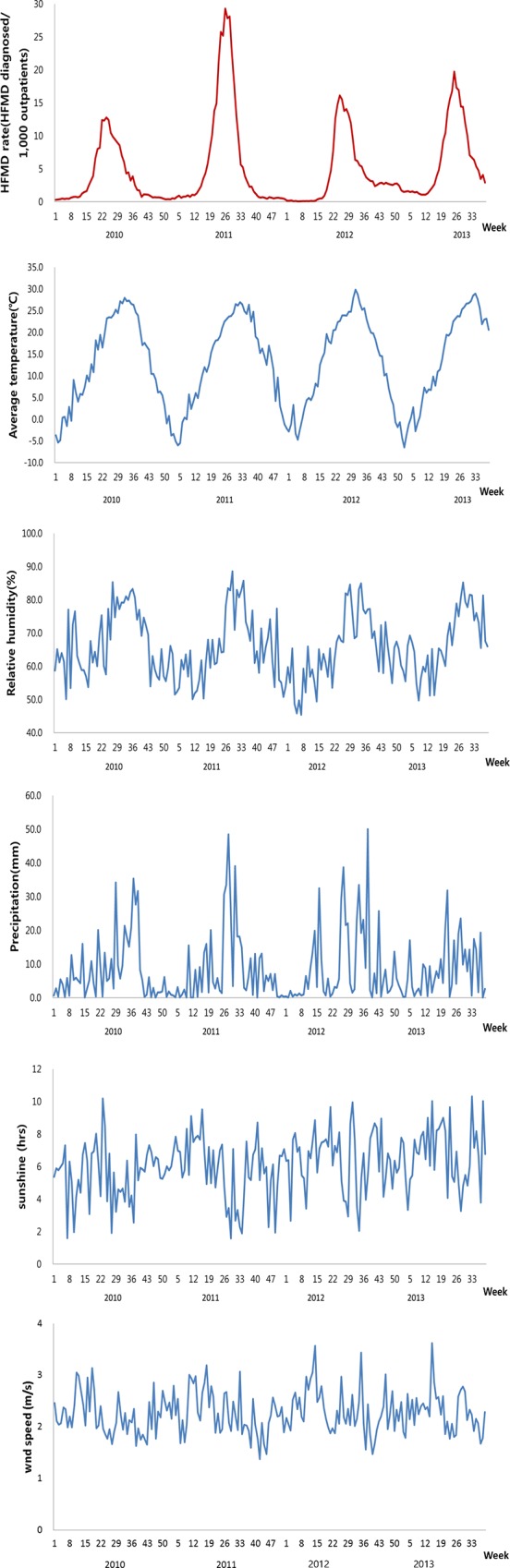
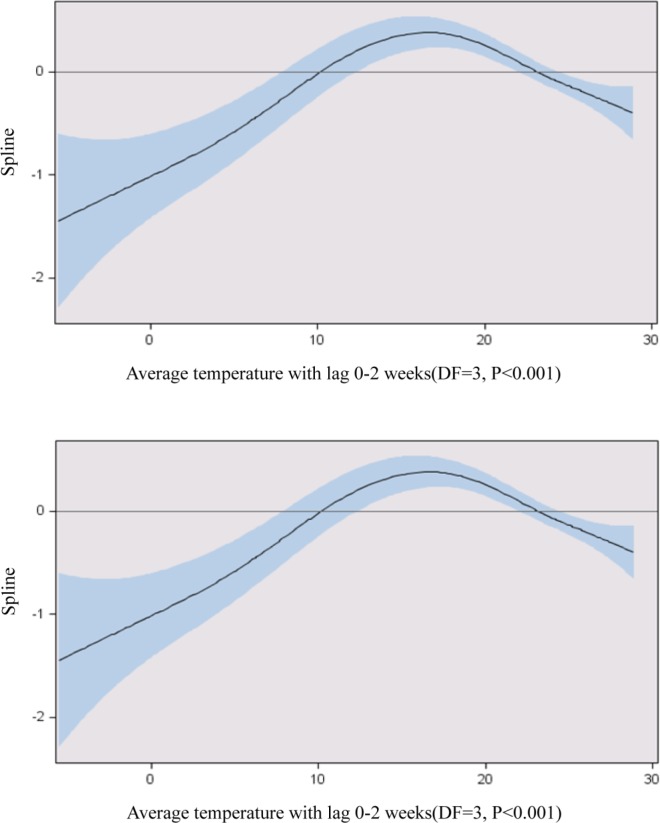
Hand, foot, and mouth disease (HFMD) causes characteristic blisters and sores mainly in infants and children, and has been monitored in South Korea through sentinel surveillance since 2009. We described the patterns of HFMD occurrence and analyzed the effect of climatic factors on national HFMD incidence. Weekly clinically diagnosed HFMD case rates (per 1,000 outpatients) in sentinel sites and weekly climatic factors, such as average temperature, relative humidity, duration of sunshine, precipitation, and wind speed from 2010 to 2013, were used in this study. A generalized additive model with smoothing splines and climatic variables with time lags of up to 2 weeks were considered in the modeling process. To account for long-term trends and seasonality, we controlled for each year and their corresponding weeks. The autocorrelation issue was also adjusted by using autocorrelation variables. At an average temperature below 18°C, the HFMD rate increased by 10.3% for every 1°C rise in average temperature (95% confidence interval (CI): 8.4, 12.3%). We also saw a 6.6% increase in HFMD rate (95% CI: 3.6, 9.7%) with every 1% increase in relative humidity under 65%, with a 1.5% decrease in HFMD rate observed (95% CI: 0.4, 2.7%) with each 1% humidity increase above 65%. Modeling results have shown that average temperature and relative humidity are related to HFMD rate. Additional research on the environmental risk factors of HFMD transmission is required to understand the underlying mechanism between climatic factors and HFMD incidence.
Conflict of interest statement
Figures
References
MeSH terms
LinkOut - more resources
Full Text Sources
Other Literature Sources
