


Methods for a multicenter randomized trial for mixed urinary incontinence: rationale and patient-centeredness of the ESTEEM trial
- PMID: 27287818
- PMCID: PMC5037009
- DOI: 10.1007/s00192-016-3031-7
Methods for a multicenter randomized trial for mixed urinary incontinence: rationale and patient-centeredness of the ESTEEM trial
Abstract
Introduction and hypothesis: Mixed urinary incontinence (MUI) can be a challenging condition to manage. We describe the protocol design and rationale for the Effects of Surgical Treatment Enhanced with Exercise for Mixed Urinary Incontinence (ESTEEM) trial, designed to compare a combined conservative and surgical treatment approach versus surgery alone for improving patient-centered MUI outcomes at 12 months.
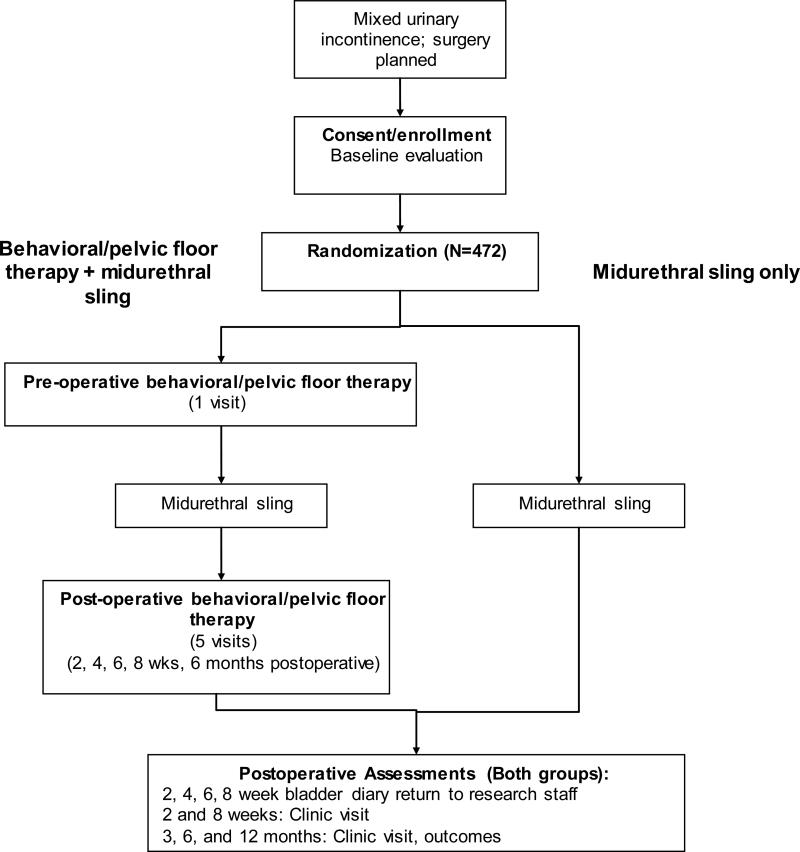
Methods: ESTEEM is a multisite, prospective, randomized trial of female participants with MUI randomized to a standardized perioperative behavioral/pelvic floor exercise intervention plus midurethral sling versus midurethral sling alone. We describe our methods and four challenges encountered during the design phase: defining the study population, selecting relevant patient-centered outcomes, determining sample size estimates using a patient-reported outcome measure, and designing an analysis plan that accommodates MUI failure rates. A central theme in the design was patient centeredness, which guided many key decisions. Our primary outcome is patient-reported MUI symptoms measured using the Urogenital Distress Inventory (UDI) score at 12 months. Secondary outcomes include quality of life, sexual function, cost-effectiveness, time to failure, and need for additional treatment.
Results: The final study design was implemented in November 2013 across eight clinical sites in the Pelvic Floor Disorders Network. As of 27 February 2016, 433 total/472 targeted participants had been randomized.
Conclusions: We describe the ESTEEM protocol and our methods for reaching consensus for methodological challenges in designing a trial for MUI by maintaining the patient perspective at the core of key decisions. This trial will provide information that can directly impact patient care and clinical decision making.
Keywords: Behavioral therapy; Clinical trials; Female; Mixed urinary incontinence; Sling.
References
-
- Dooley Y, Kenton K, Cao G, et al. Urinary incontinence prevalence: results from the National Health and Nutrition Examination Survey. J Urol. 2008;179:656–61. - PubMed
-
- Melville JL, Katon W, Delaney K, Newton K. Urinary incontinence in US women: a population-based study. Arch Intern Med. 2005;165:537–42. - PubMed
Publication types
MeSH terms
Grants and funding
- U10 HD041261/HD/NICHD NIH HHS/United States
- UG1 HD069013/HD/NICHD NIH HHS/United States
- U10 HD054215/HD/NICHD NIH HHS/United States
- U10 HD054214/HD/NICHD NIH HHS/United States
- UG1 HD069006/HD/NICHD NIH HHS/United States
- U01 HD069031/HD/NICHD NIH HHS/United States
- UG1 HD069010/HD/NICHD NIH HHS/United States
- U10 HD069013/HD/NICHD NIH HHS/United States
- U10 HD041267/HD/NICHD NIH HHS/United States
- UG1 HD054214/HD/NICHD NIH HHS/United States
- U10 HD069006/HD/NICHD NIH HHS/United States
- U10 HD069010/HD/NICHD NIH HHS/United States
- UG1 HD041267/HD/NICHD NIH HHS/United States
- UG1 HD054215/HD/NICHD NIH HHS/United States
- U10 HD041250/HD/NICHD NIH HHS/United States
- UG1 HD041261/HD/NICHD NIH HHS/United States
- U24 HD069031/HD/NICHD NIH HHS/United States
- U10 HD069025/HD/NICHD NIH HHS/United States
LinkOut - more resources
Full Text Sources
Other Literature Sources
Medical
Molecular Biology Databases
Research Materials
