Presence of cerebral amyloid modulates phenotype and pattern of neurodegeneration in early Parkinson's disease
- PMID: 27288043
- PMCID: PMC5154297
- DOI: 10.1136/jnnp-2015-312690
Presence of cerebral amyloid modulates phenotype and pattern of neurodegeneration in early Parkinson's disease
Abstract
Objective: To evaluate the frequency of cerebral amyloid in early Parkinson's disease (ePD) and provide a multimodal assessment of the influence of cerebral amyloid on disease phenotype.
Methods: We performed a multicentre cohort study of the Parkinson's Progression Markers Initiative (PPMI), including 369 drug-naïve patients with ePD and 174 healthy controls (HC). Cerebrospinal fluid (CSF) amyloid-β levels were transformed using the linear regression procedure. A cut-off of >198 pg/mL was used to define amyloid-negative (PD-) and amyloid-positive (PD+) subgroups. Grey matter (GM) density and hippocampal volume from the MRI was measured using Advanced Normalisation Tools (ANTs). We compared demographic, genetic, CSF, behavioural, functional and imaging modalities across ePD- and ePD+ groups.
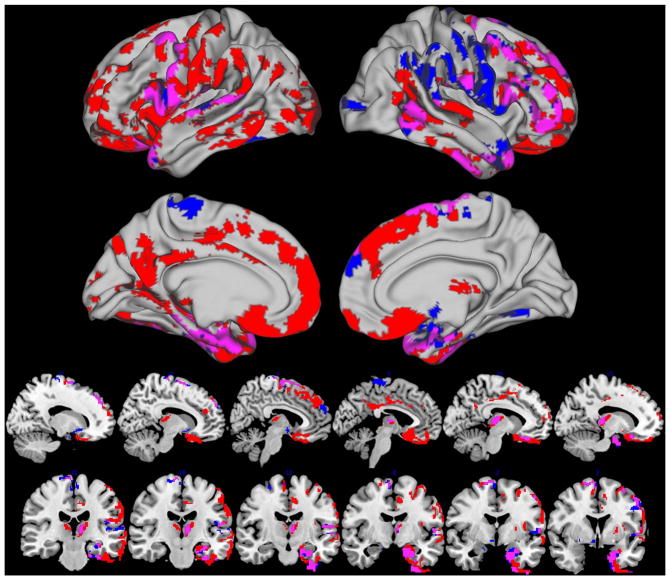
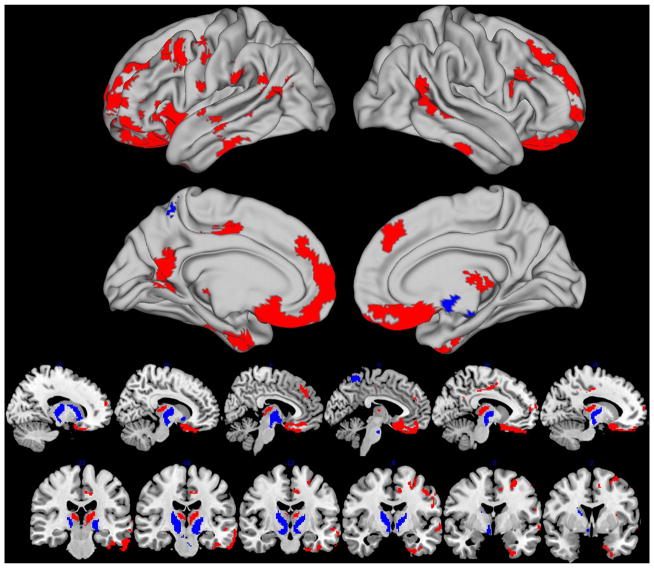
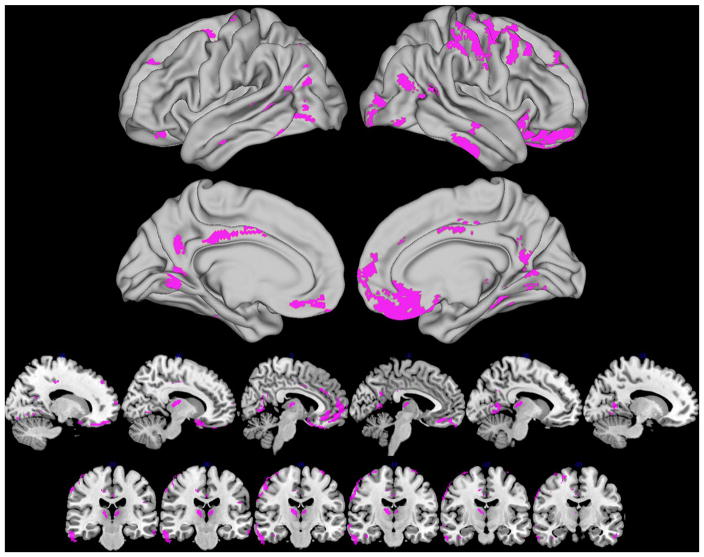
Results: We observed that 16.5% of ePD have CSF evidence of amyloidosis. PD+ was significantly older than PD-, had a higher frequency of APOE e4 alleles and all CSF measures (total-tau, phosphorylated-tau and α-synuclein) were reduced. PD+ had reduced cognitive performance relative to PD- on Symbol-Digit Matching, Verbal Category Fluency and Delayed Recall tests. Imaging analysis in a subset of individuals (PD+ =43; PD- =241) revealed overlapping GM atrophy relative to HC in medial temporal, frontal and brainstem structures. Direct comparisons revealed PD+ GM reductions predominantly located in the frontal cortex while PD- had GM reductions in subcortical structures. These observations remain when controlling for age and APOE e4 allele status.
Conclusions: Cerebral amyloid in ePD yields a unique phenotype across all measured modalities that is consistent with a synergistic interaction between α-synuclein and amyloid pathology. Amyloid status should be considered when screening these individuals for trials involving disease-modifying agents.
Published by the BMJ Publishing Group Limited. For permission to use (where not already granted under a licence) please go to http://www.bmj.com/company/products-services/rights-and-licensing/
Conflict of interest statement
Conflicts of Interest: None declared.
Figures
References
Publication types
MeSH terms
Substances
Grants and funding
LinkOut - more resources
Full Text Sources
Other Literature Sources
Medical
Miscellaneous