


The Effect of Childbirth Self-Efficacy on Perinatal Outcomes
- PMID: 27290918
- PMCID: PMC5079266
- DOI: 10.1016/j.jogn.2016.06.003
The Effect of Childbirth Self-Efficacy on Perinatal Outcomes
Abstract
Objective: To synthesize and critique the quantitative literature on measuring childbirth self-efficacy and the effect of childbirth self-efficacy on perinatal outcomes.
Data sources: Eligible studies were identified through searches of MEDLINE, CINAHL, Scopus, and Google Scholar databases.
Study selection: Published research articles that used a tool explicitly intended to measure childbirth self-efficacy and that examined outcomes within the perinatal period were included. All articles were in English and were published in peer-reviewed journals.
Data extraction: First author, country, year of publication, reference and definition of childbirth self-efficacy, measurement of childbirth self-efficacy, sample recruitment and retention, sample characteristics, study design, interventions (with experimental and quasiexperimental studies), and perinatal outcomes were extracted and summarized.
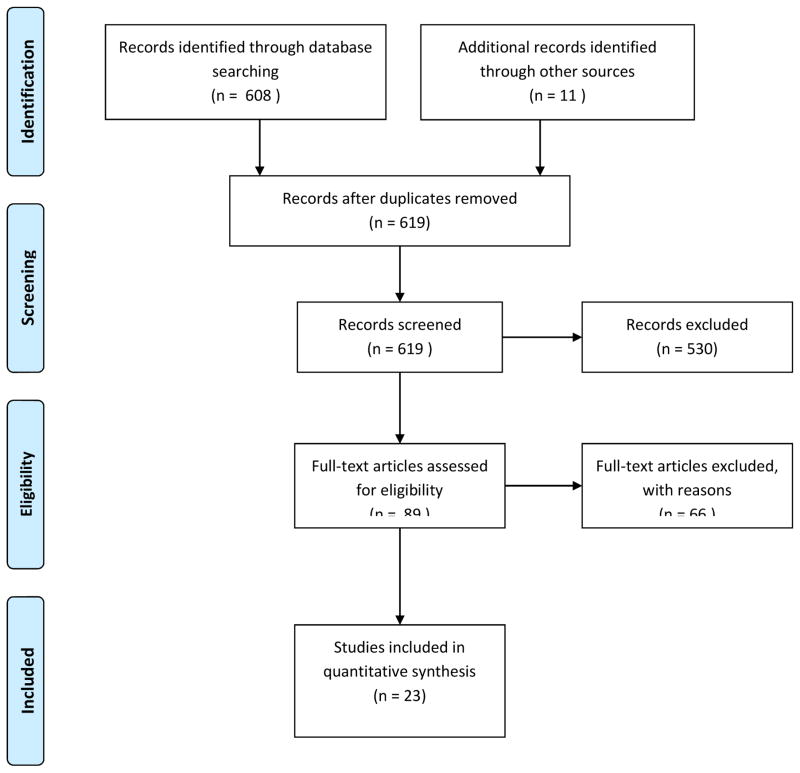
Data synthesis: Of 619 publications, 23 studies published between 1983 and 2015 met inclusion criteria and were critiqued and synthesized in this review.
Conclusion: There is overall consistency in how childbirth self-efficacy is defined and measured among studies, which facilitates comparison and synthesis. Our findings suggest that increased childbirth self-efficacy is associated with a wide variety of improved perinatal outcomes. Moreover, there is evidence that childbirth self-efficacy is a psychosocial factor that can be modified through various efficacy-enhancing interventions. Future researchers will be able to build knowledge in this area through (a) use of experimental and quasiexperimental design, (b) recruitment and retention of more diverse samples, (c) explicit reporting of definitions of terms (e.g., high risk), (d) investigation of interventions that increase childbirth self-efficacy during pregnancy, and (e) investigation about how childbirth self-efficacy-enhancing interventions might lead to decreased active labor pain and suffering. Exploratory research should continue to examine the potential association between higher prenatal childbirth self-efficacy and improved early parenting outcomes.
Keywords: childbirth self-efficacy; literature review; perinatal outcomes.
Copyright © 2016 AWHONN, the Association of Women's Health, Obstetric and Neonatal Nurses. Published by Elsevier Inc. All rights reserved.
Conflict of interest statement
The authors report no conflict of interest or relevant financial relationships.
Figures
References
-
- Adachi K, Shimada M, Usui A. The relationship between the parturient’s position and perceptions of labor pain intensity. Nursing Research. 2003;52(1):47–51. - PubMed
-
- Ananth CV, Savitz DA, Luther ER, Bowes WA., Jr Preeclampsia and preterm birth subtypes in Nova Scotia, 1986 to 1992. American Journal of Perinatology. 1997;14(1):17–23. - PubMed
-
- Arck P. Stress during pregnancy: maternal endocrine-immune imbalances and fetal health. Journal of Reproductive Immunology. 2010;86(11):67–73.
-
- Ayers S, Joseph S, McKenzie-McHarg K, Slade P, Wijma K. Post-traumatic stress disorder following childbirth: current issues and recommendations for future research. Journal of Psychosomatic Obstetrics & Gynecology. 2008;29(4):240–250. doi: http://dx.doi.org/10.1080/01674820802034631. - DOI - PubMed
Publication types
MeSH terms
Grants and funding
LinkOut - more resources
Full Text Sources
Other Literature Sources
Medical
Miscellaneous
