


Long-Term Alcohol Drinking Reduces the Efficacy of Forced Abstinence and Conditioned Taste Aversion in Crossed High-Alcohol-Preferring Mice
- PMID: 27293152
- PMCID: PMC5027881
- DOI: 10.1111/acer.13115
Long-Term Alcohol Drinking Reduces the Efficacy of Forced Abstinence and Conditioned Taste Aversion in Crossed High-Alcohol-Preferring Mice
Abstract
Background: Negative outcomes of alcoholism are progressively more severe as the duration of problem of alcohol use increases. Additionally, alcoholics demonstrate tendencies to neglect negative consequences associated with drinking and/or to choose to drink in the immediate presence of warning factors against drinking. The recently derived crossed high-alcohol-preferring (cHAP) mice, which volitionally drink to heavier intoxication (as assessed by blood ethanol [EtOH] concentration) than other alcohol-preferring populations, as well as spontaneously escalating their intake, may be a candidate to explore mechanisms underlying long-term excessive drinking. Here, we hypothesized that an extended drinking history would reduce the ability of 2 manipulations (forced abstinence [FA] and conditioned taste aversion [CTA]) to attenuate drinking.
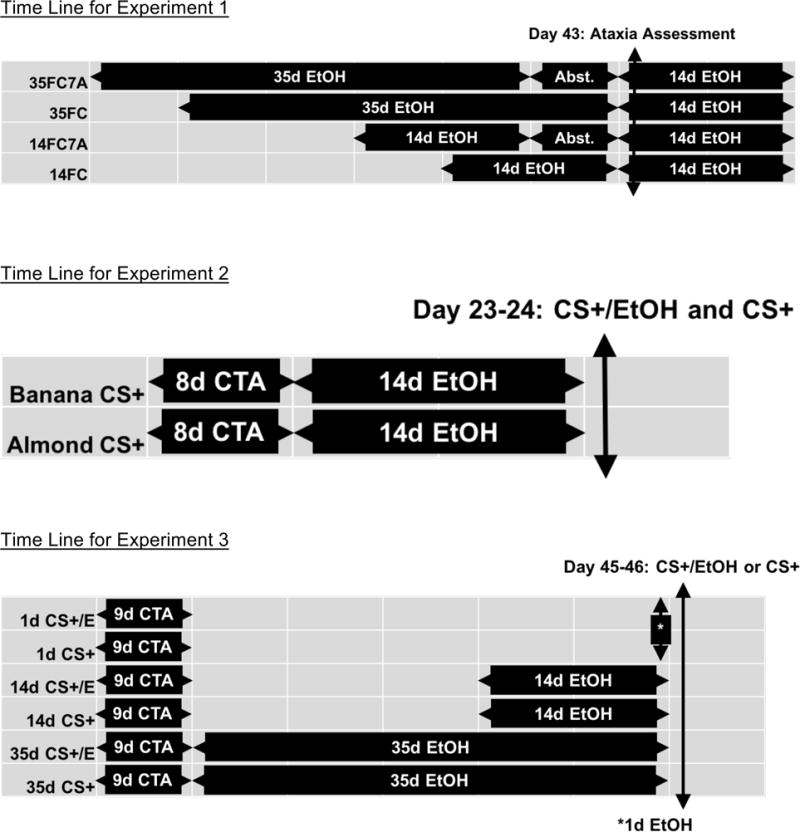
Methods: Experiment 1 examined differences between groups drinking for either 14 or 35 days, half of each subjected to 7 days of FA and half not, to characterize the potential changes in postabstinence drinking resulting from an extended drinking history. Experiment 2 used a CTA procedure to assess stimulus specificity of the ability of an aversive flavorant to decrease alcohol consumption. Experiment 3 used this taste aversion procedure to assess differences among groups drinking for 1, 14, or 35 days in their propensity to overcome this aversion when the flavorant was mixed with either EtOH or water.
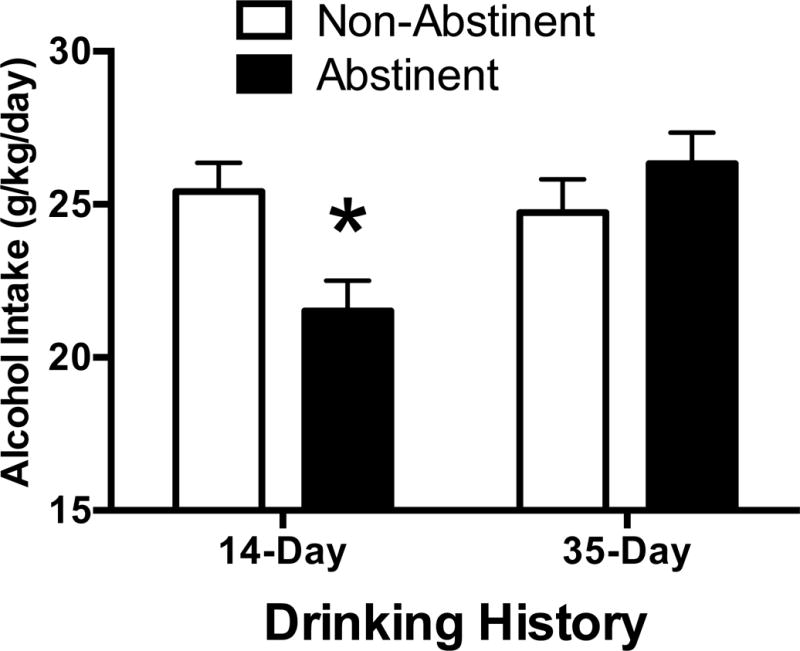
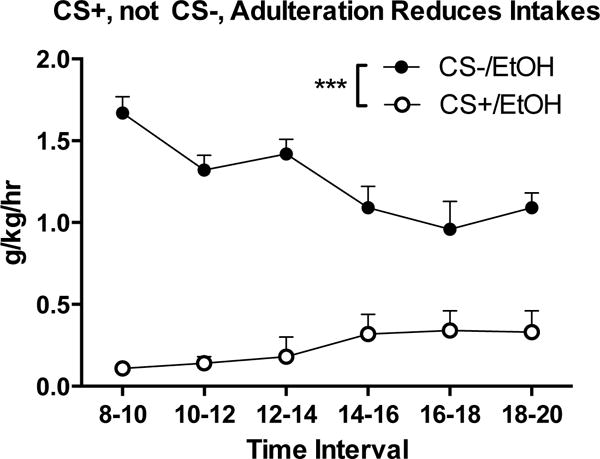
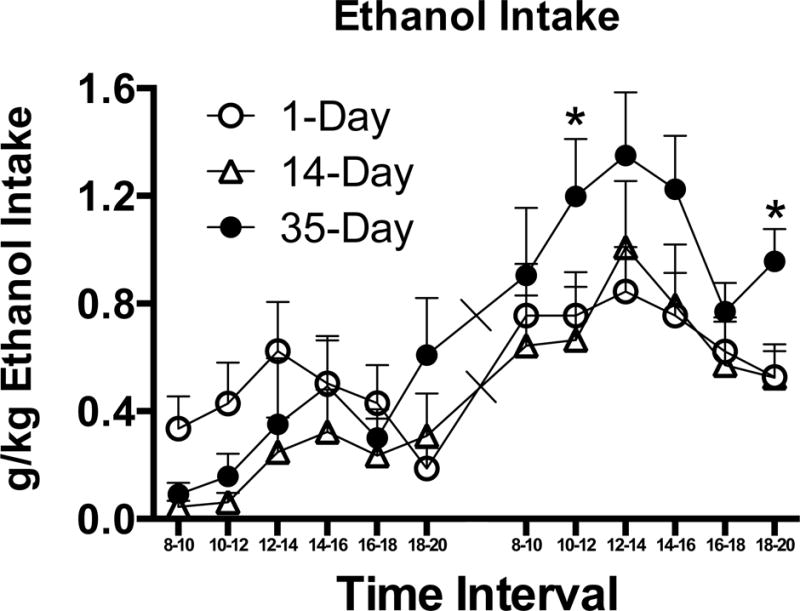
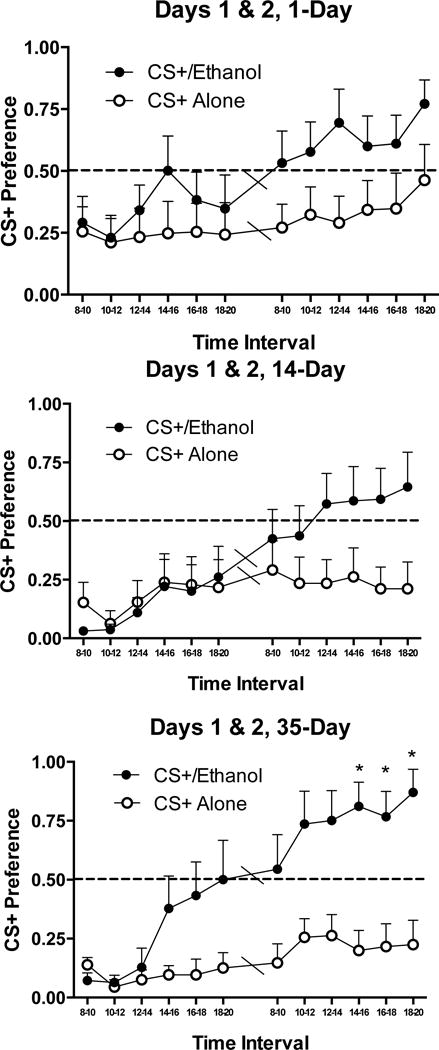
Results: Experiment 1 demonstrated that although FA decreased alcohol consumption in mice with a 14-day drinking history, it failed to do so in mice drinking alcohol for 35 days. Experiment 2 showed that the addition of a flavorant only suppressed alcohol drinking if an aversion to the flavorant was previously established. Experiment 3 demonstrated that an extended drinking history expedited extinction of suppressed alcohol intake caused by a conditioned aversive flavor.
Conclusions: These data show that a history of long-term drinking in cHAP mice attenuates the efficacy of interventions that normally reduce drinking. Analogous to alcoholics who may encounter difficulties in limiting their intake, cHAP mice with long drinking histories are relatively insensitive to both abstinence and signals of harmful consequences. We propose that the cHAP line may be a valid model for adaptations that occur following the extended heavy alcohol drinking.
Keywords: Abstinence; Animal Model; Conditioned Taste Aversion; Escalation; Ethanol.
Copyright © 2016 by the Research Society on Alcoholism.
Figures
References
-
- Bartsch AJ, Homola G, Biller A, Smith SM, Weijers HG, Wiesbeck GA, Jenkinson M, Stefano ND, Solymosi L, Bendszus M. Manifestations of early brain recovery associated with abstinence from alcoholism. Brain. 2007;130:36–47. - PubMed
-
- Bell RL, Rodd ZA, Boutwell CL, Hsu CC, Lumeng L, Murphy JM, Li TK, McBride WJ. Effects of long-term episodic access to ethanol on the expression of an alcohol deprivation effect in low alcohol-consuming rats. Alcohol Clin Exp Res. 2004;28:1867–1874. - PubMed
-
- Cannon DS, Baker TB, Wehl CK. Emetic and electric shock alcohol aversion therapy: Six- and twelve-month follow-up. J Consult Clin Psychol. 1981;49(3):360–368. - PubMed
-
- Crabbe JC, Metten P, Yu CH, Schlumbohm JP, Cameron AJ, Wahlsten D. Genotypic differences in ethanol sensitivity in two tests of motor incoordination. J Appl Physiol. 2003;95:1338–1351. - PubMed
-
- Cunningham CL, Niehus JS. Flavor preference conditioning by oral self-administration of ethanol. Psychopharmacology. 1997;134(3):293–302. - PubMed
MeSH terms
Substances
Grants and funding
LinkOut - more resources
Full Text Sources
Other Literature Sources
Medical
