Mechanical thrombectomy for acute ischemic stroke in pregnancy using the penumbra system
- PMID: 27293343
- PMCID: PMC4888695
- DOI: 10.4103/0972-2327.173302
Mechanical thrombectomy for acute ischemic stroke in pregnancy using the penumbra system
Abstract
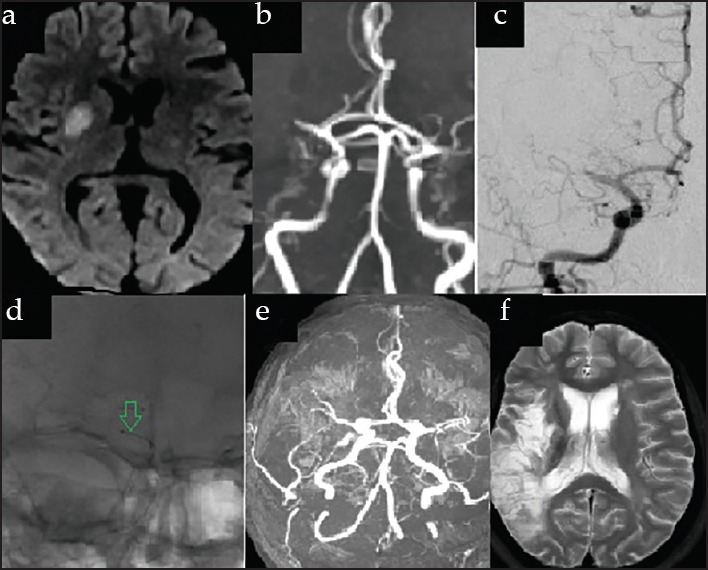
Even though intravenous thrombolysis with tissue plasminogen activator (IV tPA) is the standard of care in acute ischemic stroke, its use in pregnancy is not clearly defined. Mechanical thrombectomy devices can be an option; however, literature on the use of such mechanical devices in stroke in pregnancy is lacking. Here we describe two cases that developed acute embolic stroke during pregnancy who were successfully treated by mechanical clot retrieval using the Penumbra system 28 (Penumbra Inc., Alameda, California, USA). To the best of our knowledge, these are the only case reports on the use of the Penumbra device in pregnant patients with acute ischemic stroke.
Keywords: Mechanical thrombectomy in pregnancy; penumbra system; stroke in pregnancy.
Conflict of interest statement
Figures

References
-
- Tissue plasminogen activator for acute ischemic stroke. The National Institute of Neurological Disorders and Stroke rt-PA Stroke Study Group. N Engl J Med. 1995;333:1581–7. - PubMed
-
- Hacke W, Kaste M, Bluhmki E, Brozman M, Dávalos A, Guidetti D, et al. ECASS Investigators. Thrombolysis with alteplase 3 to 4.5 hours after acute ischemic stroke. N Engl J Med. 2008;359:1317–29. - PubMed
-
- Aleu A, Mellado P, Lichy C, Köhrmann M, Schellinger PD. Hemorrhagic complications after off-label thrombolysis for ischemic stroke. Stroke. 2007;38:417–22. - PubMed
-
- Leonhardt G, Gaul C, Nietsch HH, Buerke M, Schleussner E. Thrombolytic therapy in pregnancy. J Thromb Thrombolysis. 2006;21:271–6. - PubMed
-
- Jauch EC, Saver JL, Adams HP, Jr, Bruno A, Connors JJ, Demaerschalk BM, et al. American Heart Association Stroke Council; Council on Cardiovascular Nursing; Council on Peripheral Vascular Disease; Council on Clinical Cardiology. Guidelines for the early management of patients with acute ischemic stroke: A guideline for healthcare professionals from the American Heart Association/American Stroke Association. Stroke. 2013;44:870–947. - PubMed
Publication types
LinkOut - more resources
Full Text Sources
Other Literature Sources