


The dynamic interactome and genomic targets of Polycomb complexes during stem-cell differentiation
- PMID: 27294783
- PMCID: PMC4939079
- DOI: 10.1038/nsmb.3248
The dynamic interactome and genomic targets of Polycomb complexes during stem-cell differentiation
Abstract
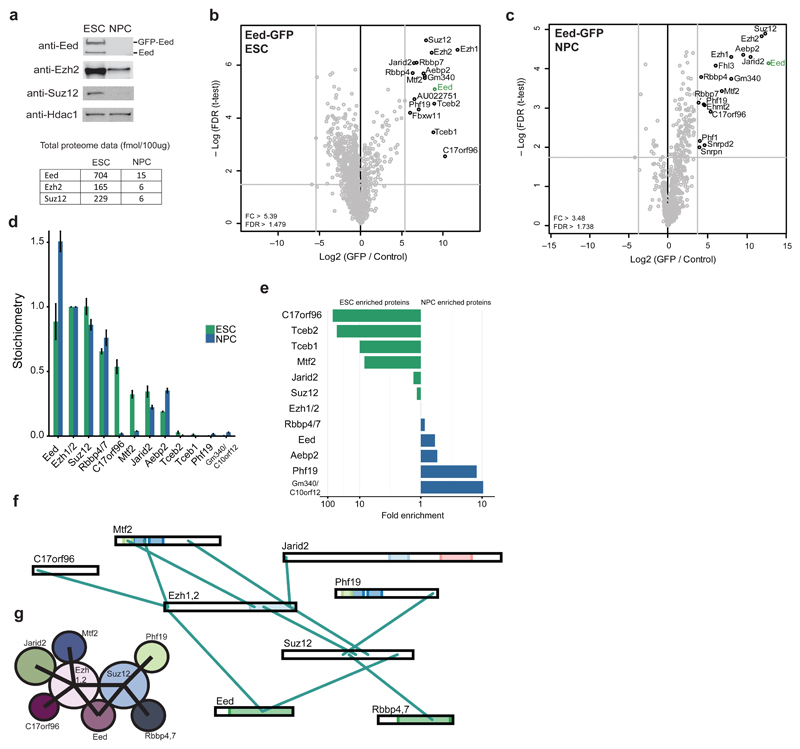
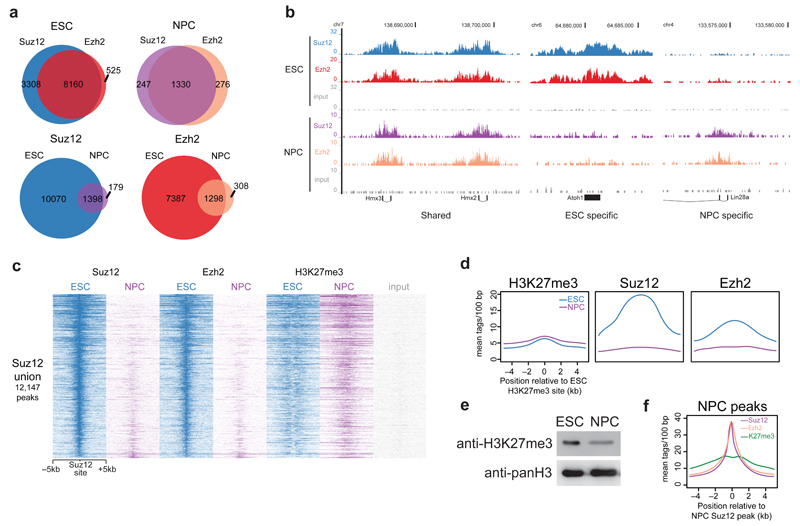
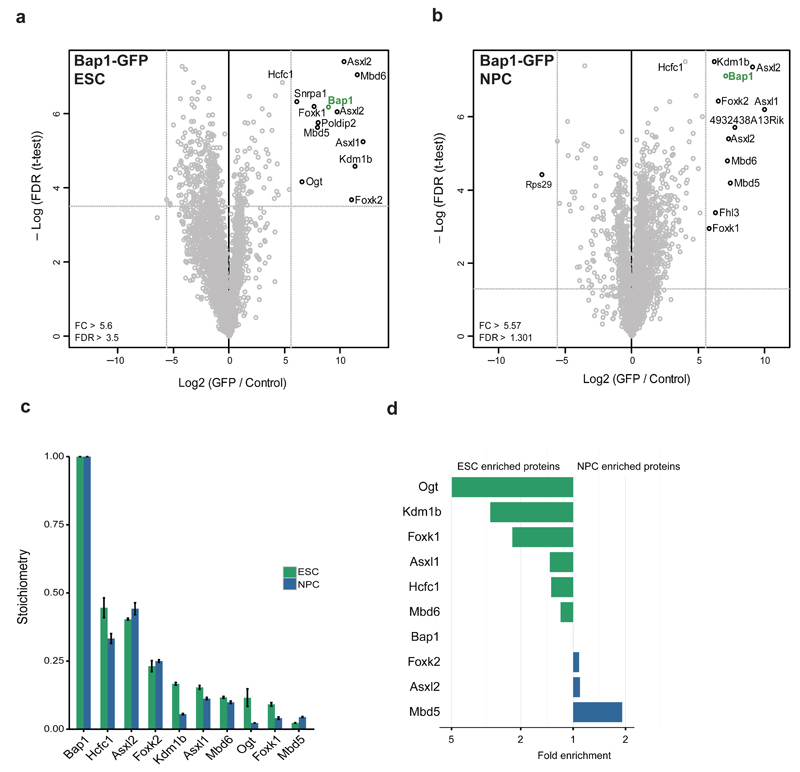
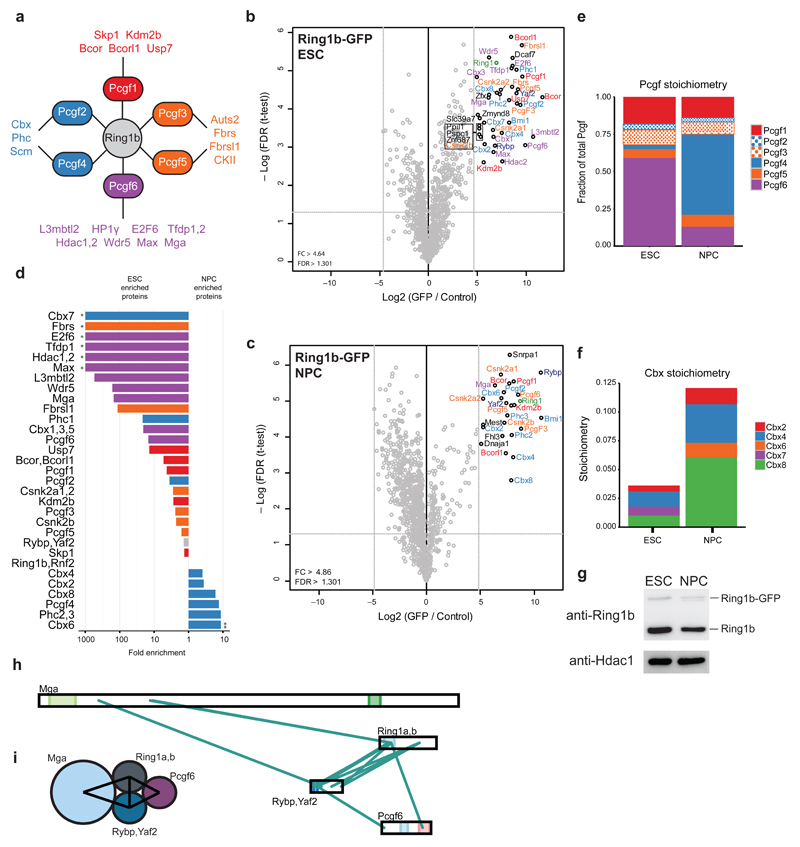
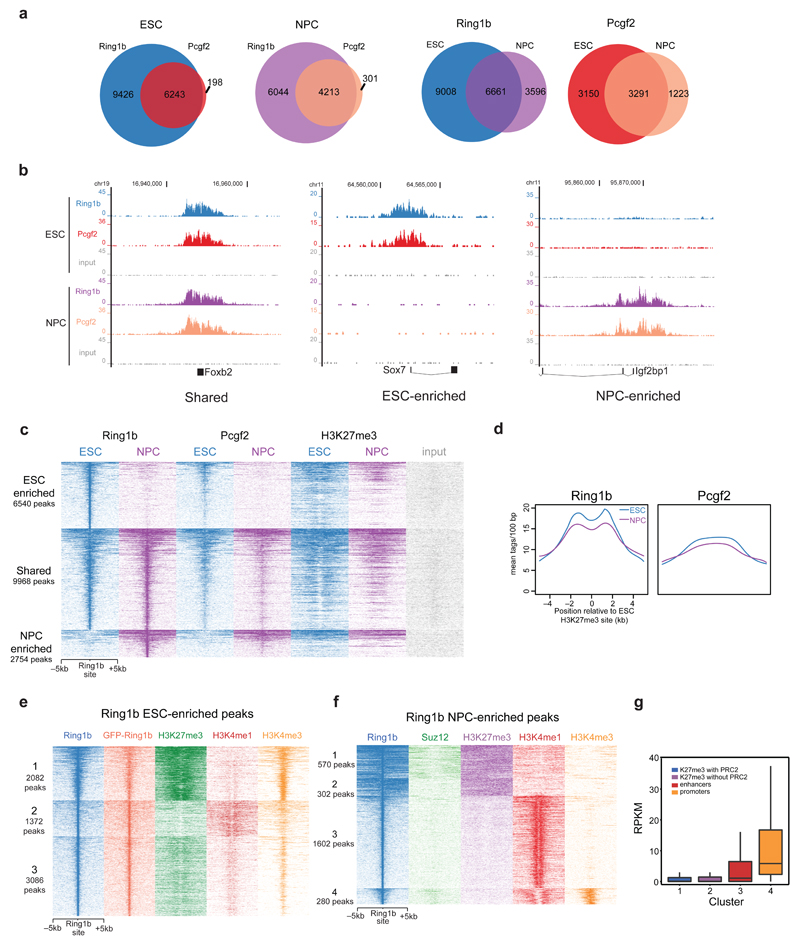
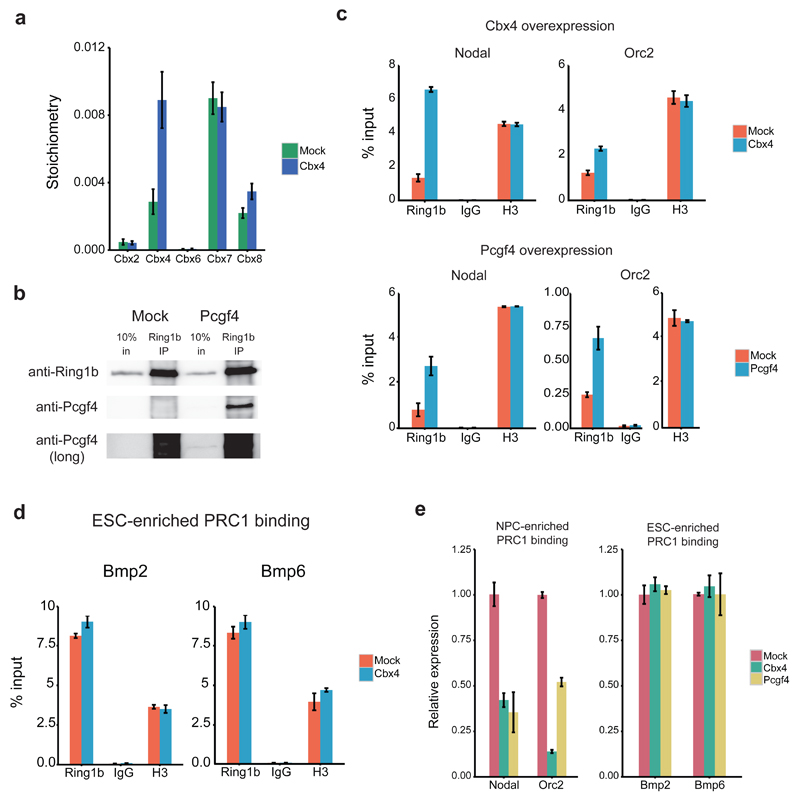
Although the core subunits of Polycomb group (PcG) complexes are well characterized, little is known about the dynamics of these protein complexes during cellular differentiation. We used quantitative interaction proteomics and genome-wide profiling to study PcG proteins in mouse embryonic stem cells (ESCs) and neural progenitor cells (NPCs). We found that the stoichiometry and genome-wide binding of PRC1 and PRC2 were highly dynamic during neural differentiation. Intriguingly, we observed a downregulation and loss of PRC2 from chromatin marked with trimethylated histone H3 K27 (H3K27me3) during differentiation, whereas PRC1 was retained at these sites. Additionally, we found PRC1 at enhancer and promoter regions independently of PRC2 binding and H3K27me3. Finally, overexpression of NPC-specific PRC1 interactors in ESCs led to increased Ring1b binding to, and decreased expression of, NPC-enriched Ring1b-target genes. In summary, our integrative analyses uncovered dynamic PcG subcomplexes and their widespread colocalization with active chromatin marks during differentiation.
Conflict of interest statement
The authors declare no competing financial interests.
Figures
References
-
- Laugesen A, Helin K. Chromatin repressive complexes in stem cells, development, and cancer. Cell Stem Cell. 2014;14:735–51. - PubMed
-
- Di Croce L, Helin K. Transcriptional regulation by Polycomb group proteins. Nat Struct Mol Biol. 2013;20:1147–55. - PubMed
-
- Wang H, et al. Role of histone H2A ubiquitination in Polycomb silencing. Nature. 2004;431:873–8. - PubMed
Publication types
MeSH terms
Substances
Grants and funding
LinkOut - more resources
Full Text Sources
Other Literature Sources
Molecular Biology Databases
