


Accuracy of Currently Used Paper Burn Diagram vs a Three-Dimensional Computerized Model
- PMID: 27294858
- PMCID: PMC8291050
- DOI: 10.1097/BCR.0000000000000363
Accuracy of Currently Used Paper Burn Diagram vs a Three-Dimensional Computerized Model
Abstract
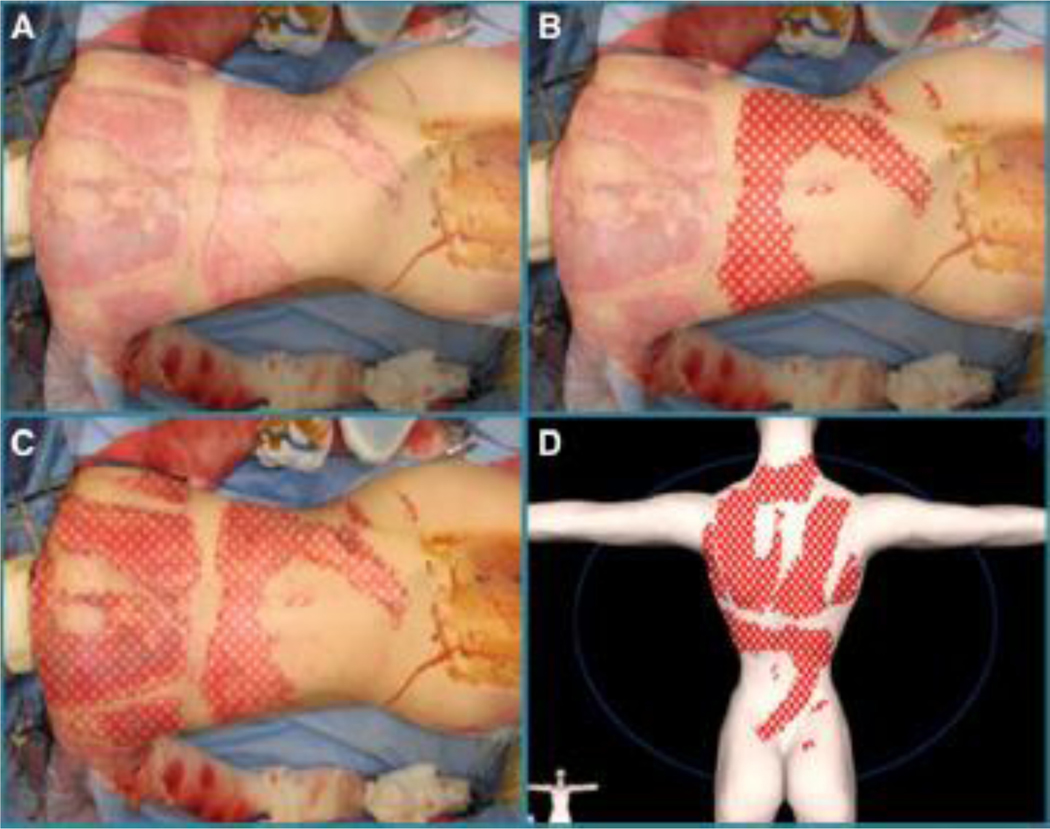
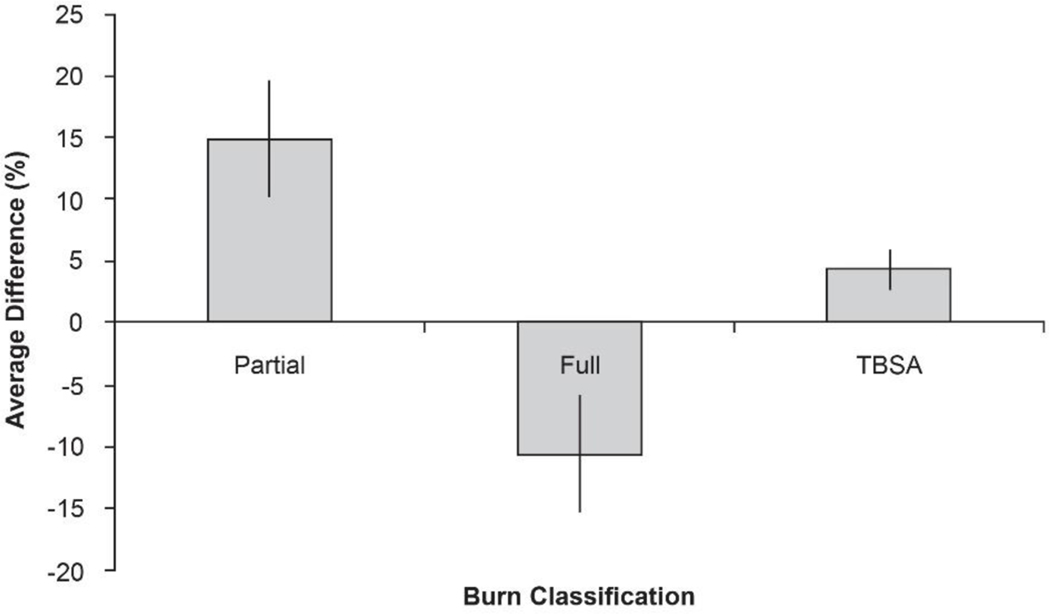
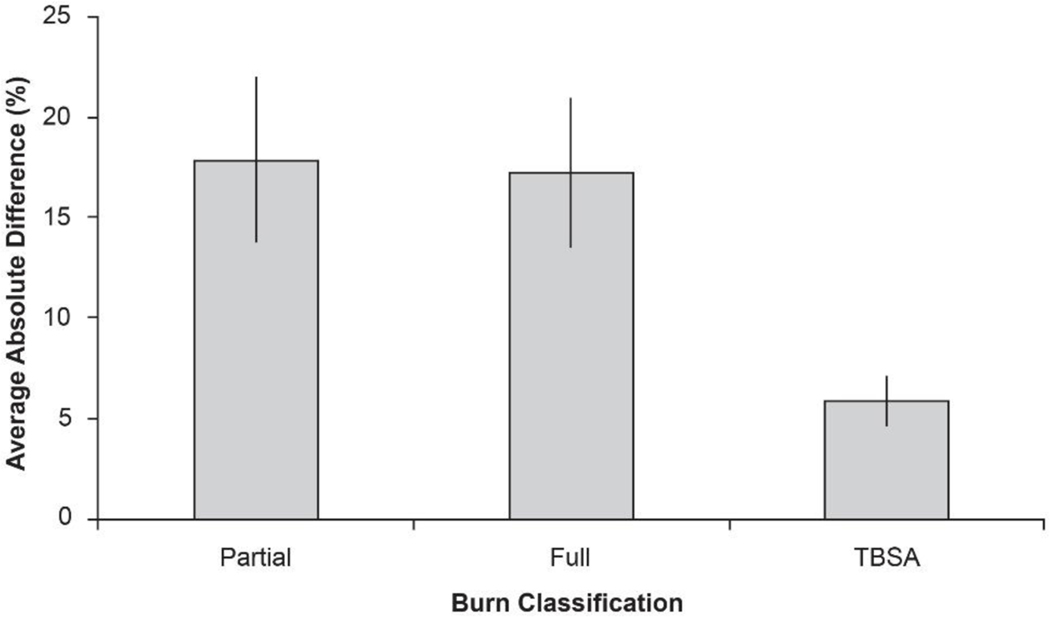
Burn units have historically used paper diagrams to estimate percent burn; however, unintentional errors can occur. The use of a computer program that incorporates wound mapping from photographs onto a three-dimensional (3D) human diagram could decrease subjectivity in preparing burn diagrams and subsequent calculations of TBSA burned. Analyses were done on 19 burned patients who had an estimated TBSA burned of ≥20%. The patients were admitted to Shriners Hospitals for Children or the University of Texas Medical Branch in Galveston, Texas, from July 2012 to September 2013 for treatment. Digital photographs were collected before the patient's first surgery. Using BurnCase 3D (RISC Software GmbH, Hagenberg, Austria), a burn mapping software, the user traced partial- and full-thickness burns from photographs. The program then superimposed tracings onto a 3D model and calculated percent burned. The results were compared with the Lund and Browder diagrams completed after the first operation. A two-tailed t-test was used to calculate statistical differences. For partial-thickness burns, burn sizes calculated using Lund and Browder diagrams were significantly larger than those calculated using BurnCase 3D (15% difference, P < .01). The opposite was found for full-thickness burns, with burn sizes being smaller when calculated using Lund and Browder diagrams (11% difference, P < .05). In conclusion, substantial differences exist in percent burn estimations derived from BurnCase 3D and paper diagrams. In our studied cohort, paper diagrams were associated with overestimation of partial-thickness burn size and underestimation of full-thickness burn size. Additional studies comparing BurnCase 3D with other commonly used methods are warranted.
Figures
References
-
- Warden GD. Outpatient management of thermal injuries. In: Boswick JA, editors. The art and science of burn care. Rockville, MD: Aspen; 1987. p. 45–51.
-
- Mlcak RP, Buffalo MC, Jimenez CJ. Pre-hospital management, transportation and emergency care. In: Herndon DN, editors. Total Burn Care. 4 edition. London: Elsevier Saunders; 2012. p. 93–102.
-
- McDougal WS, Slade CL, Pruitt BA. Initial Treatment. In: Egdahl RH, editor. Comprehensive manuals of surgical specialties: manual of burns. New York: Springer-Verlag; 1978. p. 31–37.
-
- Wachtel TL, Fortune JB. Fluid resuscitation for burn shock. In: Wachtel TL, Kahn V, Frank HA, editors. Current topics in burn care. London: Aspen; 1983. p. 45–49.
-
- Parvizi D, Kamolz LP, Giretzlehner M, et al. The potential impact of wrong TBSA estimations on fluid resuscitation in patients suffering from burns: things to keep in mind. Burns 2014;40:241–5. - PubMed
Publication types
MeSH terms
Grants and funding
LinkOut - more resources
Full Text Sources
Other Literature Sources
Medical
