Review
. 2016 Jun 10;5(2):42.
doi: 10.3390/pathogens5020042.

The Use of a Recombinant Canarypox-Based Equine Influenza Vaccine during the 2007 Australian Outbreak: A Systematic Review and Summary

Affiliations
Review

The Use of a Recombinant Canarypox-Based Equine Influenza Vaccine during the 2007 Australian Outbreak: A Systematic Review and Summary

Romain Paillot et al. Pathogens. .

Abstract

In 2007, Australia experienced the most extensive equine influenza outbreak observed in recent years. Extraordinary measures were rapidly implemented in order to control and prevent the spread of this highly contagious disease. The control strategy involved stringent movement restriction and disease surveillance, seconded by emergency post-outbreak vaccination strategies. Sixteen months after the first case and 12 months following the last reported case, Australia regained its equine influenza-free OIE status. This systematic review reports and summarises information relating to the implementation of emergency vaccination during the 2007 Australian equine influenza outbreak, including the choice of vaccine and implementation strategies.

Keywords: DIVA; canarypox-based vaccine; equine influenza; horse; vaccination.


Figures
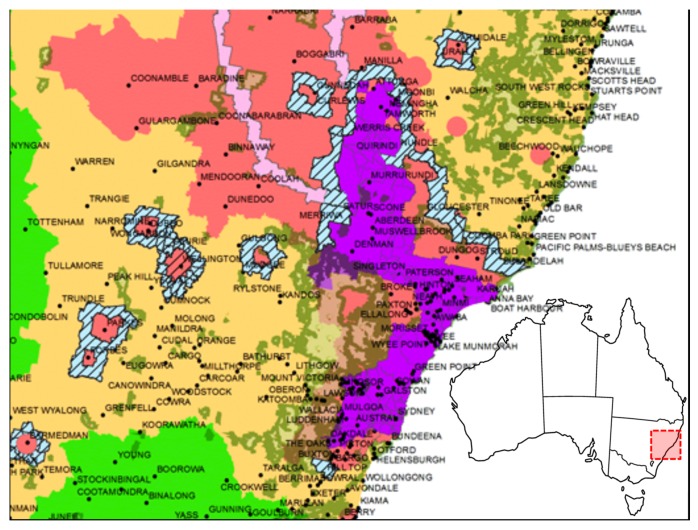
Figure 1
Figure 1
Map of zoned areas in NSW indicating equine influenza (EI) movement restrictions. Blue lined zones around red areas indicate buffer zones of vaccinated horses (image courtesy of NSW Department of Primary Industries (DPI) Equine Influenza Symposium).
Figure 2
Figure 2
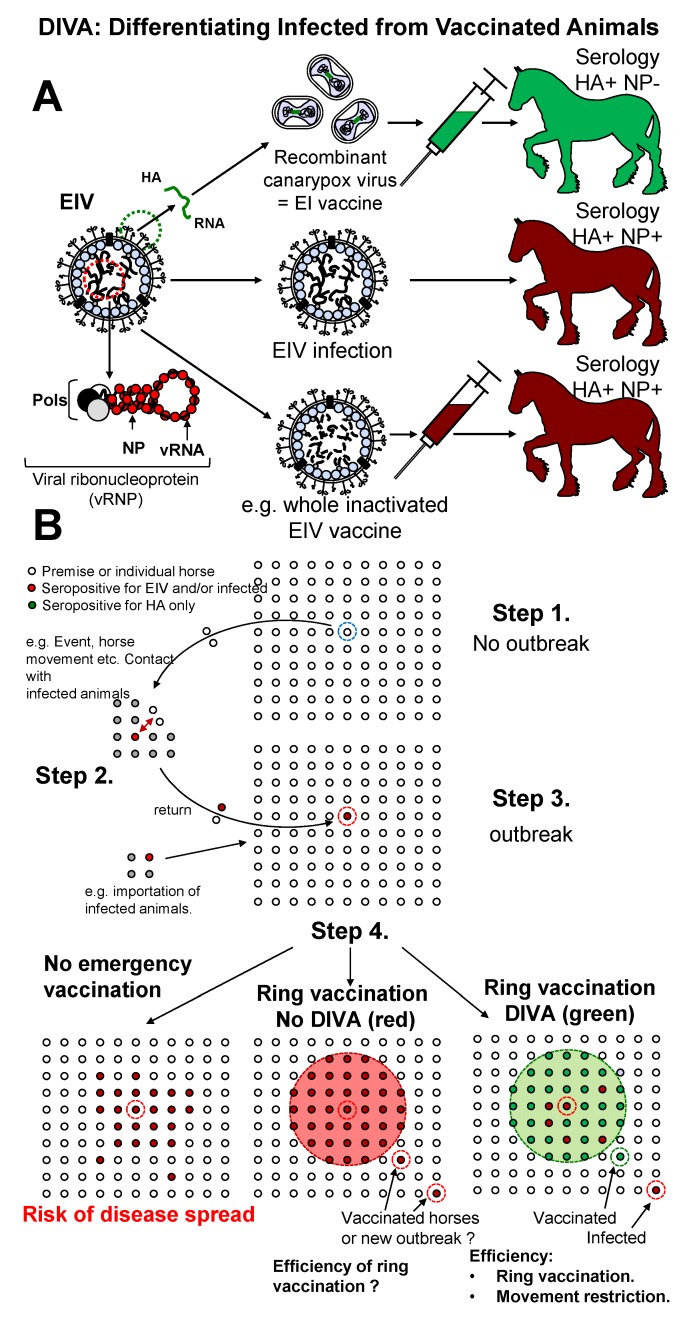
Differentiating Infected from Vaccinated Animals (DIVA). (A) Horses immunized with the recombinant canarypox-based EI vaccine seroconvert to haemagglutinin (HA) only (green). Horses infected with equine influenza virus (EIV) or vaccinated with a whole inactivated EI vaccine seroconvert to all EIV antigen (red), including the EIV nucleoprotein (NP) forming the viral ribonucleoprotein complex; (B) Importance of DIVA for emergency vaccination in the face of an EI outbreak: in an area initially free of EI (Step 1), a case of EI is detected (red spot, Step 3), following horse movement and importation of EIV (as an example, Step 2). Prevention measures are implemented (Step 4). In absence of EI vaccination, control of the disease relies entirely on movement restriction, surveillance and is influenced by the horse population density. EI is likely to spread. Ring vaccination could be implemented to support those control measures. In absence of DIVA capacity (red), the origin of seropositive horses found outside the vaccination area could not be determined (e.g., vaccinated horses outside the vaccination area or presence of the virus in the few days prior to serological analyses). The use of a DIVA EI vaccine allows determination of EIV progression inside and outside the vaccination area (i.e., ring vaccination efficacy) and evaluation of compliance with prevention measures such as movement restriction.
Figure 3
Figure 3
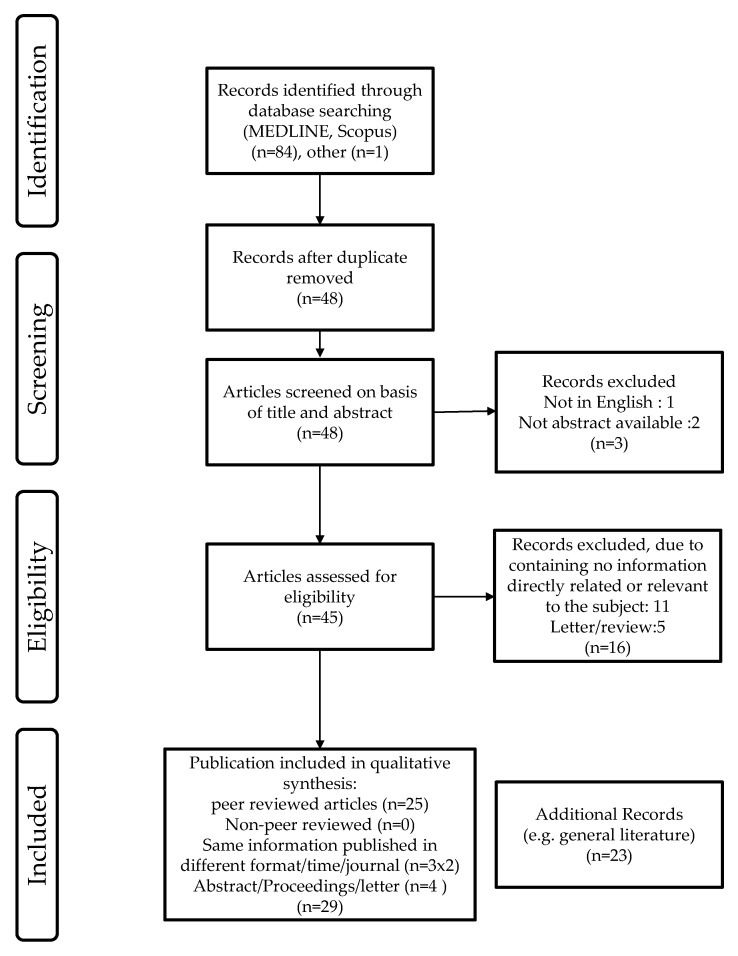
Systematic review process.

References

    1. Yamanaka T., Niwa H., Tsujimura K., Kondo T., Matsumura T. Epidemic of equine influenza among vaccinated racehorses in japan in 2007. J. Vet. Med. Sci. 2008;70:623–625. doi: 10.1292/jvms.70.623. - DOI - PubMed
    1. Anonymous. Equine disease surveillance, april to june 2008: Summary of the australian equine influenza outbreak. Vet. Rec. 2008;163:378–380. - PubMed
    1. Callinan I. Equine Influenza, the August 2007 Outbreak in Australia. [(accessed on 7 June 2016)]. Available online: http://apo.org.au/files/Resource/commonwealthofaustralia_equineinfluenza....
    1. Watson J., Daniels P., Kirkland P., Carroll A., Jeggo M. The 2007 outbreak of equine influenza in australia: Lessons learned for international trade in horses. Rev. Inform. Sci. Technol. 2011;30:87–93. doi: 10.20506/rst.30.1.2021. - DOI - PubMed
    1. Bryant N.A., Rash A.S., Woodward A.L., Medcalf E., Helwegen M., Wohlfender F., Cruz F., Herrmann C., Borchers K., Tiwari A., et al. Isolation and characterisation of equine influenza viruses (h3n8) from europe and north america from 2008 to 2009. Vet. Microbiol. 2010;147:19–27. doi: 10.1016/j.vetmic.2010.05.040. - DOI - PubMed