


Add-On Use of Eplerenone Is Effective for Lowering Home and Ambulatory Blood Pressure in Drug-Resistant Hypertension
- PMID: 27296360
- PMCID: PMC8031520
- DOI: 10.1111/jch.12860
Add-On Use of Eplerenone Is Effective for Lowering Home and Ambulatory Blood Pressure in Drug-Resistant Hypertension
Abstract
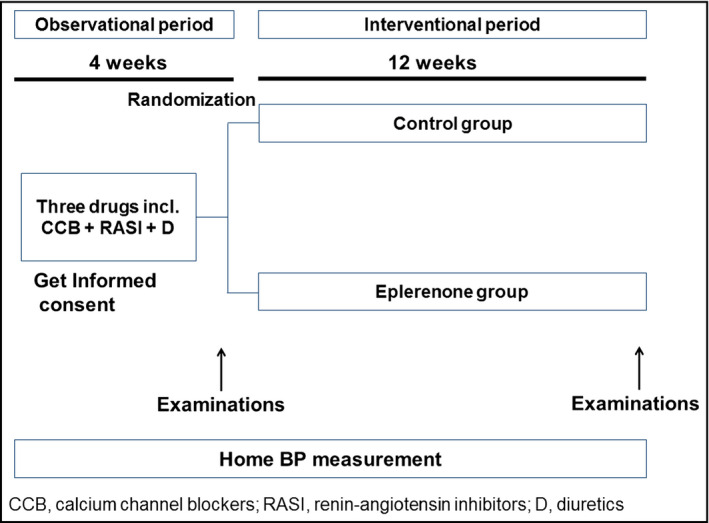
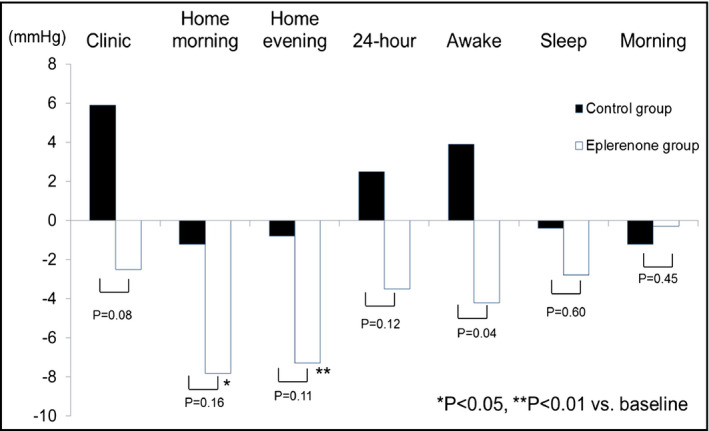
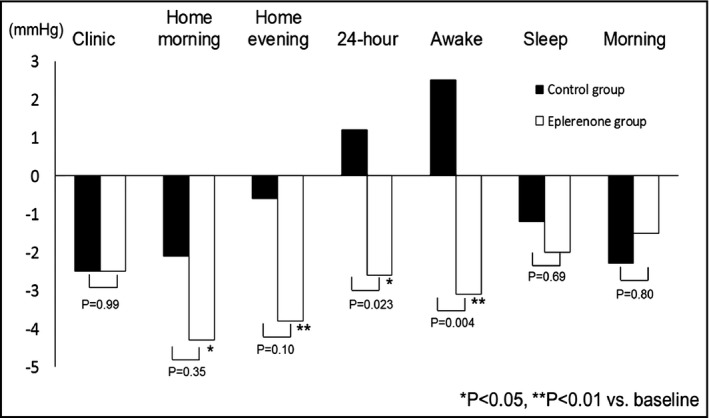
The authors aimed to investigate the blood pressure (BP)-lowering ability of eplerenone in drug-resistant hypertensive patients. A total of 57 drug-resistant hypertensive patients whose home BP was ≥135/85 mm Hg were investigated. The patients were randomized to either an eplerenone group or a control group and followed for 12 weeks. The efficacy was evaluated by clinic, home, and ambulatory BP monitoring. Urinary albumin, pulse wave velocity, and flow-mediated vasodilation (FMD) were also evaluated. Home morning systolic BP (148±15 vs 140±15 mm Hg) and evening systolic BP (137±16 vs 130±16 mm Hg) were significantly lowered in the eplerenone group (n=35) compared with baseline (both P<.05), while unchanged in the control group (n=22). BP reductions in the eplerenone group were most pronounced for ambulatory awake systolic BP (P=.04), awake diastolic BP (P=.004), and 24-hour diastolic BP (P=.02). FMD was significantly improved in the eplerenone group. In patients with drug-resistant hypertension, add-on use of eplerenone was effective in lowering BP, especially home and ambulatory awake BP.
©2016 Wiley Periodicals, Inc.
Figures
References
-
- Moser M, Setaro JF. Clinical practice. Resistant or difficult‐to‐control hypertension. N Engl J Med. 2006;355:385–392. - PubMed
-
- Calhoun DA, Jones D, Textor S, et al. Resistant hypertension: diagnosis, evaluation, and treatment. A scientific statement from the American Heart Association Professional Education Committee of the Council for High Blood Pressure Research. Hypertension. 2008;51:1403–1419. - PubMed
-
- Nishizaka MK, Zaman MA, Calhoun DA. Efficacy of low‐dose spironolactone in subjects with resistant hypertension. Am J Hypertens. 2003;16:925–930. - PubMed
-
- Chapman N, Dobson J, Wilson S, et al., On behalf of the Anglo‐Scandinavian Cardiac Outcomes Trial Investigators . Effect of spironolactone on blood pressure in subjects with resistant hypertension. Hypertension. 2007;49:839–845. - PubMed
Publication types
MeSH terms
Substances
LinkOut - more resources
Full Text Sources
Other Literature Sources
Medical
