Endoplasmic Reticulum-Associated Degradation and Lipid Homeostasis
- PMID: 27296502
- PMCID: PMC6268005
- DOI: 10.1146/annurev-nutr-071715-051030
Endoplasmic Reticulum-Associated Degradation and Lipid Homeostasis
Abstract
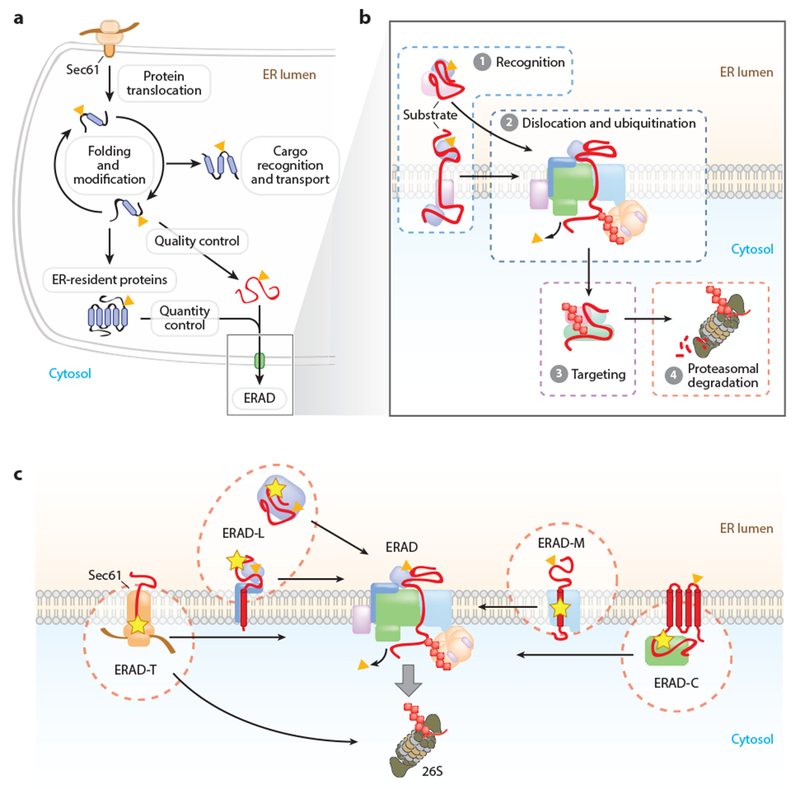
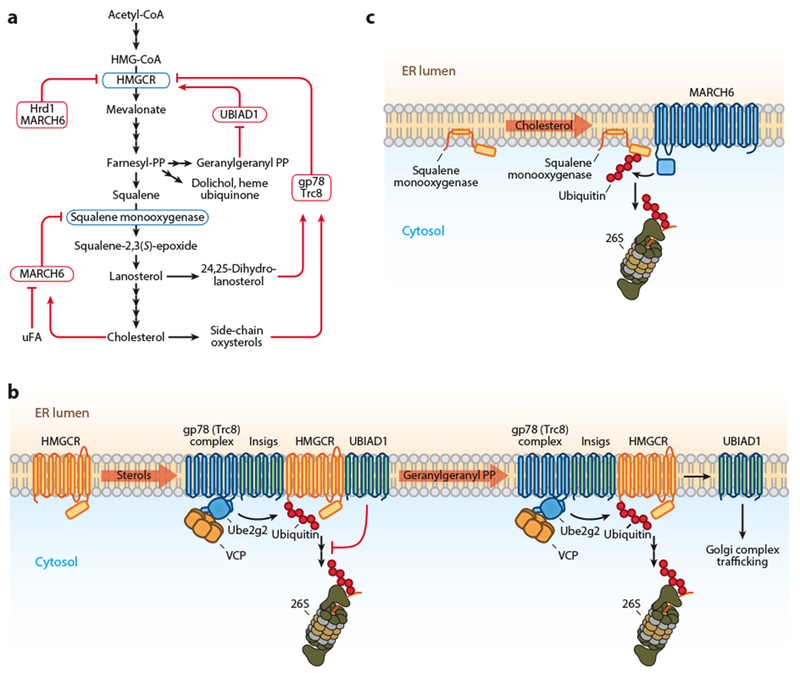
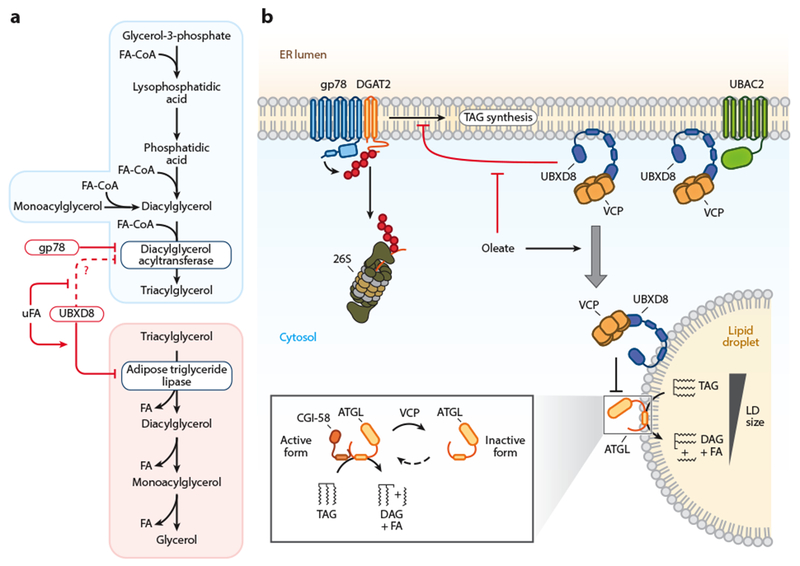
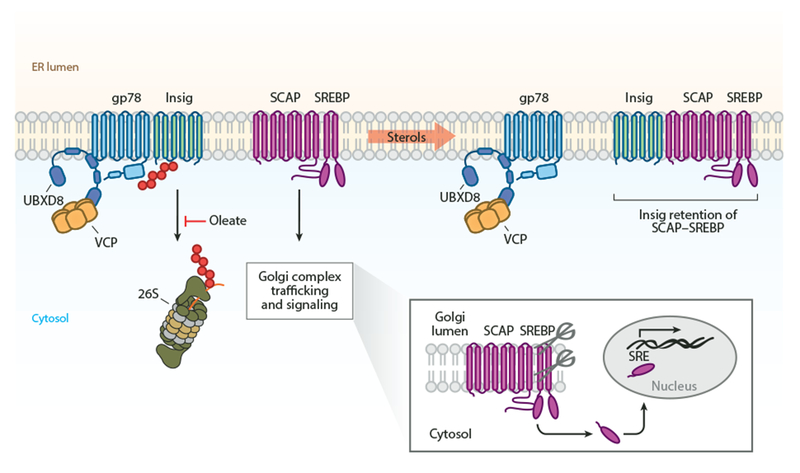
The endoplasmic reticulum is the port of entry for proteins into the secretory pathway and the site of synthesis for several important lipids, including cholesterol, triacylglycerol, and phospholipids. Protein production within the endoplasmic reticulum is tightly regulated by a cohort of resident machinery that coordinates the folding, modification, and deployment of secreted and integral membrane proteins. Proteins failing to attain their native conformation are degraded through the endoplasmic reticulum-associated degradation (ERAD) pathway via a series of tightly coupled steps: substrate recognition, dislocation, and ubiquitin-dependent proteasomal destruction. The same ERAD machinery also controls the flux through various metabolic pathways by coupling the turnover of metabolic enzymes to the levels of key metabolites. We review the current understanding and biological significance of ERAD-mediated regulation of lipid metabolism in mammalian cells.
Keywords: ERAD; cholesterol; lipid droplet; quality control; triacylglycerol; ubiquitin.
Figures
References
-
- Benoist F, Grand-Perret T. 1997. Co-translational degradation of apolipoprotein B100 by the proteasome is prevented by microsomal triglyceride transfer protein. Synchronized translation studies on HepG2 cells treated with an inhibitor of microsomal triglyceride transfer protein. J. Biol. Chem 272(33):20435–42 - PubMed
Publication types
MeSH terms
Substances
Grants and funding
LinkOut - more resources
Full Text Sources
Other Literature Sources