


Reconstitution of full-thickness skin by microcolumn grafting
- PMID: 27296503
- PMCID: PMC5697650
- DOI: 10.1002/term.2174
Reconstitution of full-thickness skin by microcolumn grafting
Abstract
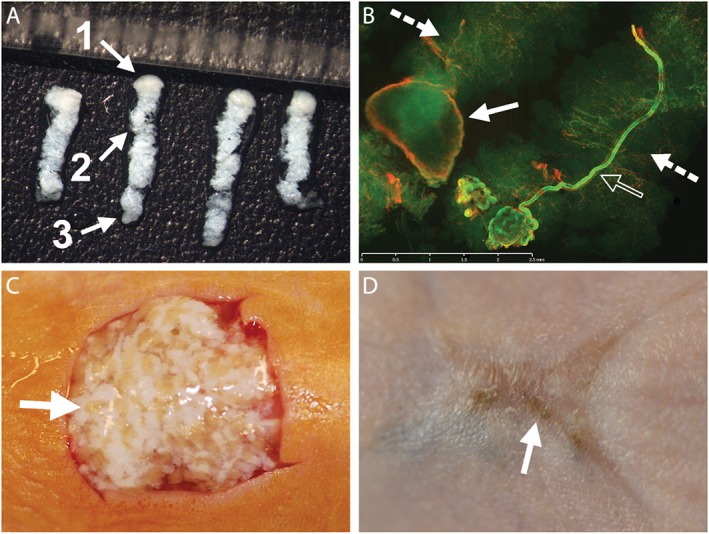
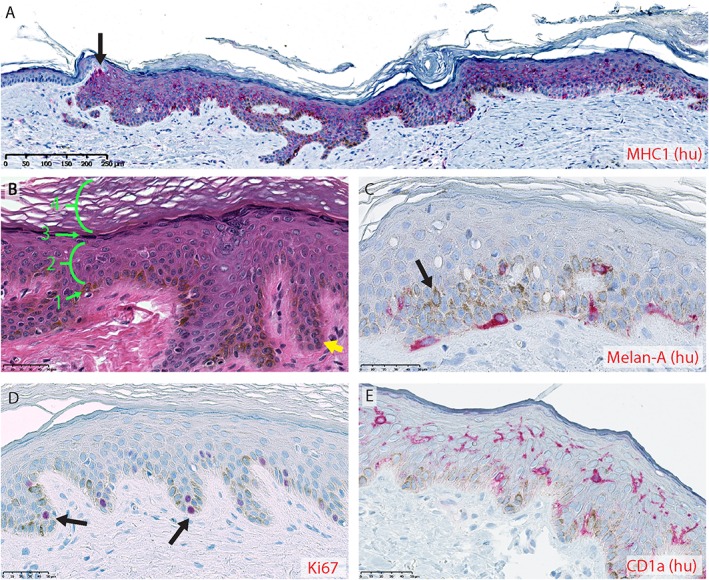
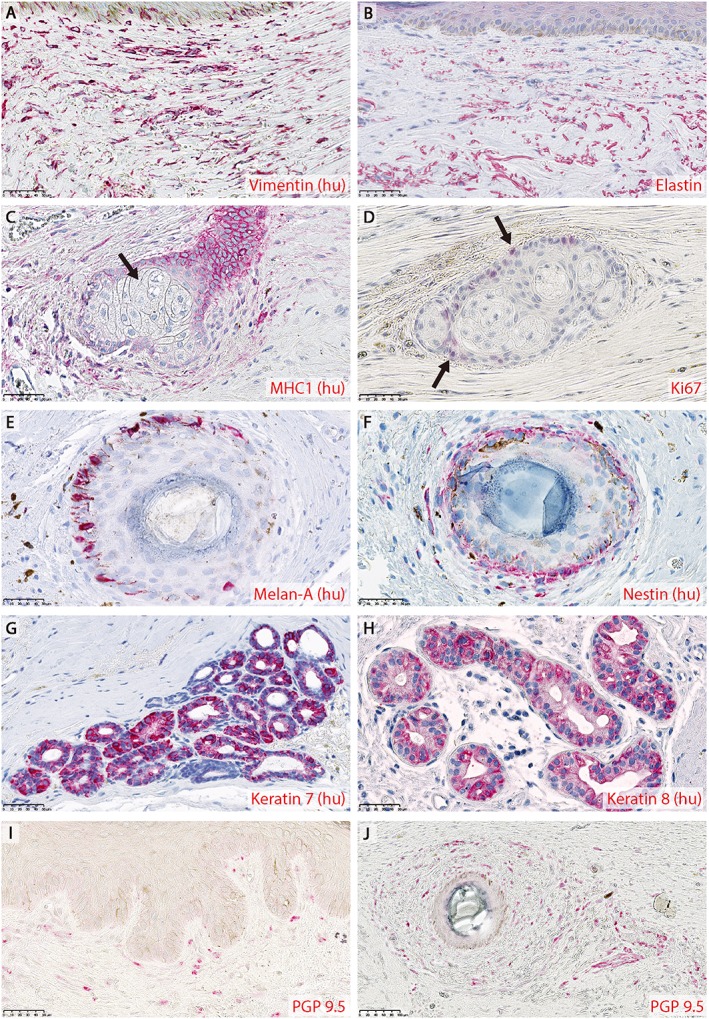
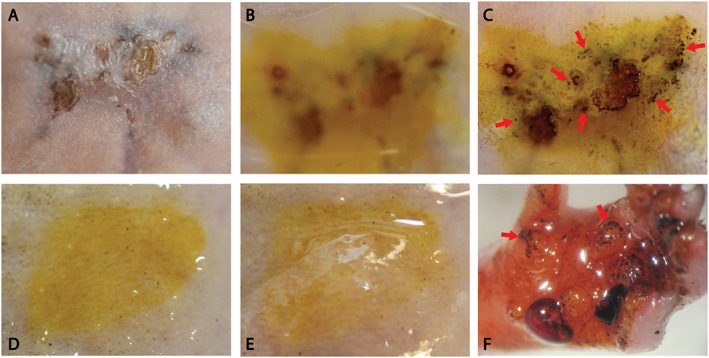
In addition to providing a physical barrier, skin also serves a diverse range of physiological functions through different specialized resident cell types/structures, including melanocytes (pigmentation and protection against ultraviolet radiation), Langerhans cells (adaptive immunity), fibroblasts (maintaining extracellular matrix, paracrine regulation of keratinocytes), sweat glands (thermoregulation) and hair follicles (hair growth, sensation and a stem cell reservoir). Restoration of these functional elements has been a long-standing challenge in efforts to engineer skin tissue, while autologous skin grafting is limited by the scarcity of donor site skin and morbidity caused by skin harvesting. We demonstrate an alternative approach of harvesting and then implanting μm-scale, full-thickness columns of human skin tissue, which can be removed from a donor site with minimal morbidity and no scarring. Fresh human skin microcolumns were used to reconstitute skin in wounds on immunodeficient mice. The restored skin recapitulated many key features of normal human skin tissue, including epidermal architecture, diverse skin cell populations, adnexal structures and sweat production in response to cholinergic stimulation. These promising preclinical results suggest that harvesting and grafting of microcolumns may be useful for reconstituting fully functional skin in human wounds, without donor site morbidity. © 2016 The Authors Journal of Tissue Engineering and Regenerative Medicine Published by John Wiley & Sons Ltd.
Keywords: adnexa; full thickness; healing; regeneration; skin wound.
© 2016 The Authors Journal of Tissue Engineering and Regenerative Medicine Published by John Wiley & Sons Ltd.
Conflict of interest statement
Figures
References
-
- Anderson RR, Donelan MB, Hivnor C, et al. 2014; Laser treatment of traumatic scars with an emphasis on ablative fractional laser resurfacing: consensus report. JAMA Dermatol 150: 187–193. - PubMed
-
- Beachkofsky TM, Henning JS, Hivnor CM. 2011; Induction of de novo hair regeneration in scars after fractionated carbon dioxide laser therapy in three patients. Dermatol Surg 37: 1365–1368. - PubMed
-
- Boggio P, Tiberio R, Gattoni M, et al. 2008, Is there an easier way to autograft skin in chronic leg ulcers? 'Minced micrografts', a new technique. J Eur Acad Dermatol Venereol 22: 1168–1172. - PubMed
-
- Bottcher‐Haberzeth S, Biedermann T, Klar AS, et al. 2014; Tissue engineering of skin: human tonsil‐derived mesenchymal cells can function as dermal fibroblasts. Pediatr Surg Int 30: 213–222. - PubMed
-
- Brusselaers N, Pirayesh A, Hoeksema H, et al. 2010; Skin replacement in burn wounds. J Trauma 68: 490–501. - PubMed
MeSH terms
LinkOut - more resources
Full Text Sources
Other Literature Sources
