


A Review on Medicinal Properties of Orientin
- PMID: 27298620
- PMCID: PMC4889806
- DOI: 10.1155/2016/4104595
A Review on Medicinal Properties of Orientin
Abstract
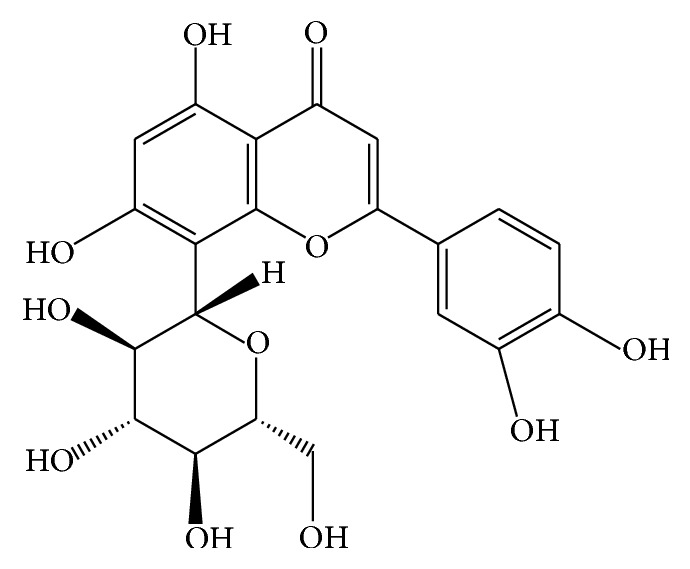
Medicinal plants continue to play an important role in modern medications and healthcare as consumers generally believe that most of them cause fewer or milder adverse effects than the conventional modern medicines. In order to use the plants as a source of medicinal agents, the bioactive compounds are usually extracted from plants. Therefore, the extraction of bioactive compounds from medicinal plants is a crucial step in producing plant-derived drugs. One of the bioactive compounds isolable from medicinal plants, orientin, is often used in various bioactivity studies due to its extensive beneficial properties. The extraction of orientin in different medicinal plants and its medicinal properties, which include antioxidant, antiaging, antiviral, antibacterial, anti-inflammation, vasodilatation and cardioprotective, radiation protective, neuroprotective, antidepressant-like, antiadipogenesis, and antinociceptive effects, are discussed in detail in this review.
References
-
- Solecki R. Shanidar IV, a neanderthal flower burial in northern Iraq. Science. 1975;190(4217):880–881. doi: 10.1126/science.190.4217.880. - DOI
-
- Ross I. A. Medicinal Plants of the World, Volume 3: Chemical Constituents, Traditional and Modern Medicinal Uses. Humana Press; 2005.
-
- Ross I. A. Medicinal Plants of the World, Volume 1: Chemical Constituents, Traditional and Modern Medicinal Uses. Humana Press; 2003.
-
- Das S. K., Vasudevan D. M. Tulsi: the Indian holy power plant. Indian Journal of Natural Products and Resources. 2006;5(4):279–283.
Publication types
LinkOut - more resources
Full Text Sources
Other Literature Sources
