


Metallosis Presenting as Knee Pain 26 years after Primary Total Knee Arthroplasty
- PMID: 27299048
- PMCID: PMC4722595
- DOI: 10.13107/jocr.2250-0685.277
Metallosis Presenting as Knee Pain 26 years after Primary Total Knee Arthroplasty
Abstract
Introduction: Metallosis occurs when periprosthetic soft tissues, synovium, and/or bone is infiltrated by metallic debris secondary to metal-on-metal wear. This debris can cause a chronic inflammatory reaction leading to joint instability, pain, and swelling, and may cause osteolysis, implant looseningand ultimately implant failure.
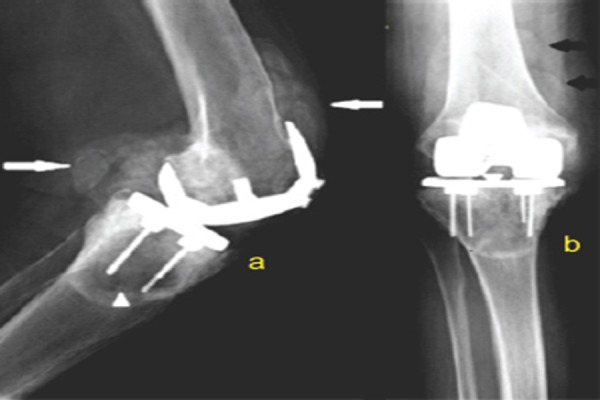
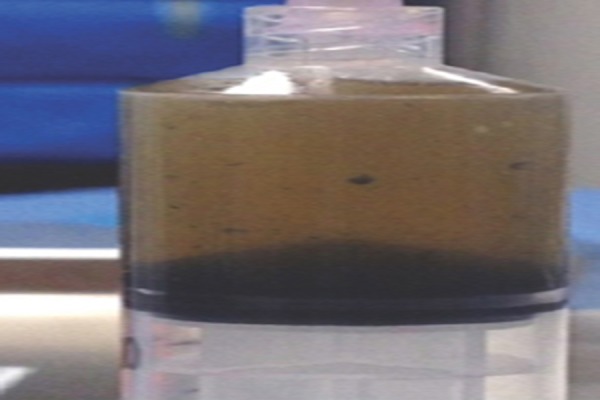
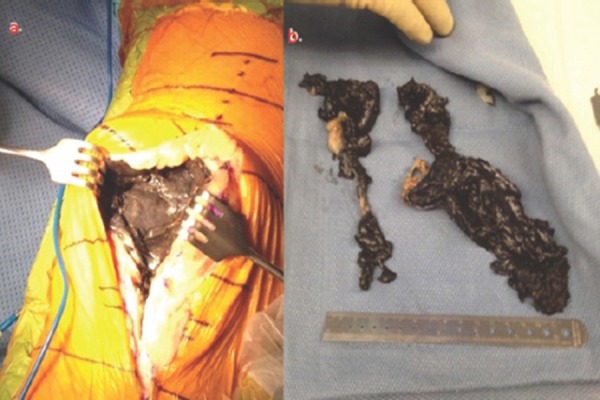
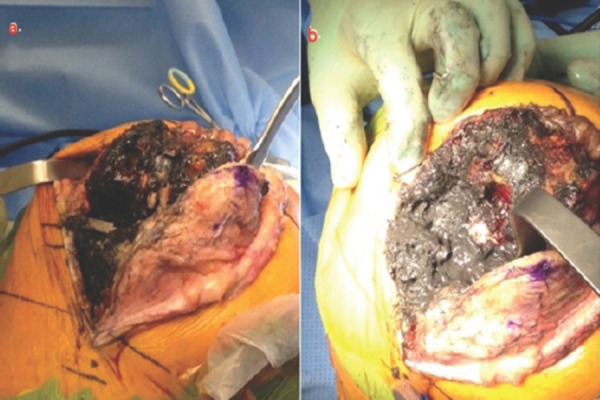
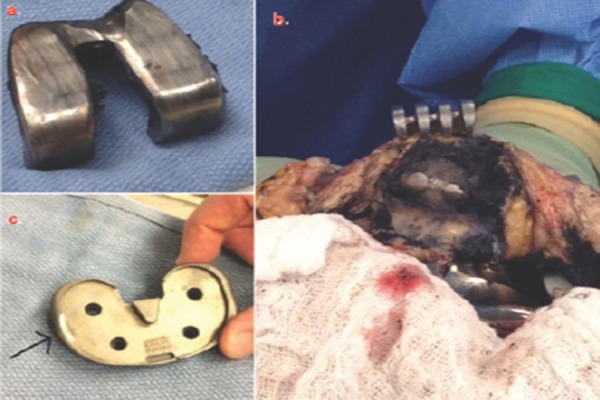
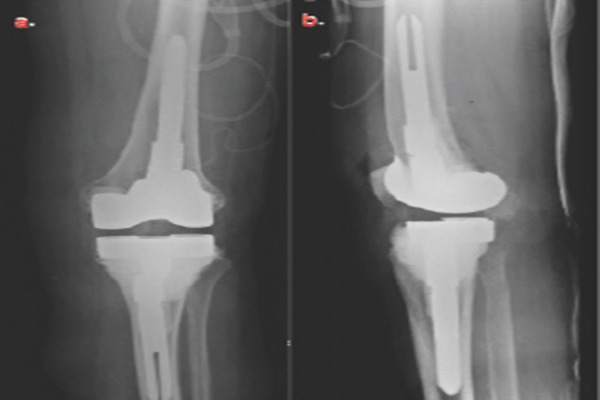
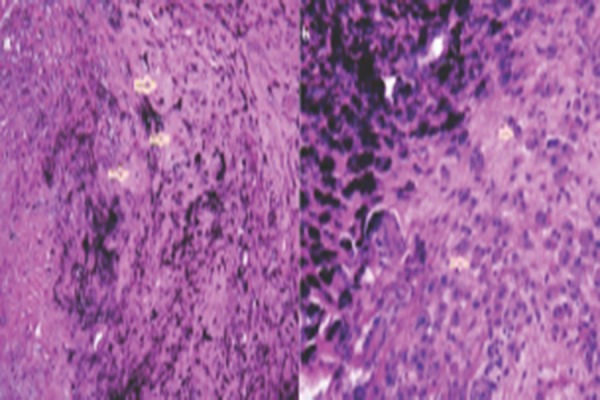
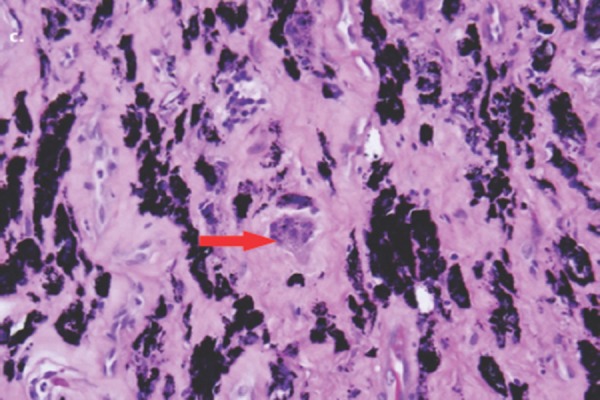
Case report: An 81 year old female, with a history of primary left total knee arthroplasty, presented with a 6 month history of left knee pain, swelling, and limited range of motion following a fall. Radiographs and joint aspiration were performed, with results that showed no evidence of periprosthetic trauma or infection but were suspicious for chronic metallosis. The patient underwent revision total knee replacement of the left knee which revealed extensive necrotic black metal debris throughout the joint space. Histopathology confirmed the diagnosis of a foreign body reaction consistent with metallosis.
Conclusion: This case is a rare example of chronic metallosis presenting 26 years following total knee replacement. Treatment with revision total knee replacement is the consensus management choice to avoid further destruction of the bone and joint capsule that can occur with metal-induced inflammation.
Keywords: Aseptic loosening; Metal-induced synovitis; bubble sign; cloud sign; metal-line sign; metallosis; severe osteolysis.
Conflict of interest statement
Conflict of Interest: Nil
Figures
References
-
- Helito CP, Buarque de Gusmão CV, Angelini FJ, et al. Severe metallosis following total knee arthroplasty: a case report and review of radiographic signs. Skeletal Radiol. 2014 Aug;43(8):1169–73. - PubMed
-
- O’Brien ST, Burnell CD, Hedden DR, Brandt JM. Abrasive wear and metallosis associated with cross-linked polyethylene in total hip arthroplasty. J Arthroplasty. 2013 Jan;28(1):197.e17–21. - PubMed
-
- Keene GC, Oakeshott RD. Early metallosis-related failure after total knee replacement: a report of 15 cases. J BoneJointSurg Br. 2011 Feb;93(2):205–9. - PubMed
Publication types
LinkOut - more resources
Full Text Sources