. 2016 Jun 15:7:11743.
doi: 10.1038/ncomms11743.

A multigene mutation classification of 468 colorectal cancers reveals a prognostic role for APC

Affiliations

A multigene mutation classification of 468 colorectal cancers reveals a prognostic role for APC

Michael J Schell et al. Nat Commun. .

Abstract

Colorectal cancer (CRC) is a highly heterogeneous disease, for which prognosis has been relegated to clinicopathologic staging for decades. There is a need to stratify subpopulations of CRC on a molecular basis to better predict outcome and assign therapies. Here we report targeted exome-sequencing of 1,321 cancer-related genes on 468 tumour specimens, which identified a subset of 17 genes that best classify CRC, with APC playing a central role in predicting overall survival. APC may assume 0, 1 or 2 truncating mutations, each with a striking differential impact on survival. Tumours lacking any APC mutation carry a worse prognosis than single APC mutation tumours; however, two APC mutation tumours with mutant KRAS and TP53 confer the poorest survival among all the subgroups examined. Our study demonstrates a prognostic role for APC and suggests that sequencing of APC may have clinical utility in the routine staging and potential therapeutic assignment for CRC.


Conflict of interest statement

MVN and AL are employees of Merck, Sharpe and Dohme. D.M.G was an employee of Merck, Sharpe and Dohme when this work was carried out. GAB-W is an employee of Molecular Health. The remaining authors declare no competing financial interests.

Figures
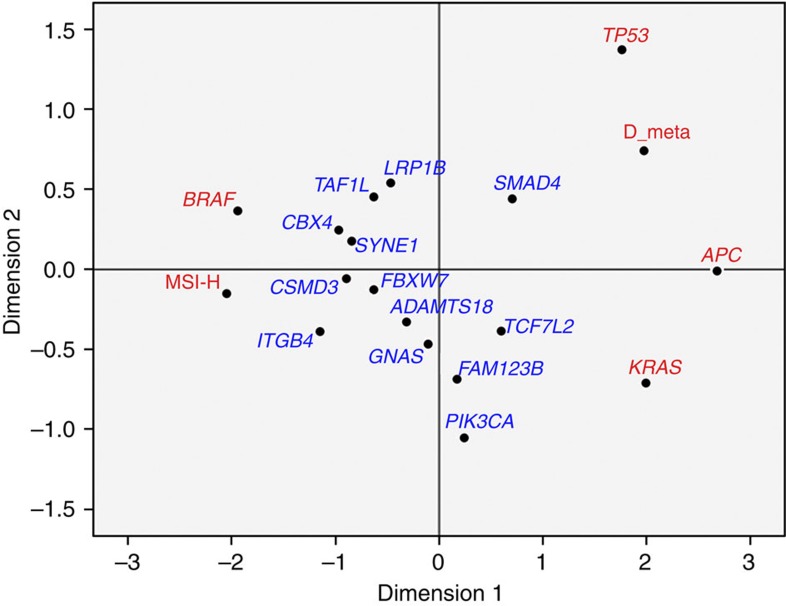
Figure 1
Figure 1. Multidimensional scaling plot for the correlation of highly mutated genes.
This plot (Euclidean distance model) graphically depicts the correlation of the 17 genes, with elevated non-silent mutation rates presented in Table 2 along with MSI-H status and presence of distant metastasis (D-meta). The most significant correlated genes BRAF, APC, KRAS, TP53 and MSI-H and D-meta are highlighted in red. BRAF is very close to (having strong positive correlation with) MSI-H but is anticorrelated with (far apart from) distant metastasis. Conversely, the partnering mutations (APC, KRAS and TP53) are comparatively close to each other and are with distant metastasis. Notably, ITGB4, CSMD3 and CBX4 are much closer to MSI-H than D-meta on the plot. FAM123B, also called AMER1, is a chromosome X-linked mutation, and 38/51 patients with mutations are female.
Figure 2
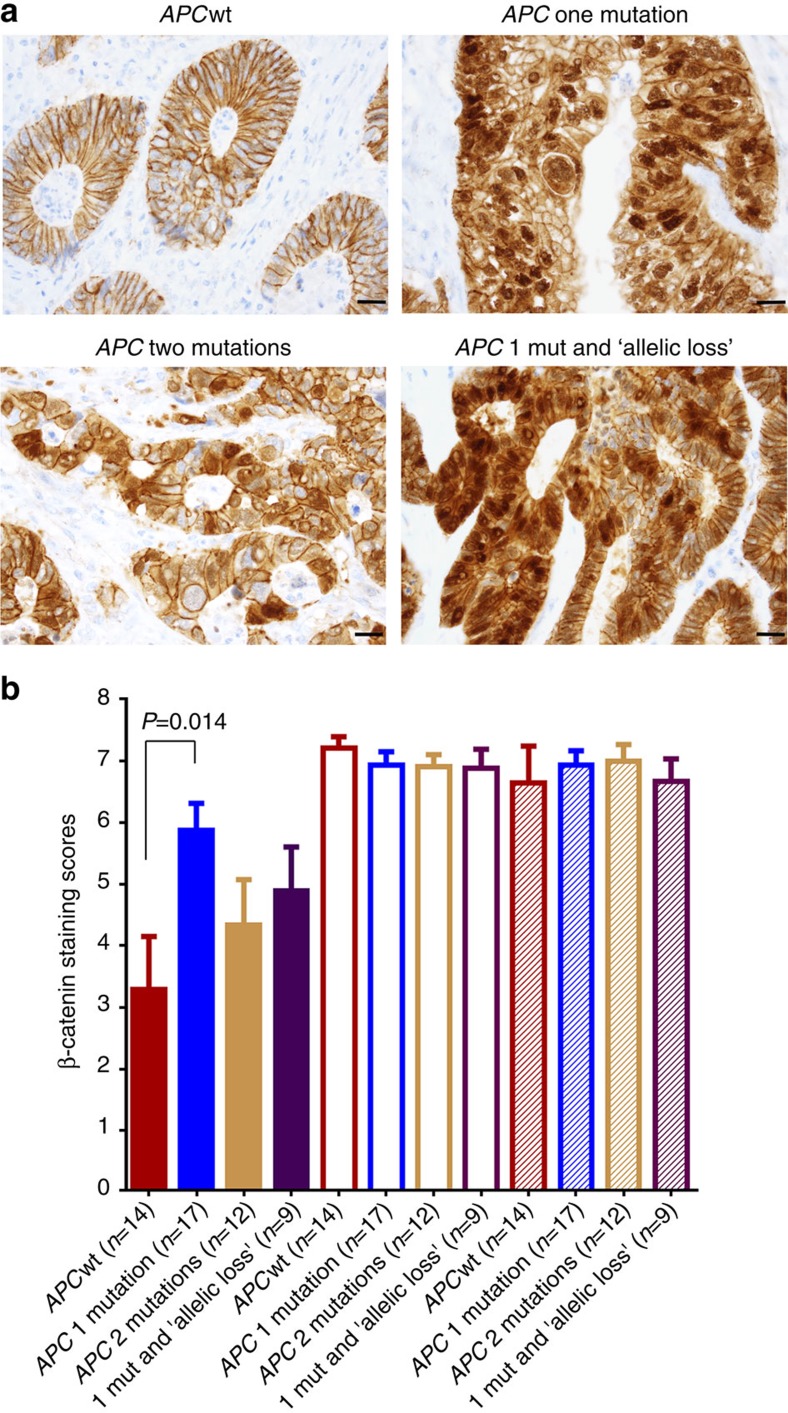
Figure 2. Immunohistochemical staining of β-catenin in 52 colorectal cancers.
(a) Representative images for APC groups (APCwt, one mutation, two mutations and one mutation plus inferred allelic loss ‘LOH'). Scale bar (bottom right), 20 μm. (b) Allred scores for nuclear (solid bars), cyto (unfilled bars) and membranous (hatched bars) staining of β-catenin in the APC groups: APCwt (n=14), one mutation (n=17), two mutations (n=12) and one mutation plus inferred allelic loss ‘LOH' (n=9). Error bar represents s.e.m. P=0.014 is for two-tailed, unequal variance Welch t-test. See detailed score information for individual tumours in Supplementary Table 7.
Figure 3
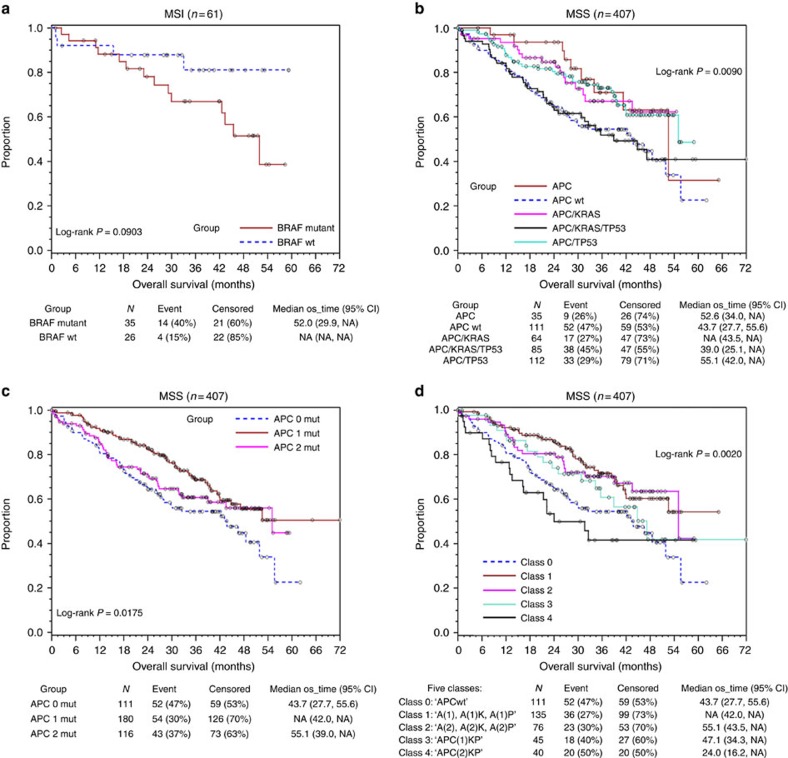
Figure 3. Kaplan–Meier survival analysis.
(a) MSI tumours by BRAF mutation, (b) MSS tumours by APC groups (APCwt, APC, APC/KRAS, APC/TP53, APC/KRAS/TP53), (c) MSS tumours by the number of truncating mutations (0, 1, 2) in the APC gene, (d) MSS tumours by both APC groups and the number of APC mutations. A−APC, K−KRAS, P−TP53. Five classes: Class 0: APC wild type; Class 1: APC(1), APC(1)/KRAS, APC(1)/TP53; Class 2: APC(2), APC(2)/KRAS, APC(2)/TP53; Class 3: APC(1)/KRAS/TP53; Class 4: APC(2)/KRAS/TP53. A(1) or APC (1) represents one APC mutation and A(2) or APC (2) represents two APC mutations.
Figure 4
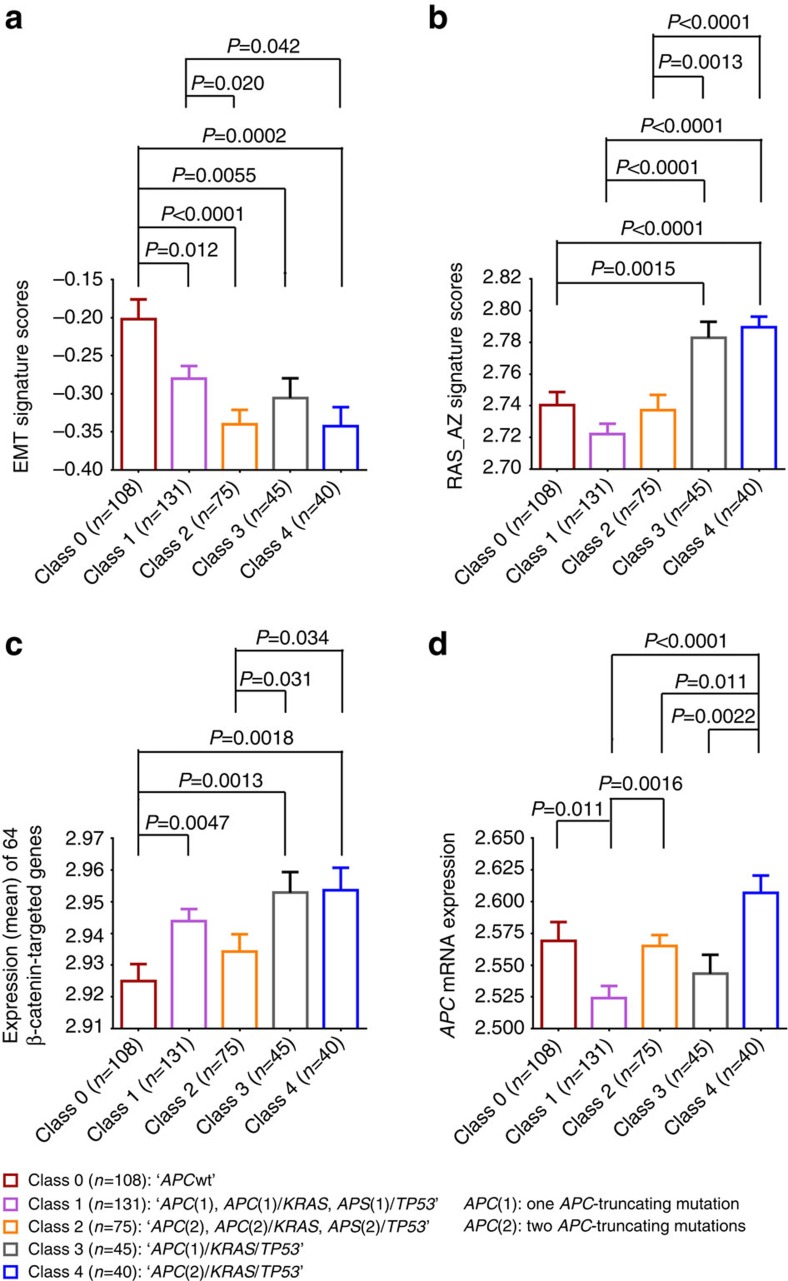
Figure 4. Expression (log2) comparison of MSS tumours in five classes (n=399).
(a) EMT signature scores, (b) RAS_AZ signature scores, (c) the 64 β-catenin-targeted genes and (d) APC mRNA expression (mean of eight APC probes). Five classes: Class 0: APC wild type; Class 1: APC(1), APC(1)/KRAS, APC(1)/TP53; Class 2: APC(2), APC(2)/KRAS, APC(2)/TP53; Class 3: APC(1)/KRAS/TP53; Class 4: APC(2)/KRAS/TP53. APC (1) represents one APC mutation and APC (2) represents two APC mutations. Error bars represent s.e.m. The two-tailed, unequal variance Welch t-test was used to assess the statistical significance of comparison. Unadjusted P-values of <0.05 are shown. Notably, eight samples without suitable microarray data were excluded from 407 MSS CRCs. Class 0 tumours were significantly more ‘mesenchymal-like' than all four other classes (a), while AKP-related Classes 3 and 4 had stronger RAS activation (b). Compared with Class 0 tumours, WNT activation, as measured by the 64 WNT target genes, was observed in APC-mutated Class 1 (P=0.0047), Class 3 (P=0.0013) and Class 4 (P=0.0018; c).

References

    1. Markowitz S. D. & Bertagnolli M. M. Molecular origins of cancer: molecular basis of colorectal cancer. N. Engl. J. Med. 361, 2449–2460 (2009). - PMC - PubMed
    1. Fearon E. R. Molecular genetics of colorectal cancer. Annu. Rev. Pathol. 6, 479–507 (2011). - PubMed
    1. Dukes C. Histological grading of rectal cancer: (section of pathology). Proc. R Soc. Med. 30, 371–376 (1937). - PMC - PubMed
    1. Domingo E. et al. Use of multivariate analysis to suggest a new molecular classification of colorectal cancer. J. Pathol. 229, 441–448 (2013). - PMC - PubMed
    1. De Sousa E. M. F. et al. Poor-prognosis colon cancer is defined by a molecularly distinct subtype and develops from serrated precursor lesions. Nat. Med. 19, 614–618 (2013). - PubMed

Publication types

MeSH terms