


Polymers in the gut compress the colonic mucus hydrogel
- PMID: 27303035
- PMCID: PMC4932961
- DOI: 10.1073/pnas.1602789113
Polymers in the gut compress the colonic mucus hydrogel
Abstract
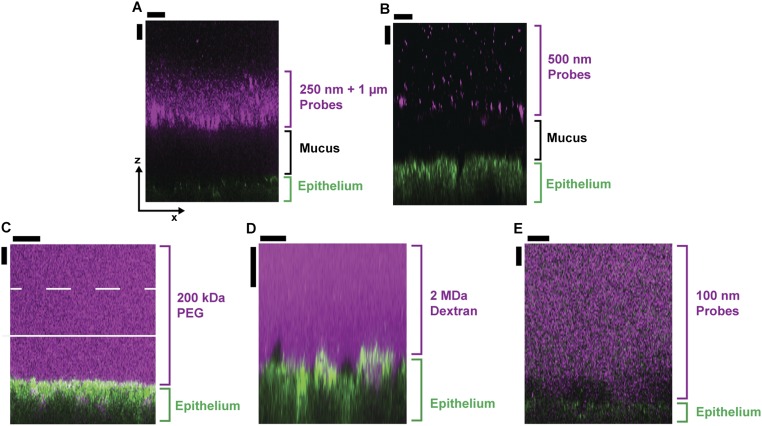
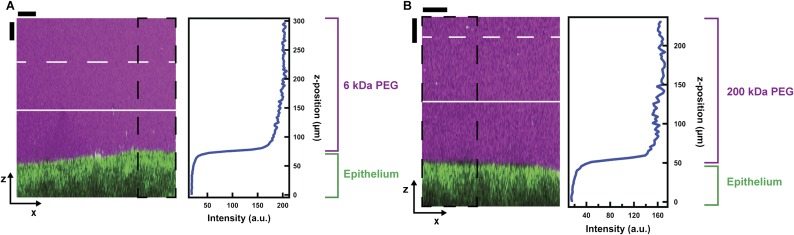
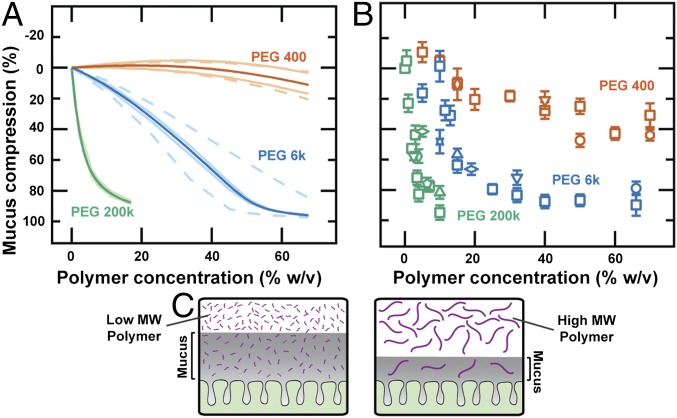
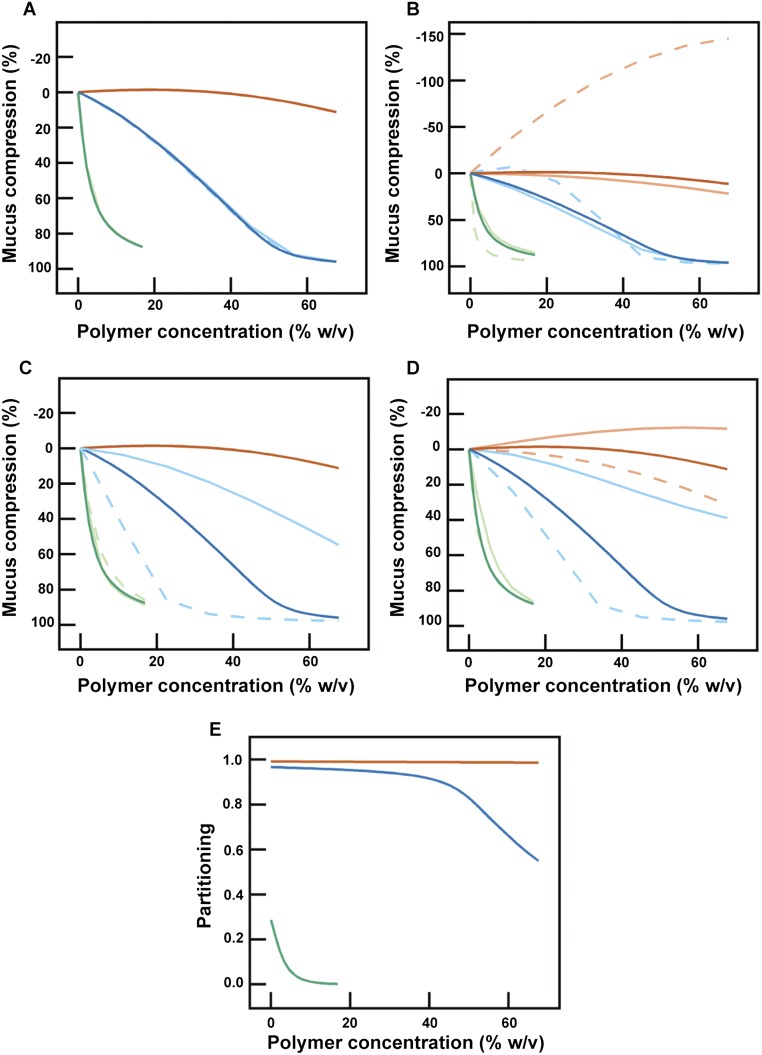
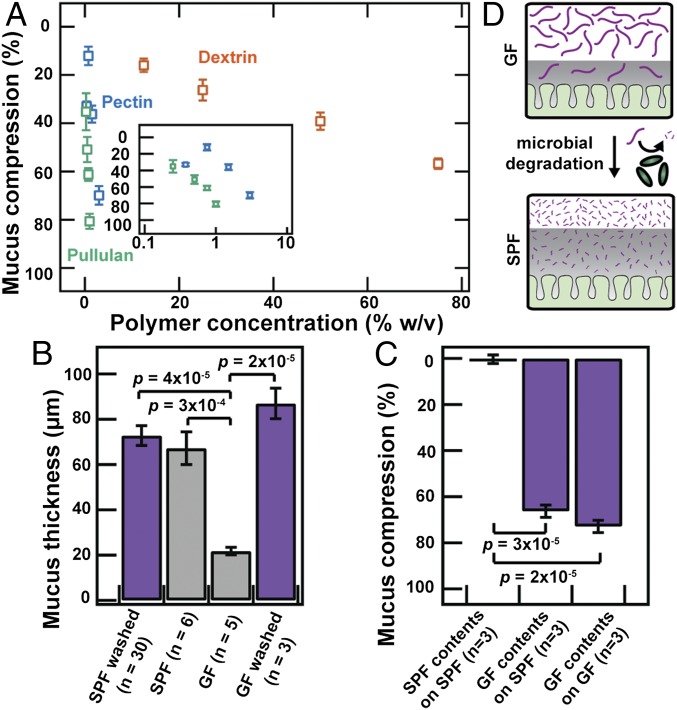
Colonic mucus is a key biological hydrogel that protects the gut from infection and physical damage and mediates host-microbe interactions and drug delivery. However, little is known about how its structure is influenced by materials it comes into contact with regularly. For example, the gut abounds in polymers such as dietary fibers or administered therapeutics, yet whether such polymers interact with the mucus hydrogel, and if so, how, remains unclear. Although several biological processes have been identified as potential regulators of mucus structure, the polymeric composition of the gut environment has been ignored. Here, we demonstrate that gut polymers do in fact regulate mucus hydrogel structure, and that polymer-mucus interactions can be described using a thermodynamic model based on Flory-Huggins solution theory. We found that both dietary and therapeutic polymers dramatically compressed murine colonic mucus ex vivo and in vivo. This behavior depended strongly on both polymer concentration and molecular weight, in agreement with the predictions of our thermodynamic model. Moreover, exposure to polymer-rich luminal fluid from germ-free mice strongly compressed the mucus hydrogel, whereas exposure to luminal fluid from specific-pathogen-free mice-whose microbiota degrade gut polymers-did not; this suggests that gut microbes modulate mucus structure by degrading polymers. These findings highlight the role of mucus as a responsive biomaterial, and reveal a mechanism of mucus restructuring that must be integrated into the design and interpretation of studies involving therapeutic polymers, dietary fibers, and fiber-degrading gut microbes.
Keywords: biomaterials; biophysics; hydrogel; mucus; polymers.
Conflict of interest statement
The authors declare no conflict of interest.
Figures
References
-
- Macfarlane S, Macfarlane GT, Cummings JH. Review article: Prebiotics in the gastrointestinal tract. Aliment Pharmacol Ther. 2006;24(5):701–714. - PubMed
-
- Hooper LV, Midtvedt T, Gordon JI. How host-microbial interactions shape the nutrient environment of the mammalian intestine. Annu Rev Nutr. 2002;22:283–307. - PubMed
-
- DiPalma JA, DeRidder PH, Orlando RC, Kolts BE, Cleveland MB. A randomized, placebo-controlled, multicenter study of the safety and efficacy of a new polyethylene glycol laxative. Am J Gastroenterol. 2000;95(2):446–450. - PubMed
-
- DiPalma JA, Brady CE., 3rd Colon cleansing for diagnostic and surgical procedures: Polyethylene glycol-electrolyte lavage solution. Am J Gastroenterol. 1989;84(9):1008–1016. - PubMed
-
- Wu L, et al. High-molecular-weight polyethylene glycol prevents lethal sepsis due to intestinal Pseudomonas aeruginosa. Gastroenterology. 2004;126(2):488–498. - PubMed
Publication types
MeSH terms
Substances
LinkOut - more resources
Full Text Sources
Other Literature Sources
