A Case of Aplasia Cutis Congenita, Type VII
- PMID: 27303163
- PMCID: PMC4904055
- DOI: 10.5021/ad.2008.20.2.70
A Case of Aplasia Cutis Congenita, Type VII
Abstract
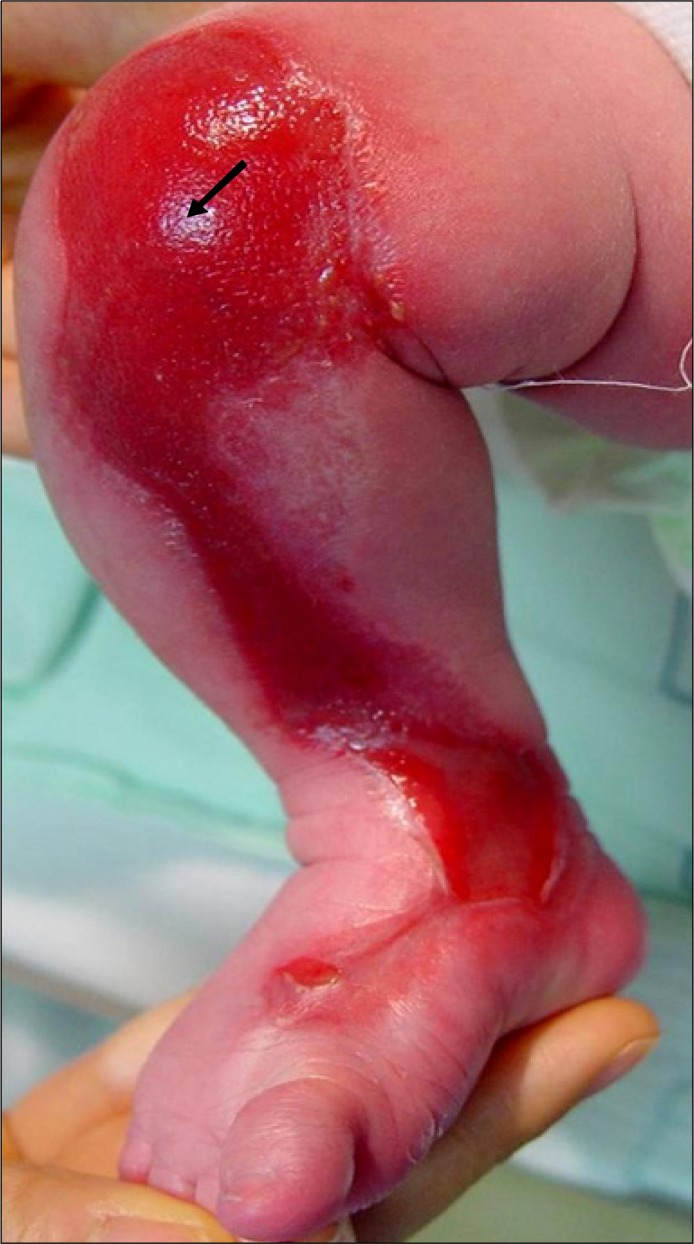
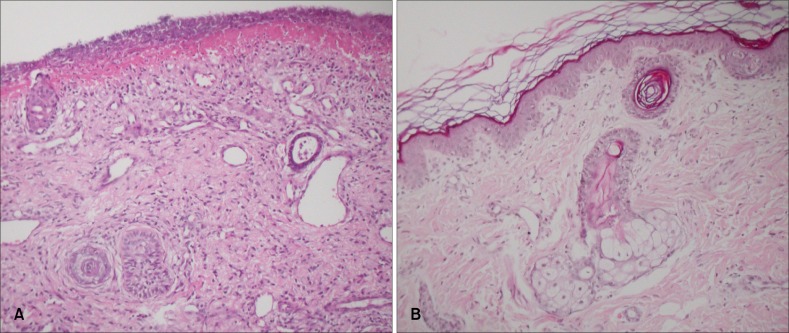
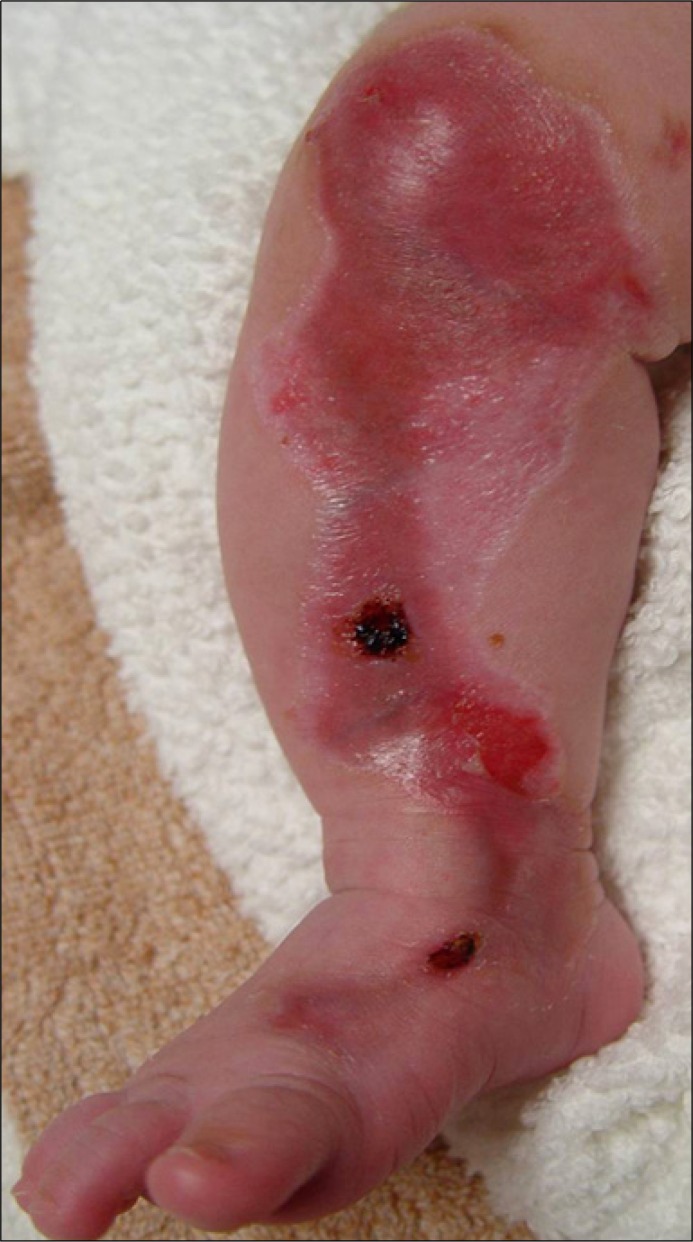
Aplasia cutis congenita (ACC) is a rare congenital defect in which localized or widespread areas of the skin are absent at birth. In the majority of cases, it is limited to the scalp especially on the vertex although other areas of the body may also be involved. Other congenital malformations can be associated with ACC. We present herein the case of a new born male with unilateral absence of skin on the extensor surface of the right lower leg. There was no associated malformation or skin disease such as blistering or nail abnormailty. According to the classification outlined by Frieden, the condition was diagnosed as type VII aplasia cutis congenita. The treatment of this large ulcer was conservative, wet dressing and prophylactic topical antibiotics. On follow up after 2 years showed that the patient was nearly cured of the ulcer and had only minimal scar formation.
Keywords: Aplasia cutis congenita; Leg; Unilateral.
Figures
References
-
- Corden M. Extrait d'une letter au sujet de trios enfants de la meme nes avee partie des extremities denuee de peau. J Med Chir Pharmacie. 1767;26:556–557. Cited from reference 2.
-
- Frieden IJ. Aplasia cutis congenital: a clinical review and proposal of classification. J Am Acad Dermatol. 1986;14:646–660. - PubMed
-
- Sybert VP. Aplasia cutis congenita: a report of 12 new families and review of the literature. Pediatr Dermatol. 1985;3:1–14. - PubMed
-
- Kelly BJ, Samolitis NJ, Xie DL, Skidmore RA. Aplasia cutis congenita of the trunk with fetus papyraceus. Pediatr Dermatol. 2002;19:326–329. - PubMed
-
- Mannino FL, Jones KL. Benirschke: Congenital skin defects in fetus papyraceus. J Pediatr. 1997;4:559–564. - PubMed
Publication types
LinkOut - more resources
Full Text Sources