


Spontaneous Subarachnoid Hemorrhage: A Systematic Review and Meta-analysis Describing the Diagnostic Accuracy of History, Physical Examination, Imaging, and Lumbar Puncture With an Exploration of Test Thresholds
- PMID: 27306497
- PMCID: PMC5018921
- DOI: 10.1111/acem.12984
Spontaneous Subarachnoid Hemorrhage: A Systematic Review and Meta-analysis Describing the Diagnostic Accuracy of History, Physical Examination, Imaging, and Lumbar Puncture With an Exploration of Test Thresholds
Abstract
Background: Spontaneous subarachnoid hemorrhage (SAH) is a rare, but serious etiology of headache. The diagnosis of SAH is especially challenging in alert, neurologically intact patients, as missed or delayed diagnosis can be catastrophic.
Objectives: The objective was to perform a diagnostic accuracy systematic review and meta-analysis of history, physical examination, cerebrospinal fluid (CSF) tests, computed tomography (CT), and clinical decision rules for spontaneous SAH. A secondary objective was to delineate probability of disease thresholds for imaging and lumbar puncture (LP).
Methods: PubMed, Embase, Scopus, and research meeting abstracts were searched up to June 2015 for studies of emergency department patients with acute headache clinically concerning for spontaneous SAH. QUADAS-2 was used to assess study quality and, when appropriate, meta-analysis was conducted using random effects models. Outcomes were sensitivity, specificity, and positive (LR+) and negative (LR-) likelihood ratios. To identify test and treatment thresholds, we employed the Pauker-Kassirer method with Bernstein test indication curves using the summary estimates of diagnostic accuracy.
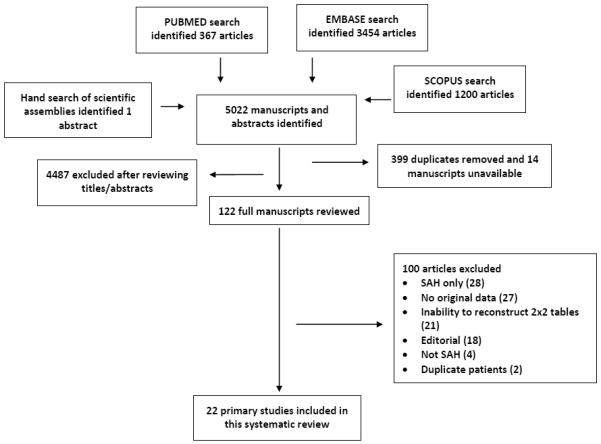
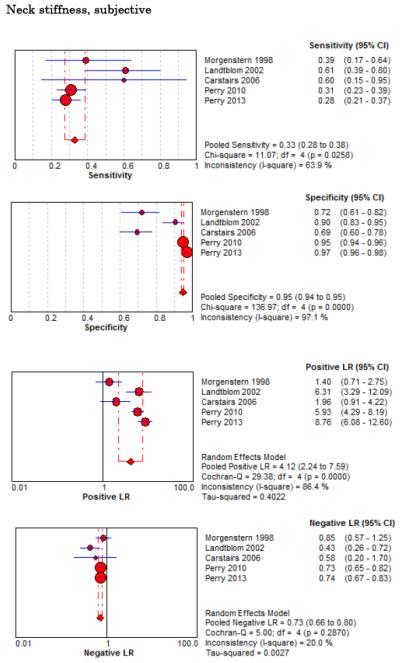
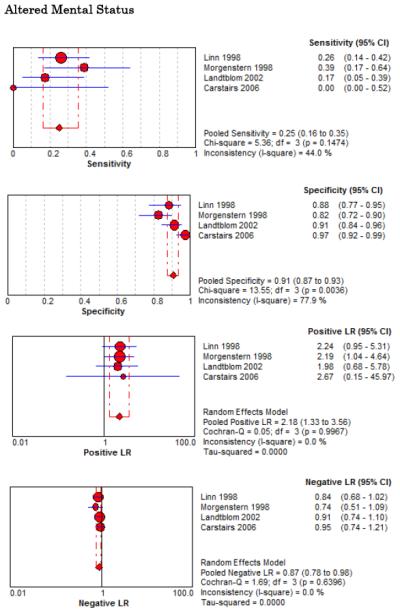
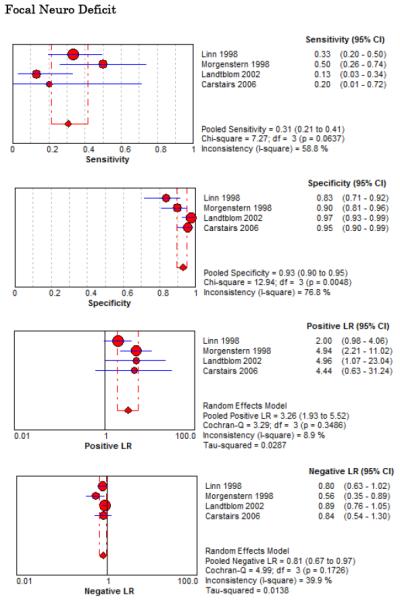
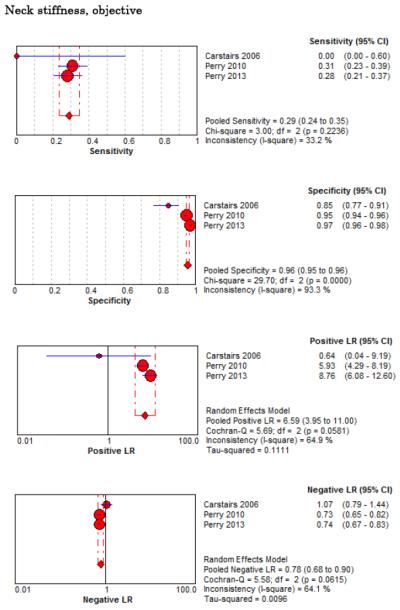
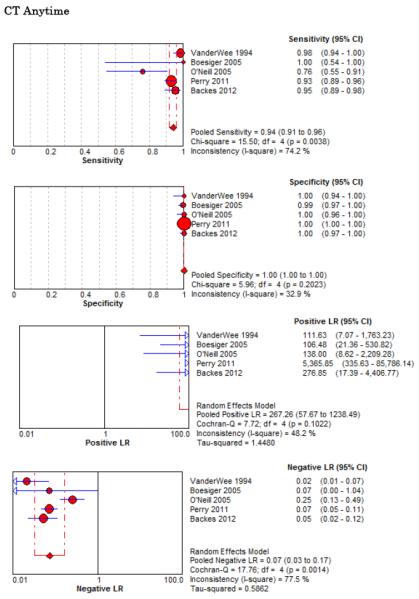
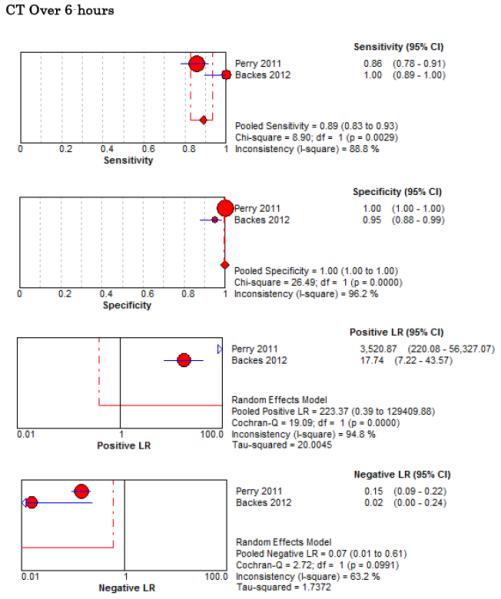
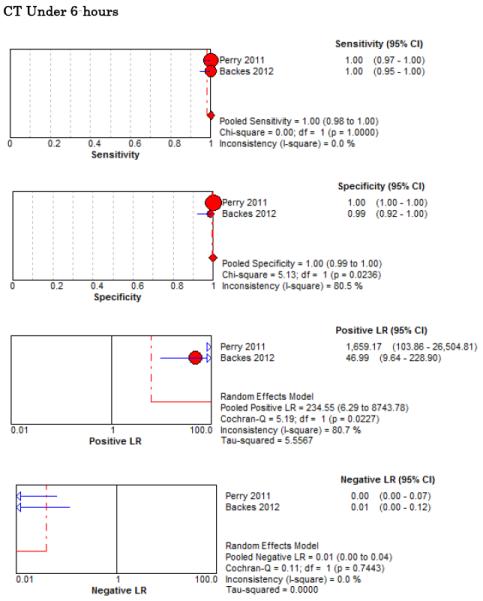
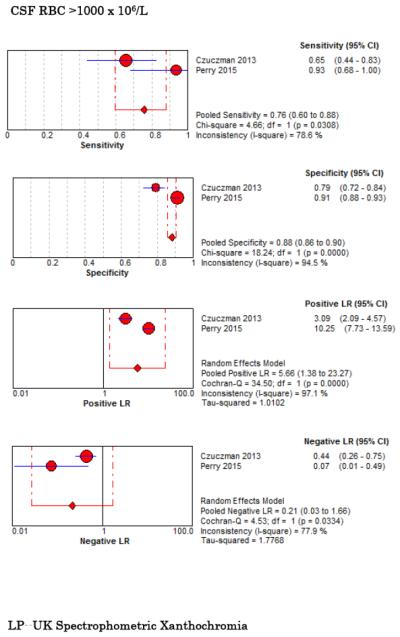
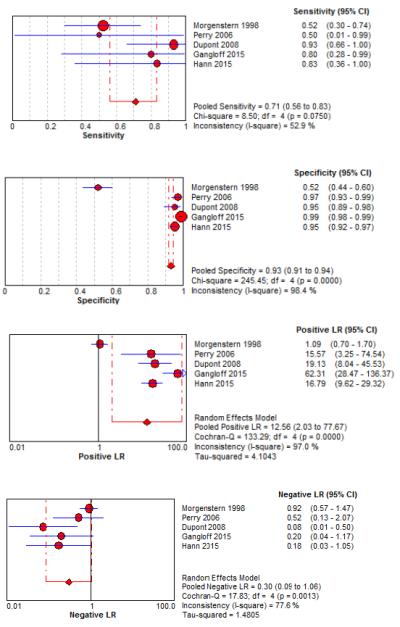
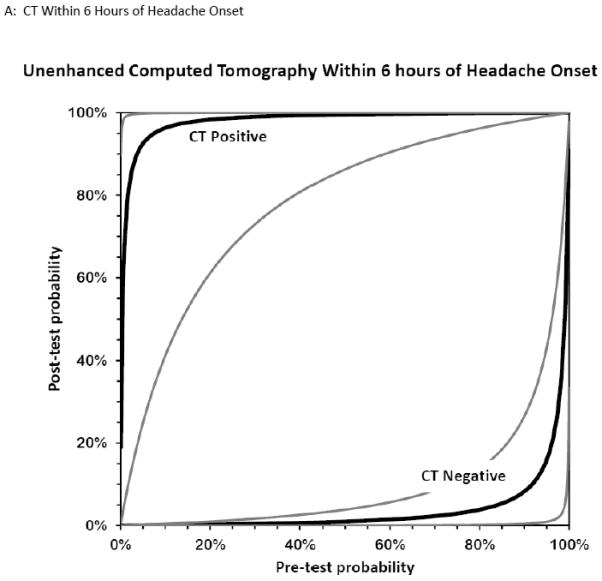
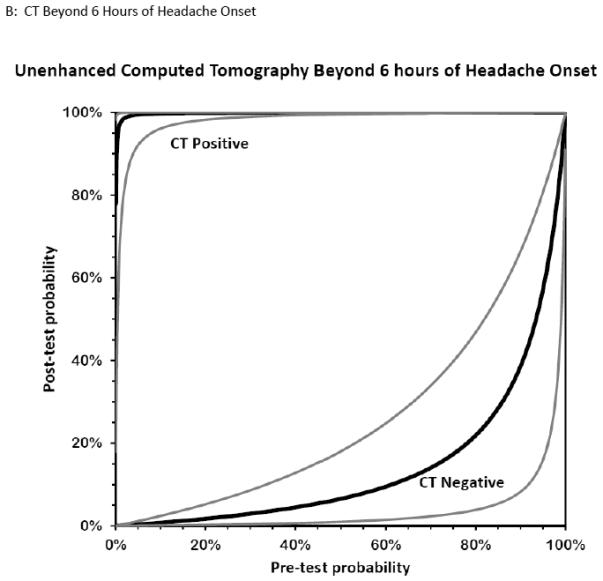
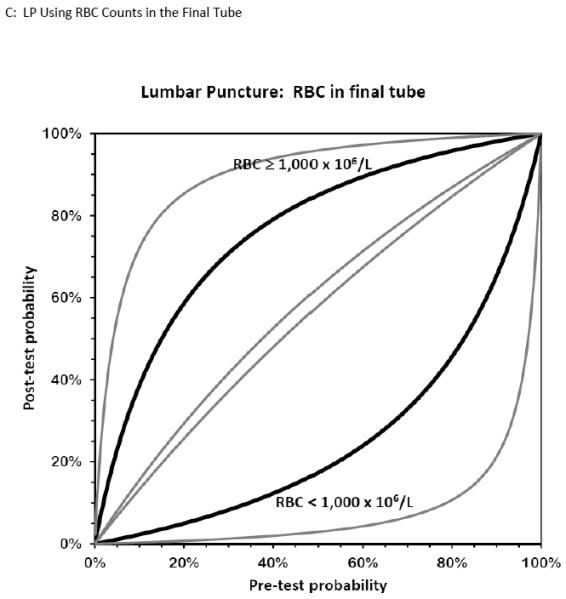
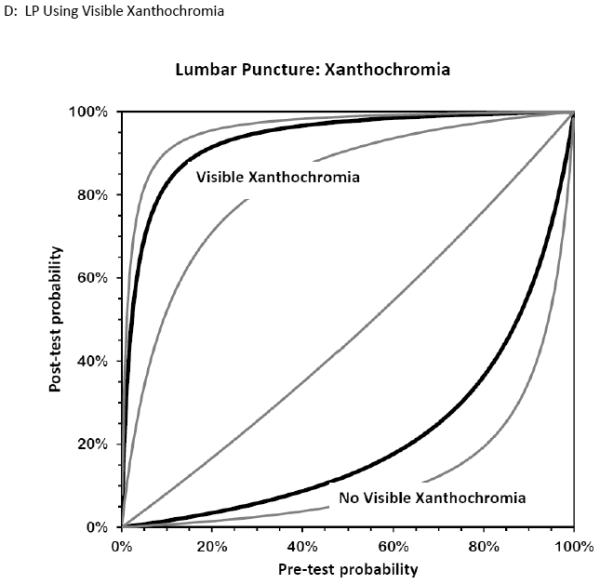
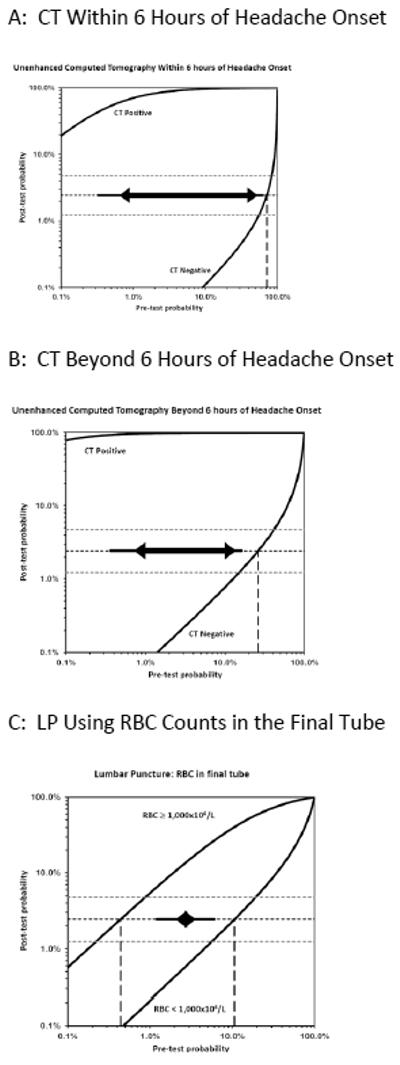
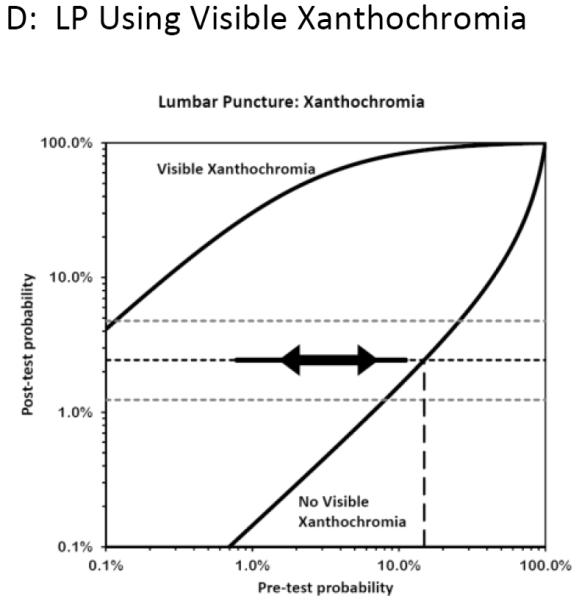
Results: A total of 5,022 publications were identified, of which 122 underwent full-text review; 22 studies were included (average SAH prevalence = 7.5%). Diagnostic studies differed in assessment of history and physical examination findings, CT technology, analytical techniques used to identify xanthochromia, and criterion standards for SAH. Study quality by QUADAS-2 was variable; however, most had a relatively low risk of biases. A history of neck pain (LR+ = 4.1; 95% confidence interval [CI] = 2.2 to 7.6) and neck stiffness on physical examination (LR+ = 6.6; 95% CI = 4.0 to 11.0) were the individual findings most strongly associated with SAH. Combinations of findings may rule out SAH, yet promising clinical decision rules await external validation. Noncontrast cranial CT within 6 hours of headache onset accurately ruled in (LR+ = 230; 95% CI = 6 to 8,700) and ruled out SAH (LR- = 0.01; 95% CI = 0 to 0.04); CT beyond 6 hours had a LR- of 0.07 (95% CI = 0.01 to 0.61). CSF analyses had lower diagnostic accuracy, whether using red blood cell (RBC) count or xanthochromia. At a threshold RBC count of 1,000 × 10(6) /L, the LR+ was 5.7 (95% CI = 1.4 to 23) and LR- was 0.21 (95% CI = 0.03 to 1.7). Using the pooled estimates of diagnostic accuracy and testing risks and benefits, we estimate that LP only benefits CT-negative patients when the pre-LP probability of SAH is on the order of 5%, which corresponds to a pre-CT probability greater than 20%.
Conclusions: Less than one in 10 headache patients concerning for SAH are ultimately diagnosed with SAH in recent studies. While certain symptoms and signs increase or decrease the likelihood of SAH, no single characteristic is sufficient to rule in or rule out SAH. Within 6 hours of symptom onset, noncontrast cranial CT is highly accurate, while a negative CT beyond 6 hours substantially reduces the likelihood of SAH. LP appears to benefit relatively few patients within a narrow pretest probability range. With improvements in CT technology and an expanding body of evidence, test thresholds for LP may become more precise, obviating the need for a post-CT LP in more acute headache patients. Existing SAH clinical decision rules await external validation, but offer the potential to identify subsets most likely to benefit from post-CT LP, angiography, or no further testing.
© 2016 by the Society for Academic Emergency Medicine.
Figures
Comment in
-
Subarachnoid Hemorrhage: A Sharp Needle in a Haystack.Acad Emerg Med. 2016 Sep;23(9):1077-9. doi: 10.1111/acem.13023. Epub 2016 Sep 6. Acad Emerg Med. 2016. PMID: 27276674 No abstract available.
References
-
- Edlow JA, Panagos PD, Godwin SA, Thomas TL, Decker WW, American College of Emergency P Clinical policy: critical issues in the evaluation and management of adult patients presenting to the emergency department with acute headache. Ann Emerg Med. 2008 Oct;52(4):407–436. - PubMed
-
- Landtblom AM, Fridriksson S, Boivie J, Hillman J, Johansson G, Johansson I. Sudden onset headache: a prospective study of features, incidence and causes. Cephalagia. 2002 Jun;22(5):354–360. - PubMed
-
- Delasobera BE, Osborn SR, Davis JE. Thunderclap headache with orgasm: a case of basilar artery dissection associated with sexual intercourse. J Emerg Med. 2012 Jul;43(1):e43–e47. - PubMed
-
- Imperato J, Burstein J, Edlow JA. Benign exertional headache. Ann Emerg Med. 2003 Jan;41(1):98–103. - PubMed
-
- Dodick DW, Wijdicks EF. Pituitary apoplexy presenting as a thunderclap headache. Neurology. 1998 May;50(5):1510–1511. - PubMed
Publication types
MeSH terms
Grants and funding
LinkOut - more resources
Full Text Sources
Other Literature Sources
Medical
