


Naïve CD8(+) T cell derived tumor-specific cytotoxic effectors as a potential remedy for overcoming TGF-β immunosuppression in the tumor microenvironment
- PMID: 27306834
- PMCID: PMC4910083
- DOI: 10.1038/srep28208
Naïve CD8(+) T cell derived tumor-specific cytotoxic effectors as a potential remedy for overcoming TGF-β immunosuppression in the tumor microenvironment
Abstract
Despite of the potential implications for cancer immunotherapy, conventional approaches using in vitro expanded CD8(+) T cells have suboptimal outcomes, mostly due to loss of functionality from cellular exhaustion. We therefore investigated the phenotypic and functional differences among in vitro activated CD8(+) T cells of three different sources, namely naïve (NTeff), memory (MTeff) and tumor-infiltrating lymphocytes (TILeff) from human and mice, to better understand mechanisms behind potent effector functions and potential for overcoming current limitations. In line with the greater proliferation activity and longer telomere lengths of NTeff populations, cells of naïve origin exhibited significantly less amounts of T cell exhaustion markers than those of MTeff and TILeff, and moreover, acquired distinct expression patterns of memory-promoting transcription factors, T-bet and Eomes, induced in a rapid and sustainable manner. NTeff cells appeared to have lower expression of Foxp1 and were refractory to apoptosis upon TGF-β conditioning, implying better survival potential and resistance to tumor-induced immune suppression. Of CD8(+) T cell pools activated to tumor-specific CTLs, naïve cell generated effectors possessed the most potent cytotoxic activity, validating implications for use in rational design of adoptive immunotherapy.
Figures
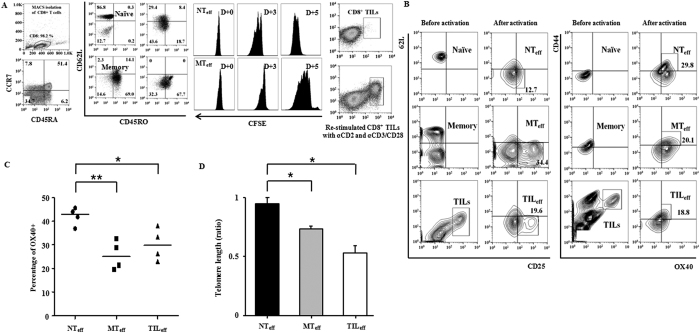
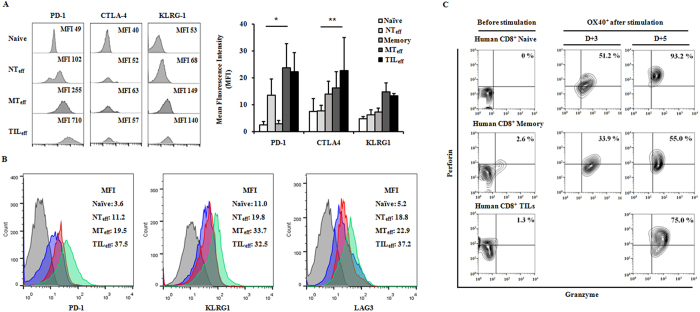
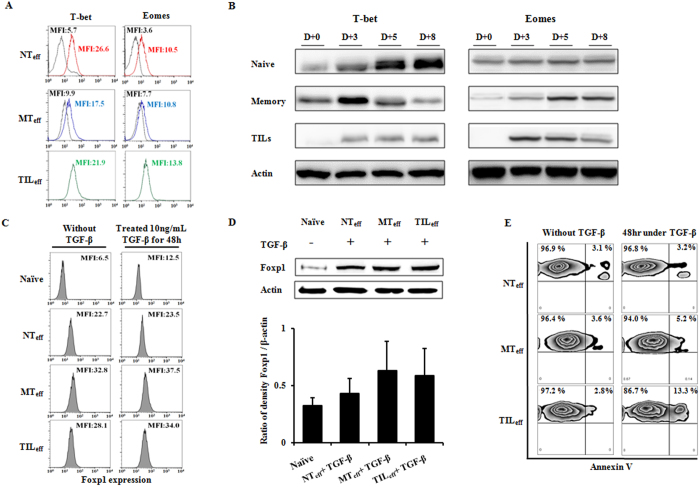
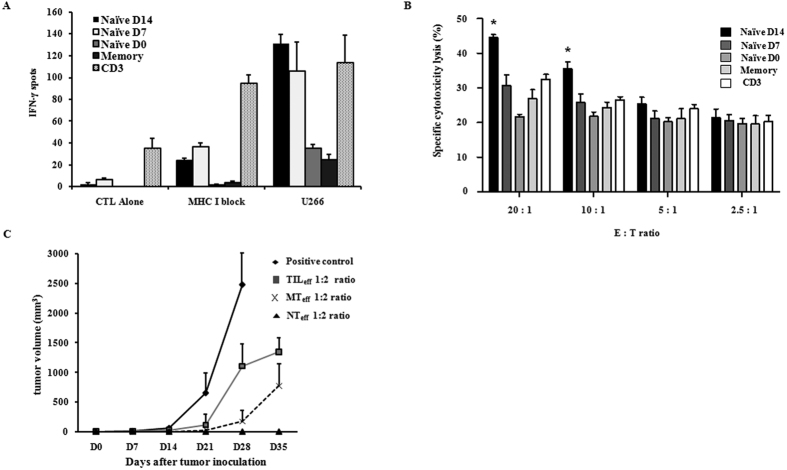
 L) were inoculated subcutaneously in B6 recipient mice in a 1:2 ratio of target tumor to effector cells. All B6 mice injected with TILeff had positive mass (1 cm3) formation after 28 days, whereas tumor growth was suppressed in NTeff harboring B6 mice for longer than 35 days. All data are representative of three independent experiments and shown as mean ± SD.
References
-
- Perret R. & Ronchese F. Memory T cells in cancer immunotherapy: which CD8+ T-cell population provides the best protection against tumours? Tissue Antigens 72, 187–194 (2008). - PubMed
-
- Wherry E. J. T cell exhaustion. Nature Immunology 12, 492–499 (2011). - PubMed
-
- Caja F. & Vannucci L. TGFβ: A player on multiple fronts in the tumor microenvironment. J Immunotoxicol. 12, 300–7 (2015). - PubMed
Publication types
MeSH terms
Substances
LinkOut - more resources
Full Text Sources
Other Literature Sources
Molecular Biology Databases
Research Materials
