


Impact of injection therapy on retinal patients with diabetic macular edema or retinal vein occlusion
- PMID: 27307696
- PMCID: PMC4888735
- DOI: 10.2147/OPTH.S100168
Impact of injection therapy on retinal patients with diabetic macular edema or retinal vein occlusion
Abstract
Purpose: An important factor in the choice of therapy is the impact it has on the patient's quality of life. This survey aimed to understand treatment burden, treatment-related anxiety and worry, and practical issues such as appointment attendance and work absence in patients receiving injection therapy for diabetic macular edema (DME) or retinal vein occlusion (RVO).
Patients and methods: A European sample of 131 retinal patients completed a detailed questionnaire to elucidate the impact of injection therapy on individuals with DME or RVO.
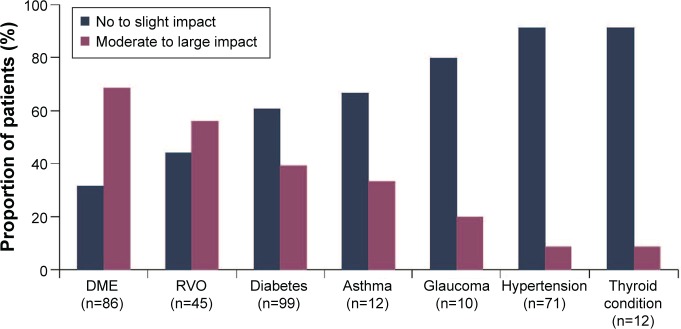
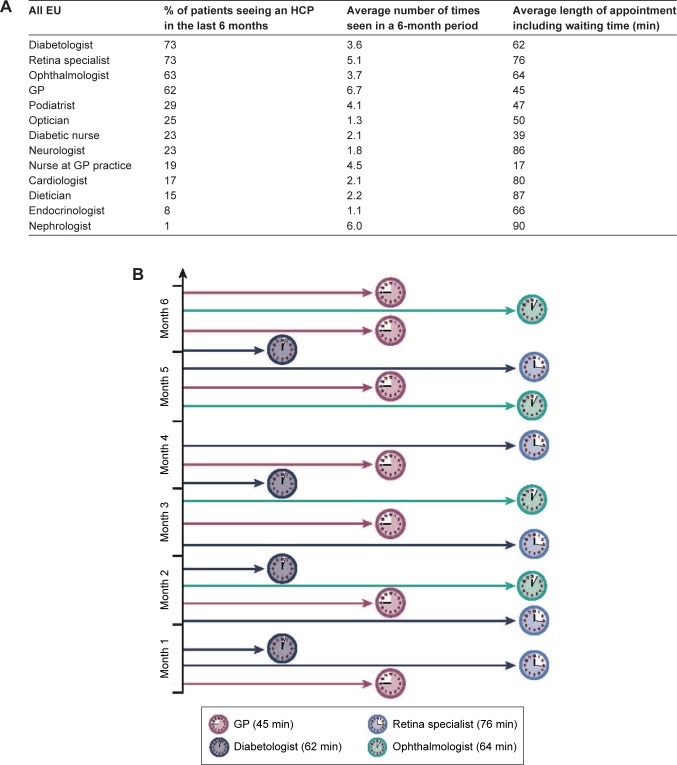
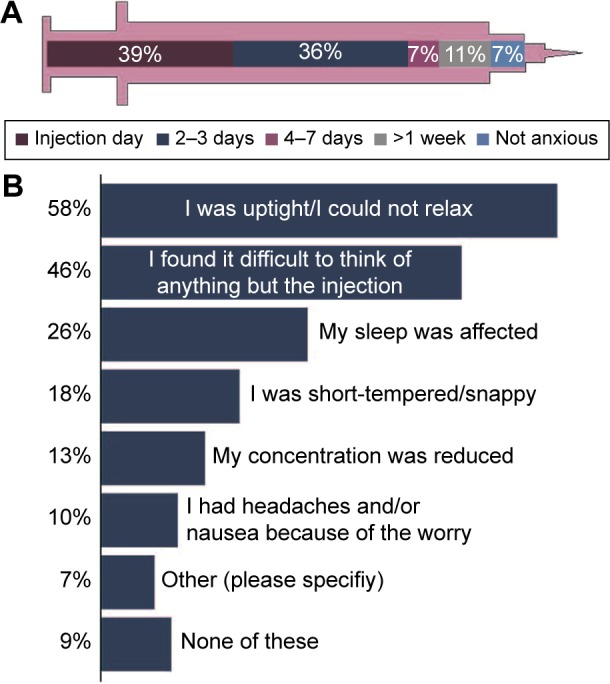
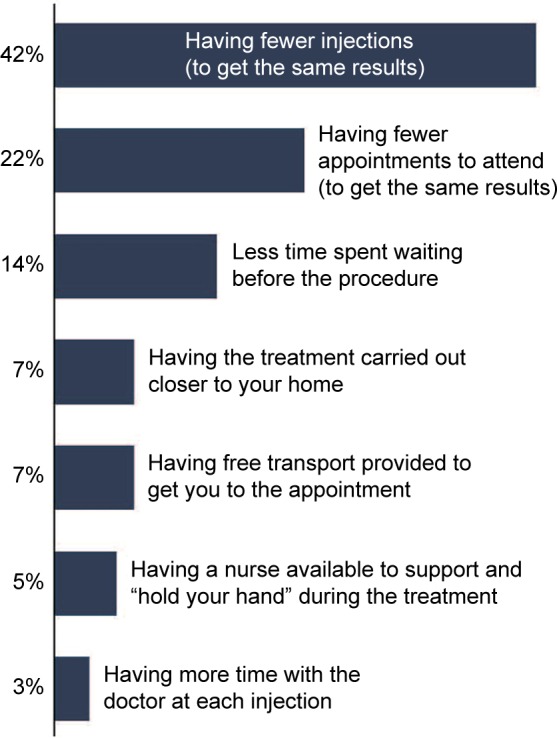
Results: RVO and DME greatly impact a patient's quality of life. An intensive injection regimen and the requirements for multiple hospital visits place a large practical burden on the patient. Each intravitreal injection appointment (including travel time) was reported to take an average of 4.5 hours, with a total appointment burden over 6 months of 13.5 hours and 20 hours for RVO and DME patients, respectively. This creates a significant burden on patient time and may make appointment attendance difficult. Indeed, 53% of working patients needed to take at least 1 day off work per appointment and 71% of patients required a carer's assistance at the time of the injection appointment, ~6.3 hours per injection. In addition to practical issues, three-quarters of patients reported experiencing anxiety about their most recent injection treatment, with 54% of patients reporting that they were anxious for at least 2 days prior to the injection. Patients' most desired improvement to their treatment regimen was to have fewer injections and to require fewer appointments, to achieve the same visual results.
Conclusion: Patients' quality of life is clearly very affected by having to manage an intensive intravitreal injection regimen, with a considerable treatment burden having a large negative effect. Reducing the appointment burden to achieve the same visual outcomes and the provision of additional support for patients to attend appointments would greatly benefit those receiving intravitreal injection therapies for DME and RVO.
Keywords: DME; RVO; burden; intravitreal; quality of life; questionnaire; retina.
Figures
References
-
- Minassian DC, Owens DR, Reidy A. Prevalence of diabetic macular oedema and related health and social care resource use in England. Br J Ophthalmol. 2012;96:345–349. - PubMed
-
- International Diabetes Federation [webpage on the Internet] IDF Diabetes Atlas. 6th ed. 2013. [Accessed March 8, 2016]. [cited May, 2015]. Available from: http://www.idf.org/diabetesatlas.
-
- Ding J, Wong TY. Current epidemiology of diabetic retinopathy and diabetic macular oedema. Curr Diab Rep. 2012;12:346–354. - PubMed
-
- Royal College of Ophthalmologists . Guidelines for Retinal Vein Occlusion. London: Royal College of Ophthalmologists; 2015.
LinkOut - more resources
Full Text Sources
Other Literature Sources
