


Comparison of Complications and Efficacy of NIPPV and Nasal CPAP in Preterm Infants With RDS
- PMID: 27307960
- PMCID: PMC4904342
- DOI: 10.5812/ijp.2352
Comparison of Complications and Efficacy of NIPPV and Nasal CPAP in Preterm Infants With RDS
Abstract
Background: Respiratory distress syndrome (RDS) is one of the most common diseases in neonates admitted to NICU. For this important cause of morbidity and mortality in preterm neonates, several treatment methods have been used. To date, non-invasive methods are preferred due to fewer complications.
Objectives: Herein, two non-invasive methods of ventilation support are compared: NCPAP vs. NIPPV.
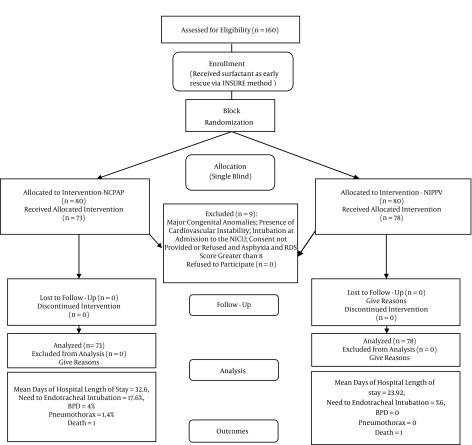
Patients and methods: This is a randomized clinical trial. Premature neonates with less than 34 weeks gestation, suffering from RDS entered the study, including 151 newborns admitted to Vali-Asr NICU during 2012-2013. Most of these patients received surfactant as early rescue via INSURE method and then randomly divided into two NCPAP (73 neonates) and NIPPV (78 neonates) groups. Both early and late complications are compared including extubation failure, hospital length of stay, GI perforation, apnea, intraventricular hemorrhage (IVH) and mortality rate.
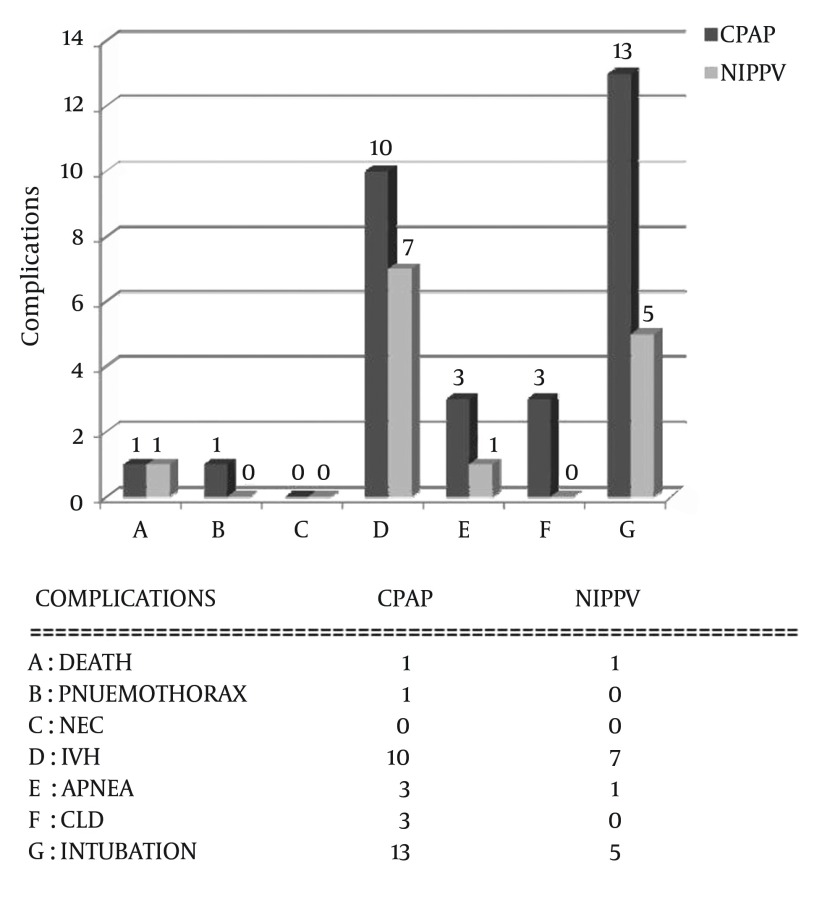
Results: The need for re-intubation was 6% in NIPPV vs. 17.6% in NCPAP group, which was statistically significant (P = 0.031). The length of hospital stay was 23.92 ± 13.5 vs. 32.61 ± 21.07 days in NIPPV and NCPAP groups, respectively (P = 0.002). Chronic lung disease (CLD) was reported to be 4% in NCPAP and 0% in NIPPV groups (P = 0.035). The most common complication occurred in both groups was traumatization of nasal skin and mucosa, all of which fully recovered. Gastrointestinal perforation was not reported in either group.
Conclusions: This study reveals the hospital length of stay, re-intubation and BPD rates are significantly declined in neonates receiving NIPPV as the treatment for RDS.
Keywords: NCPAP; NIPPV; Prematurity; Respiratory Distress Syndrome.
Figures
References
-
- Dunn MS, Reilly MC. Approaches to the initial respiratory management of preterm neonates. Paediatr Respir Rev. 2003;4(1):2–8. - PubMed
-
- Gittermann MK, Fusch C, Gittermann AR, Regazzoni BM, Moessinger AC. Early nasal continuous positive airway pressure treatment reduces the need for intubation in very low birth weight infants. Eur J Pediatr. 1997;156(5):384–8. - PubMed
-
- De Klerk AM, De Klerk RK. Nasal continuous positive airway pressure and outcomes of preterm infants. J Paediatr Child Health. 2001;37(2):161–7. - PubMed
LinkOut - more resources
Full Text Sources
Other Literature Sources