


New strategies to maximize therapeutic opportunities for NAMPT inhibitors in oncology
- PMID: 27308565
- PMCID: PMC4845202
- DOI: 10.1080/23723556.2015.1052180
New strategies to maximize therapeutic opportunities for NAMPT inhibitors in oncology
Abstract
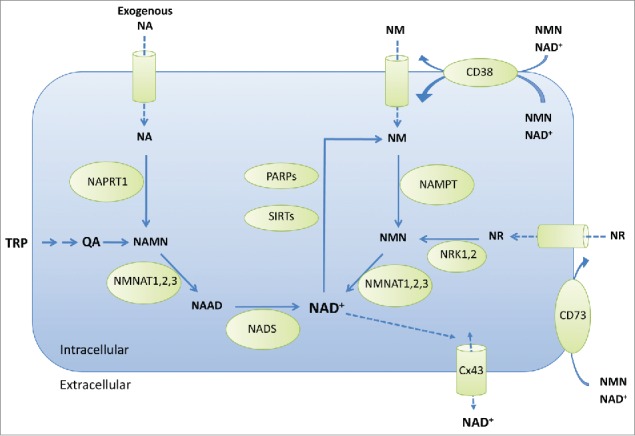
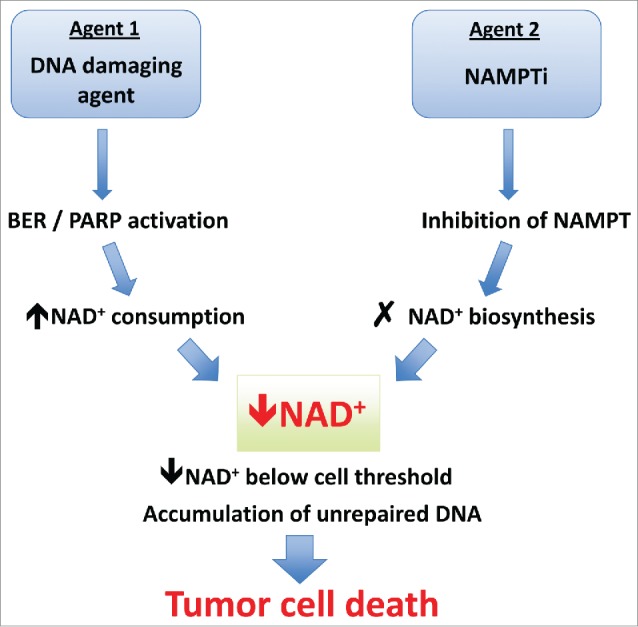
Nicotinamide phosphoribosyltransferase (NAMPT) is crucial for nicotinamide adenine dinucleotide (NAD(+)) biosynthesis in mammalian cells. NAMPT inhibitors represent multifunctional anticancer agents that act on NAD(+) metabolism to shut down glycolysis, nucleotide biosynthesis, and ATP generation and act indirectly as PARP and sirtuin inhibitors. The selectivity of NAMPT inhibitors preys on the increased metabolic requirements to replenish NAD(+) in cancer cells. Although initial clinical studies with NAMPT inhibitors did not achieve single-agent therapeutic levels before dose-limiting toxicities were reached, a new understanding of alternative rescue pathways and a biomarker that can be used to select patients provides new opportunities to widen the therapeutic window and achieve efficacious doses in the clinic. Recent work has also illustrated the potential for drug combination strategies to further enhance the therapeutic opportunities. This review summarizes recent discoveries in NAD(+)/NAMPT inhibitor biology in the context of exploiting this new knowledge to optimize the clinical outcomes for this promising new class of agents.
Keywords: DNA damage; NAMPT; NAPRT1; PARP; niacin.
Figures
References
-
- Chiarugi A, Dolle C, Felici R, Ziegler M. The NAD metabolome–a key determinant of cancer cell biology. Nat Rev Cancer 2012; 12:741-52; PMID:23018234; http://dx.doi.org/ 10.1038/nrc3340 - DOI - PubMed
-
- Houtkooper RH, Canto C, Wanders RJ, Auwerx J. The secret life of NAD+: an old metabolite controlling new metabolic signaling pathways. Endocr Rev 2010; 31:194-223; PMID:20007326; http://dx.doi.org/ 10.1210/er.2009-0026 - DOI - PMC - PubMed
-
- Magni G, Orsomando G, Raffelli N, Ruggieri S. Enzymology of mammalian NAD metabolism in health and disease. Front Biosci 2008; 13:6135-54; PMID:18508649; http://dx.doi.org/ 10.2741/3143 - DOI - PubMed
-
- Dolle C, Skoge RH, Vanlinden MR, Ziegler M. NAD biosynthesis in humans–enzymes, metabolites and therapeutic aspects. Curr Top Med Chem 2013; 13:2907-17; PMID:24171775; http://dx.doi.org/ 10.2174/15680266113136660206 - DOI - PubMed
-
- Revollo JR, Grimm AA, Imai S. The NAD biosynthesis pathway mediated by nicotinamide phosphoribosyltransferase regulates Sir2 activity in mammalian cells. J Biol Chem 2004; 279:50754-63; PMID:15381699; http://dx.doi.org/ 10.1074/jbc.M408388200 - DOI - PubMed
Publication types
LinkOut - more resources
Full Text Sources
Other Literature Sources
Miscellaneous
