


Hydrogen Sulfide Is an Antiviral and Antiinflammatory Endogenous Gasotransmitter in the Airways. Role in Respiratory Syncytial Virus Infection
- PMID: 27314446
- PMCID: PMC5105180
- DOI: 10.1165/rcmb.2015-0385OC
Hydrogen Sulfide Is an Antiviral and Antiinflammatory Endogenous Gasotransmitter in the Airways. Role in Respiratory Syncytial Virus Infection
Abstract
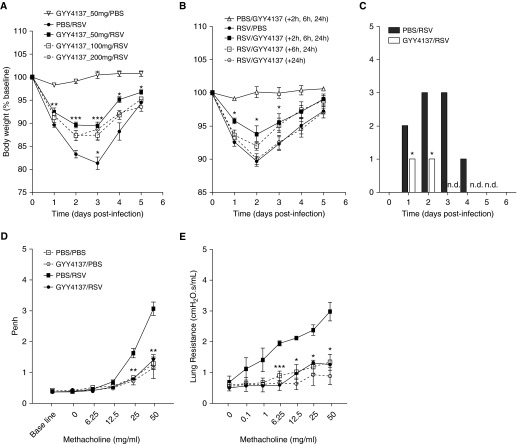
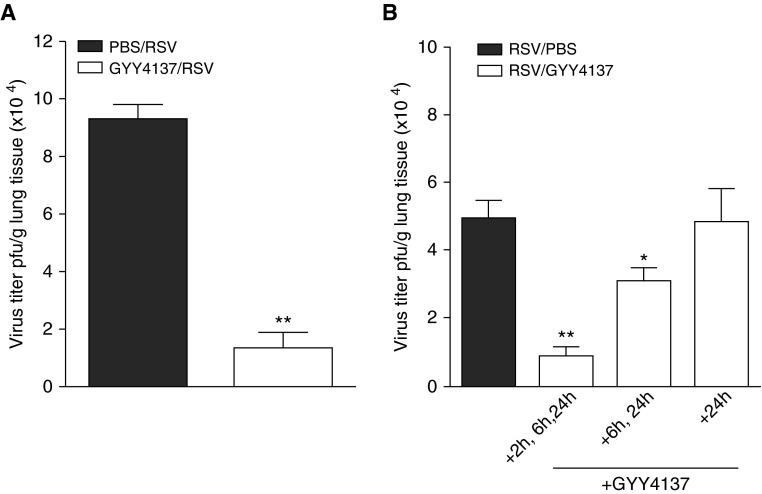
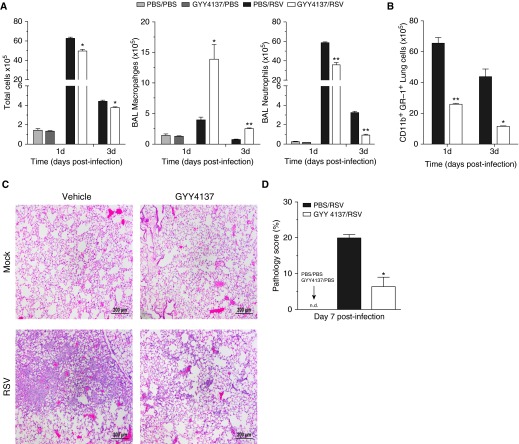
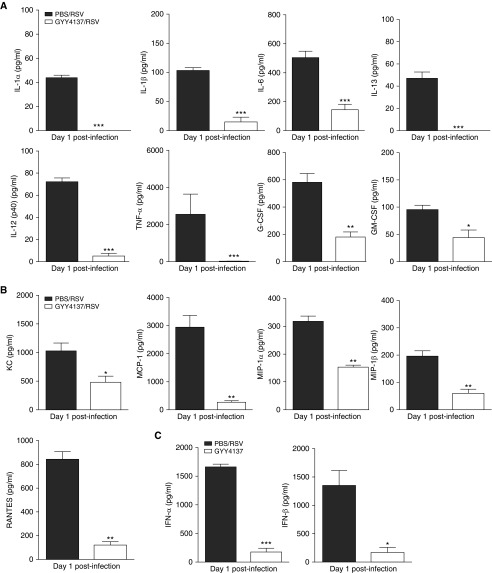
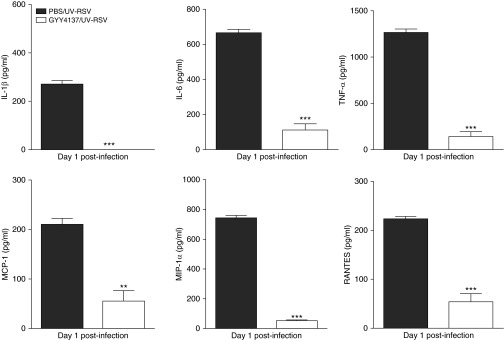
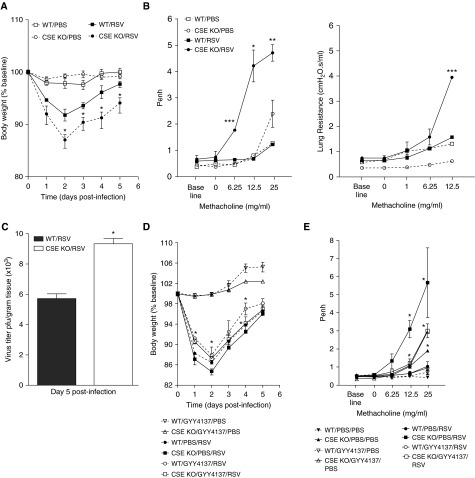
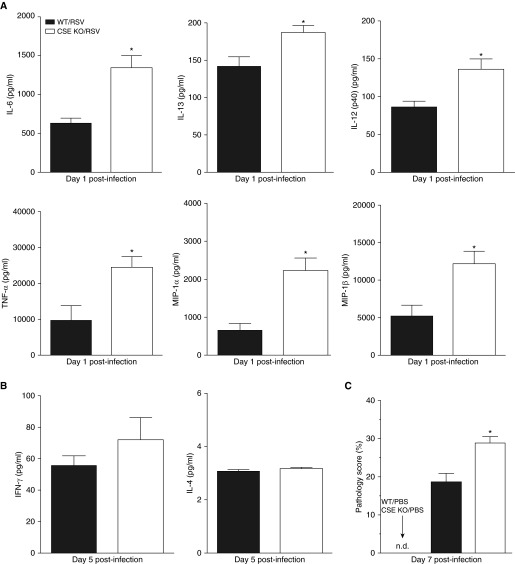
Hydrogen sulfide (H2S) is an endogenous gaseous transmitter whose role in the pathophysiology of several lung diseases has been increasingly appreciated. Our recent studies in vitro have shown, we believe for the first time, that H2S has an important antiviral and antiinflammatory activity in respiratory syncytial virus (RSV) infection, the leading cause of bronchiolitis and viral pneumonia in children. Our objective was to evaluate the therapeutic potential of GYY4137, a novel slow-releasing H2S donor, for the prevention and treatment of RSV-induced lung disease, as well as to investigate the role of endogenous H2S in a mouse model of RSV infection. Ten- to 12-week-old BALB/c mice treated with GYY4137, or C57BL/6J mice genetically deficient in the cystathionine γ-lyase enzyme, the major H2S-generating enzyme in the lung, were infected with RSV and assessed for viral replication, clinical disease, airway hyperresponsiveness, and inflammatory responses. Our results show that intranasal delivery of GYY4137 to RSV-infected mice significantly reduced viral replication and markedly improved clinical disease parameters and pulmonary dysfunction compared with the results in vehicle-treated control mice. The protective effect of the H2S donor was associated with a significant reduction of viral-induced proinflammatory mediators and lung cellular infiltrates. Furthermore, cystathionine γ-lyase-deficient mice showed significantly enhanced RSV-induced lung disease and viral replication compared with wild-type animals. Overall, our results indicate that H2S exerts a novel antiviral and antiinflammatory activity in the context of RSV infection and represent a potential novel pharmacological approach for ameliorating virus-induced lung disease.
Keywords: airway hyperresponsiveness; antiviral; cystathionine γ-lyase; lung injury; paramyxovirus.
Figures
References
-
- Chen Y, Wang R. The message in the air: hydrogen sulfide metabolism in chronic respiratory diseases. Respir Physiol Neurobiol. 2012;184:130–138. - PubMed
-
- Wang P, Zhang G, Wondimu T, Ross B, Wang R. Hydrogen sulfide and asthma. Exp Physiol. 2011;96:847–852. - PubMed
-
- Wang R. Physiological implications of hydrogen sulfide: a whiff exploration that blossomed. Physiol Rev. 2012;92:791–896. - PubMed
-
- Wang R. Signaling pathways for the vascular effects of hydrogen sulfide. Curr Opin Nephrol Hypertens. 2011;20:107–112. - PubMed
-
- Li L, Whiteman M, Guan YY, Neo KL, Cheng Y, Lee SW, Zhao Y, Baskar R, Tan CH, Moore PK. Characterization of a novel, water-soluble hydrogen sulfide-releasing molecule (GYY4137): new insights into the biology of hydrogen sulfide. Circulation. 2008;117:2351–2360. - PubMed
MeSH terms
Substances
Grants and funding
LinkOut - more resources
Full Text Sources
Other Literature Sources
Medical
