


Ancillary contributions of heterologous biotin protein ligase and carbonic anhydrase for CO2 incorporation into 3-hydroxypropionate by metabolically engineered Pyrococcus furiosus
- PMID: 27315782
- PMCID: PMC5137508
- DOI: 10.1002/bit.26033
Ancillary contributions of heterologous biotin protein ligase and carbonic anhydrase for CO2 incorporation into 3-hydroxypropionate by metabolically engineered Pyrococcus furiosus
Abstract
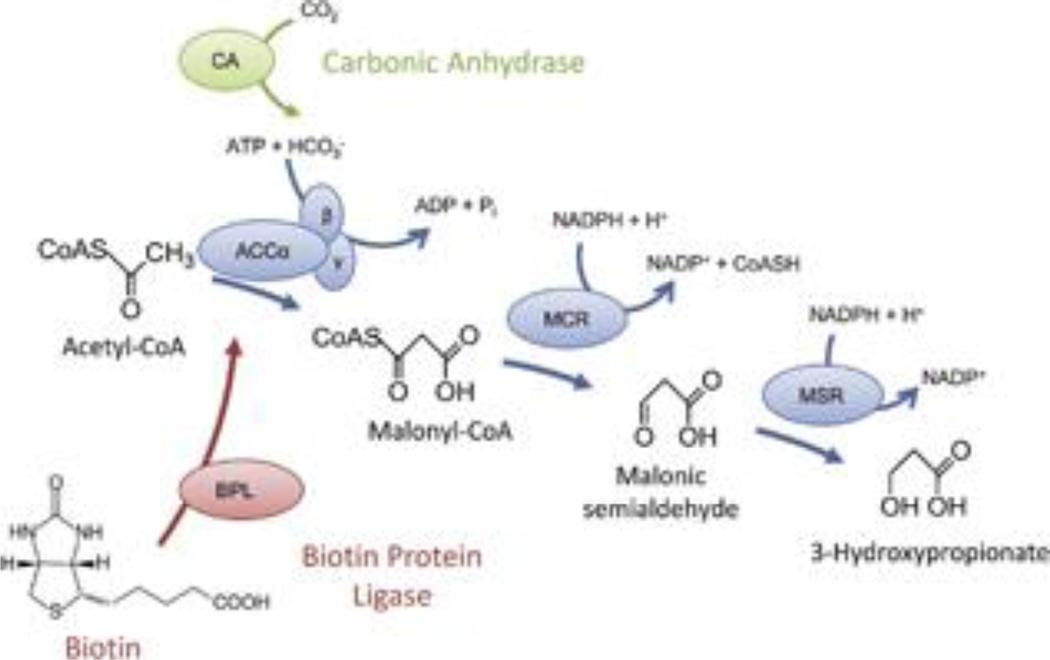
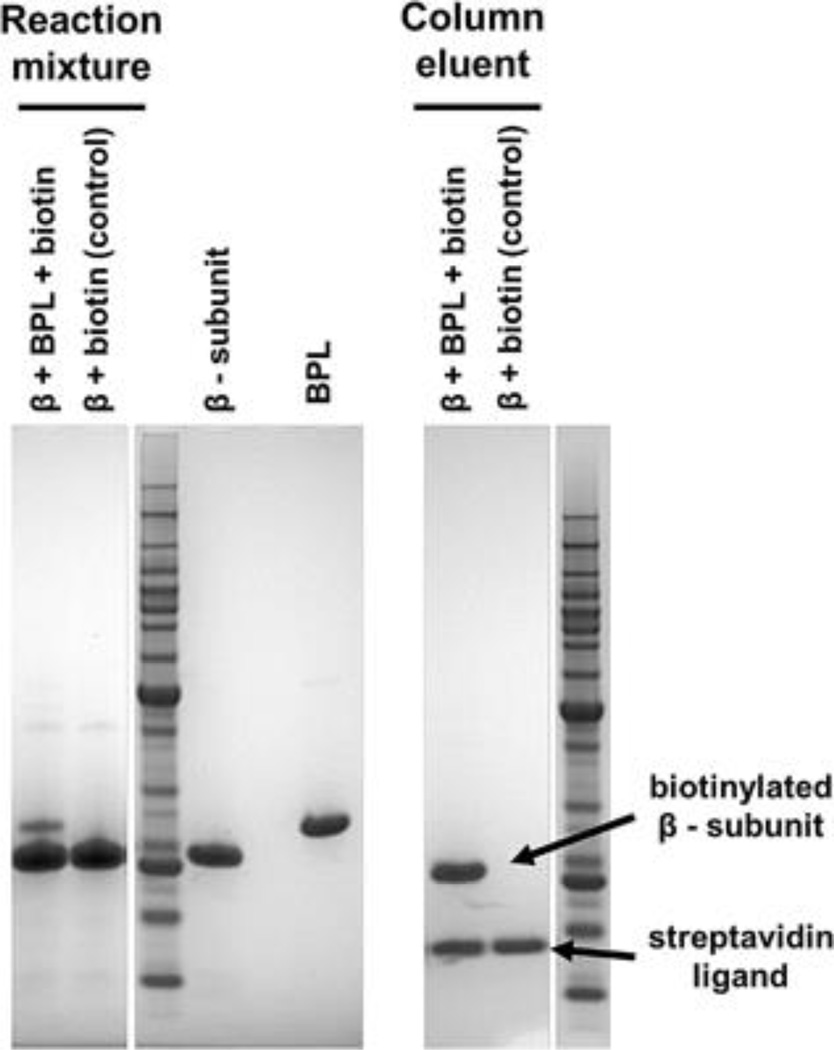
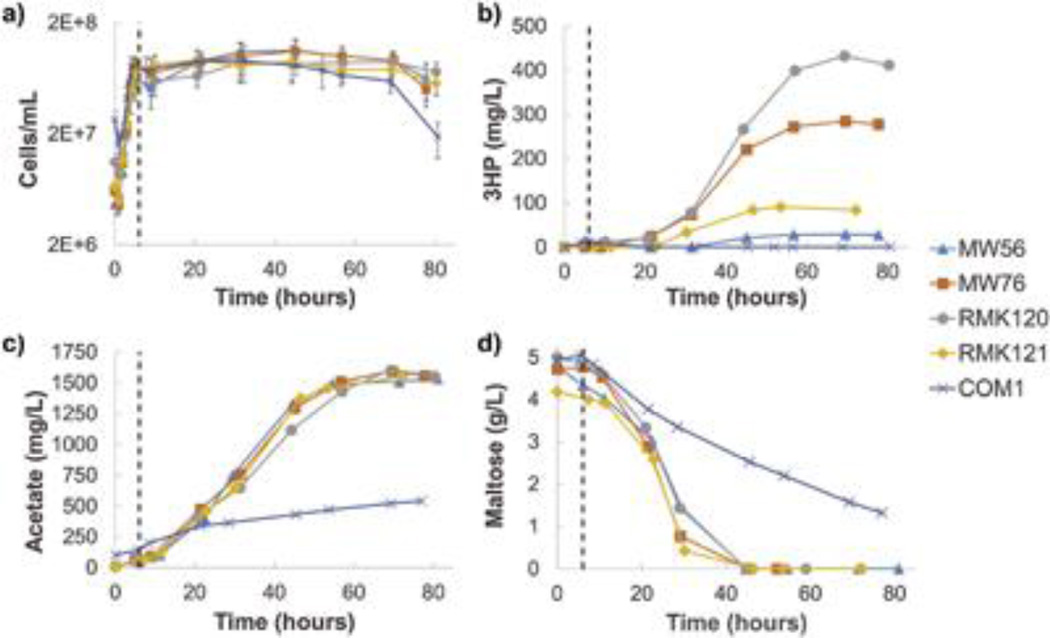
Acetyl-Coenzyme A carboxylase (ACC), malonyl-CoA reductase (MCR), and malonic semialdehyde reductase (MRS) convert HCO3- and acetyl-CoA into 3-hydroxypropionate (3HP) in the 3-hydroxypropionate/4-hydroxybutyrate carbon fixation cycle resident in the extremely thermoacidophilic archaeon Metallosphaera sedula. These three enzymes, when introduced into the hyperthermophilic archaeon Pyrococcus furiosus, enable production of 3HP from maltose and CO2 . Sub-optimal function of ACC was hypothesized to be limiting for production of 3HP, so accessory enzymes carbonic anhydrase (CA) and biotin protein ligase (BPL) from M. sedula were produced recombinantly in Escherichia coli to assess their function. P. furiosus lacks a native, functional CA, while the M. sedula CA (Msed_0390) has a specific activity comparable to other microbial versions of this enzyme. M. sedula BPL (Msed_2010) was shown to biotinylate the β-subunit (biotin carboxyl carrier protein) of the ACC in vitro. Since the native BPLs in E. coli and P. furiosus may not adequately biotinylate the M. sedula ACC, the carboxylase was produced in P. furiosus by co-expression with the M. sedula BPL. The baseline production strain, containing only the ACC, MCR, and MSR, grown in a CO2 -sparged bioreactor reached titers of approximately 40 mg/L 3HP. Strains in which either the CA or BPL accessory enzyme from M. sedula was added to the pathway resulted in improved titers, 120 or 370 mg/L, respectively. The addition of both M. sedula CA and BPL, however, yielded intermediate titers of 3HP (240 mg/L), indicating that the effects of CA and BPL on the engineered 3HP pathway were not additive, possible reasons for which are discussed. While further efforts to improve 3HP production by regulating gene dosage, improving carbon flux and optimizing bioreactor operation are needed, these results illustrate the ancillary benefits of accessory enzymes for incorporating CO2 into 3HP production in metabolically engineered P. furiosus, and hint at the important role that CA and BPL likely play in the native 3HP/4HB pathway in M. sedula. Biotechnol. Bioeng. 2016;113: 2652-2660. © 2016 Wiley Periodicals, Inc.
Keywords: 3-hydroxypropionate; Metallosphaera sedula; Pyrococcus furiosus; biotin protein ligase; carbon dioxide; carboxylase.
© 2016 Wiley Periodicals, Inc.
Figures

References
-
- Alber BE, Colangelo CM, Dong J, Stålhandske CM, Baird TT, Tu C, Fierke CA, Silverman DN, Scott RA, Ferry JG. Kinetic and spectroscopic characterization of the gamma-carbonic anhydrase from the methanoarchaeon Methanosarcina thermophila. Biochemistry. 1999;38(40):13119–13128. - PubMed
Publication types
MeSH terms
Substances
Grants and funding
LinkOut - more resources
Full Text Sources
Other Literature Sources
