


Differences in symptom expression between unipolar and bipolar spectrum depression: Results from a nationally representative sample using item response theory (IRT)
- PMID: 27318596
- PMCID: PMC6447294
- DOI: 10.1016/j.jad.2016.06.042
Differences in symptom expression between unipolar and bipolar spectrum depression: Results from a nationally representative sample using item response theory (IRT)
Abstract
Background: The inclusion of subsyndromal forms of bipolarity in the fifth edition of the DSM has major implications for the way in which we approach the diagnosis of individuals with depressive symptoms. The aim of the present study was to use methods based on item response theory (IRT) to examine whether, when equating for levels of depression severity, there are differences in the likelihood of reporting DSM-IV symptoms of major depressive episode (MDE) between subjects with and without a lifetime history of manic symptoms.
Methods: We conducted these analyses using a large, nationally representative sample from the USA (n=34,653), the second wave of the National Epidemiologic Survey on Alcohol and Related Conditions.
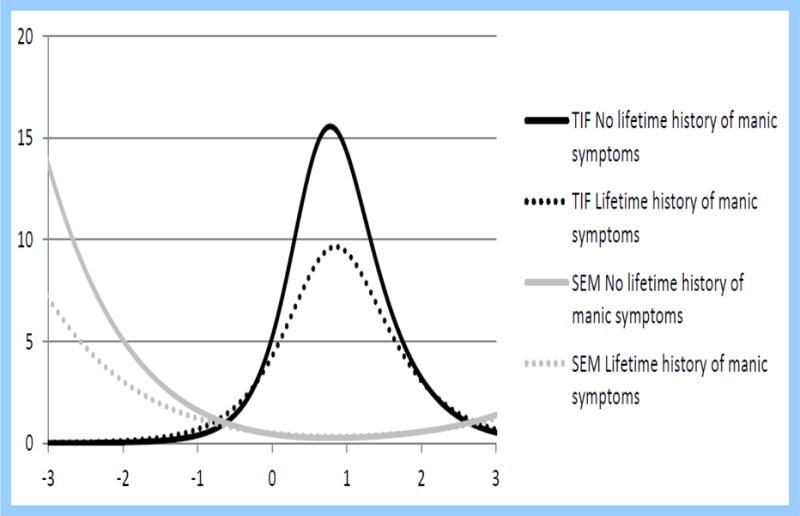
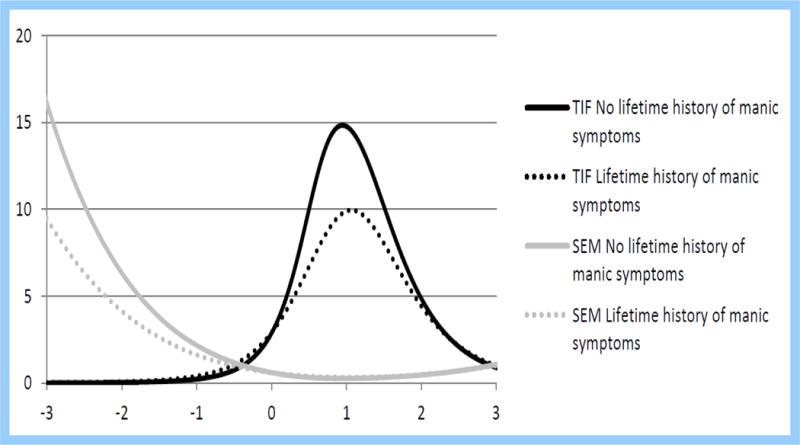
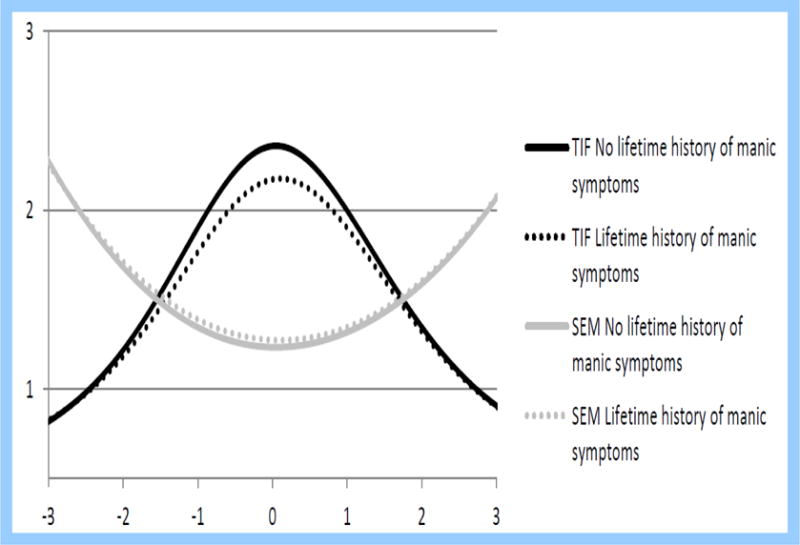
Results: The items sadness, appetite disturbance and psychomotor symptoms were better indicators of depression severity in participants without a lifetime history of manic symptoms, in a clinically meaningful way. DSM-IV symptoms of MDE were substantially less informative in participants with a lifetime history of manic symptoms than in those without such history.
Limitations: Clinical information on DSM-IV depressive and manic symptoms was based on retrospective self-report
Conclusions: The clinical presentation of depressive symptoms may substantially differ in individuals with and without a lifetime history of manic symptoms. These findings alert to the possibility of atypical symptomatic presentations among individuals with co-occurring symptoms or disorders and highlight the importance of continued research into specific pathophysiology differentiating unipolar and bipolar depression.
Keywords: Bipolar; Depression; Differential item functioning; Item response theory; Symptoms; Unipolar.
Copyright © 2016 Elsevier B.V. All rights reserved.
Figures
References
-
- Asparouhov T. Sampling weights in latent variable modeling. Struct Equ Modeling. 2005;12:411–434.
-
- Aggen SH, Neale MC, Kendler KS. DSM criteria for major depression: evaluating symptom patterns using latent-trait item response models. Psychol Med. 2005;35:475–487. - PubMed
-
- Akiskal HS, Benazzi F. Atypical depression: a variant of bipolar II or a bridge between unipolar and bipolar II? J Affect Disord. 2005;84:209–217. - PubMed
-
- Alonso A, Molenberghs G. Surrogate marker evaluation from an information theory perspective. Biometrics. 2007;63:180–186. - PubMed
-
- American Psychiatric Association. Diagnostic and statistical manual of mental disorders. 5th. Arlington: VAPP; 2013.
MeSH terms
Grants and funding
LinkOut - more resources
Full Text Sources
Other Literature Sources
Medical
