


Synthesis of Bioactive 2-(Arylamino)thiazolo[5,4-f]-quinazolin-9-ones via the Hügershoff Reaction or Cu- Catalyzed Intramolecular C-S Bond Formation
- PMID: 27322235
- PMCID: PMC6272913
- DOI: 10.3390/molecules21060794
Synthesis of Bioactive 2-(Arylamino)thiazolo[5,4-f]-quinazolin-9-ones via the Hügershoff Reaction or Cu- Catalyzed Intramolecular C-S Bond Formation
Abstract
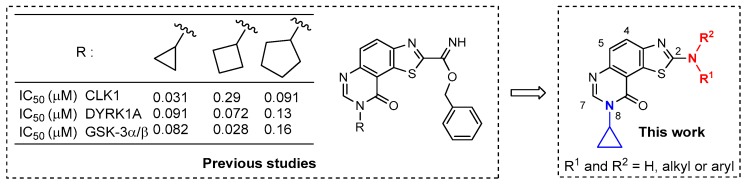
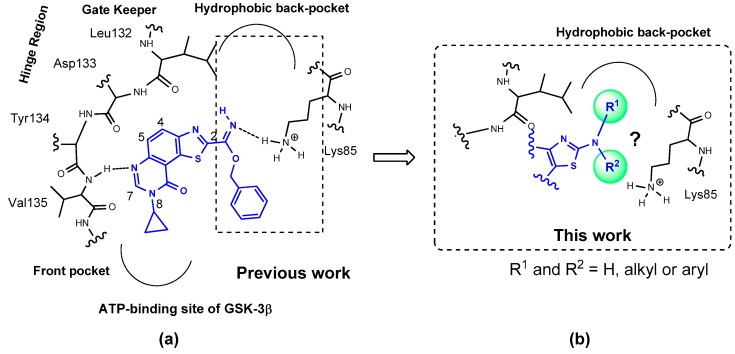
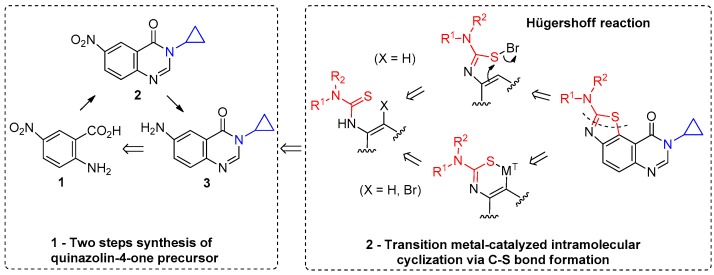
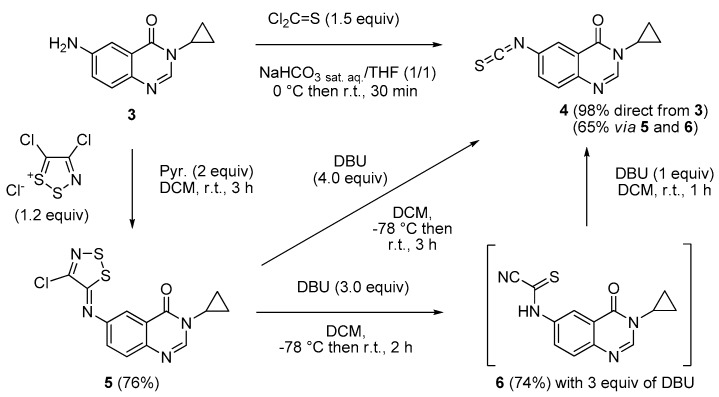
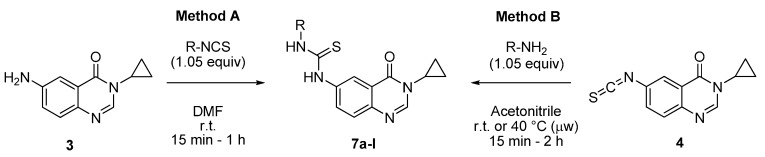
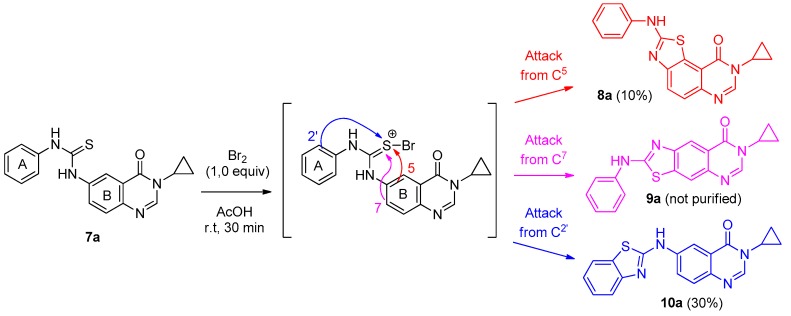
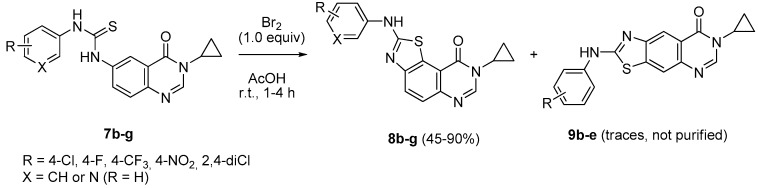
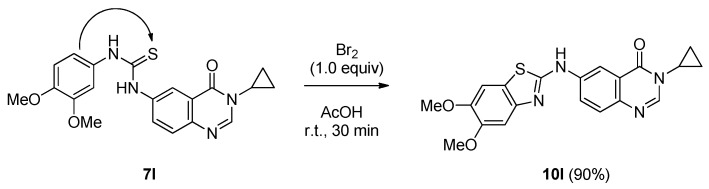
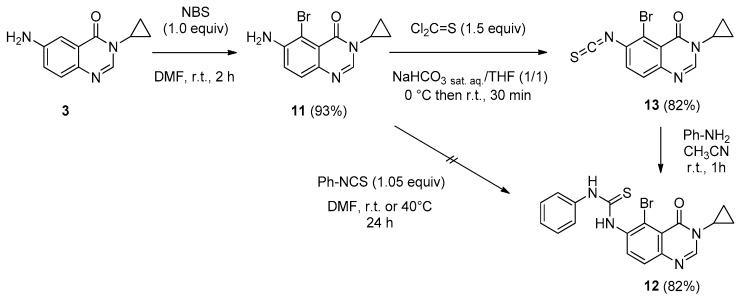
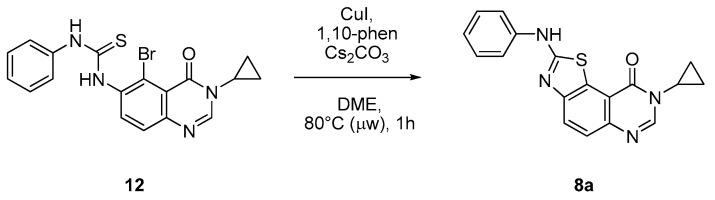
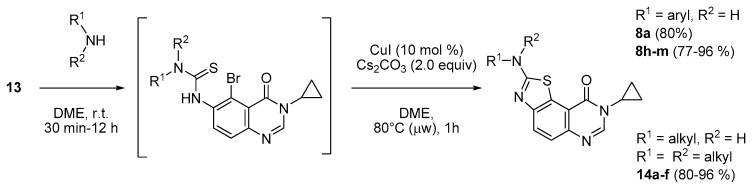
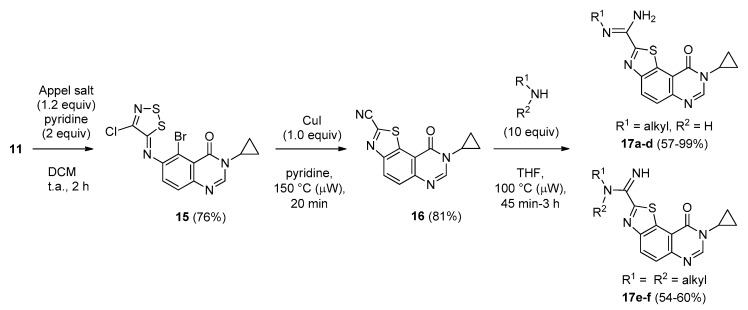
A library of thirty eight novel thiazolo[5,4-f]quinazolin-9(8H)-one derivatives (series 8, 10, 14 and 17) was prepared via the Hügershoff reaction and a Cu catalyzed intramolecular C-S bond formation, helped by microwave-assisted technology when required. The efficient multistep synthesis of the key 6-amino-3-cyclopropylquinazolin-4(3H)-one (3) has been reinvestigated and performed on a multigram scale from the starting 5-nitroanthranilic acid. The inhibitory potency of the final products was evaluated against five kinases involved in Alzheimer's disease and showed that some molecules of the 17 series described in this paper are particularly promising for the development of novel multi-target inhibitors of kinases.
Keywords: CDK5; CK1; CLK1; DYRK1A; GSK-3; Hügershoff reaction; microwave-assisted synthesis; protein kinases; thiazolo[5,4-f]quinazolin-9(8H)-ones.
Conflict of interest statement
The authors declare no conflict of interest.
Figures

References
-
- Wells G., Bradshaw T.D., Diana P., Seaton A., Shi D.-F., Westwell A.D., Stevens M.F.G. Antitumor benzothiazoles. Part 10. The synthesis and antitumor activity of benzothiazole substituted quinol derivatives. Bioorg. Med. Chem. Lett. 2000;10:513–515. - PubMed
-
- Molinski T.F. Marine pyridoacridine alkaloids: structure, synthesis, and biological chemistry. Chem. Rev. 1993;93:1825–1838. doi: 10.1021/cr00021a009. - DOI
-
- Gunawardana G.P., Kohmoto S., Gunasekara S.P., McConnel O.J., Koehn F.E. Dercitine, a new biologically active acridine alkaloid from a deep water marine sponge, Dercitus sp. J. Am. Chem. Soc. 1988;110:4856–4858. doi: 10.1021/ja00222a071. - DOI
-
- Gunawardana G.P., Kohmoto S., Burres N.S. New cytotoxic acridine alkaloids from two deep water marine sponges of the family Pachastrellidae. Tetrahedron Lett. 1989;30:4359–4362. doi: 10.1016/S0040-4039(00)99360-2. - DOI
MeSH terms
Substances
LinkOut - more resources
Full Text Sources
Other Literature Sources
Medical
Research Materials
