


Validating accelerometry as a measure of physical activity and energy expenditure in chronic stroke
- PMID: 27322733
- PMCID: PMC5125839
- DOI: 10.1080/10749357.2016.1183866
Validating accelerometry as a measure of physical activity and energy expenditure in chronic stroke
Abstract
Background: Accelerometers can objectively measure steps taken per day in individuals without gait deficits, but accelerometers also have the ability to estimate frequency, intensity, and duration of physical activity. However, thresholds to distinguish varying levels of activity intensity using the Actical brand accelerometer are standardized only for the general population and may underestimate intensity in stroke.
Objective: To derive Actical activity count thresholds specific to stroke disability for use in more accurately gauging time spent at differing activity levels.
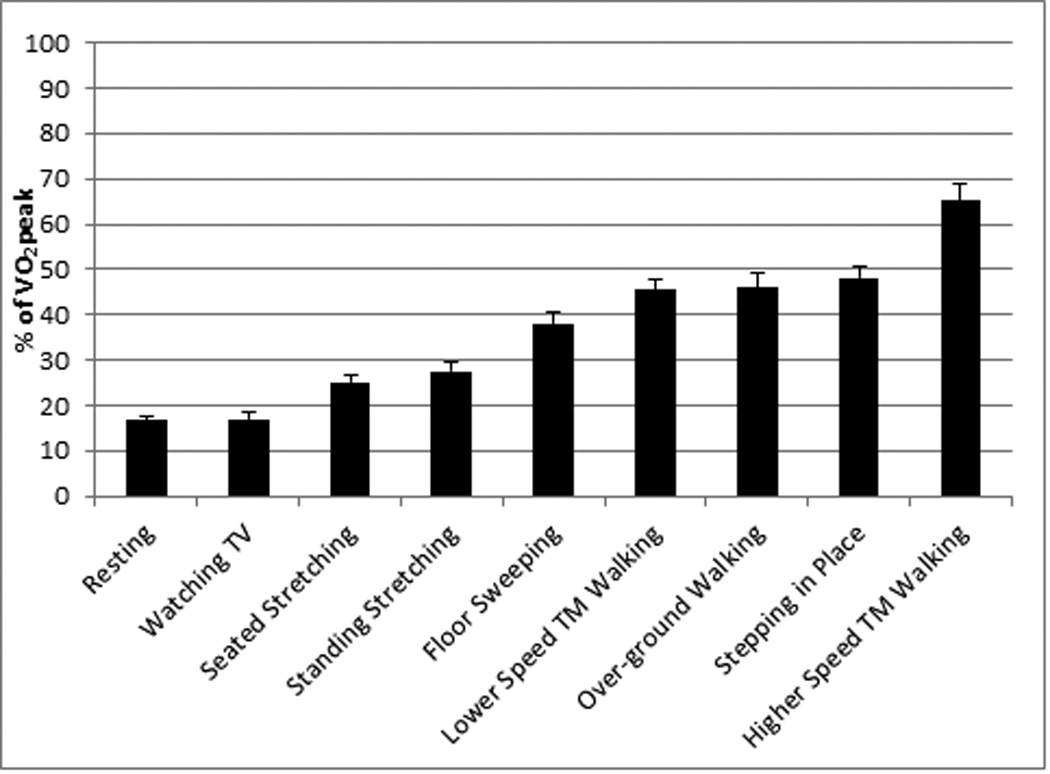
Methods: Men (n = 18) and women (n = 10) with chronic hemiparetic gait (4 ± 2 years latency, 43% Caucasian, 56% African-American, ages of 47-83 years, BMI 19-48 kg/m2) participated in the study. Actical accelerometers were placed on the non-paretic hip to obtain accelerometry counts during eight activities of varying intensity: (1) watching TV; (2) seated stretching; (3) standing stretching; (4) floor sweeping; (5) stepping in place; (6) over-ground walking; (7) lower speed treadmill walking (1.0 mph at 4% incline); and (8) higher speed treadmill walking (2.0 mph at 4% incline). Simultaneous portable monitoring (Cosmed K4b2) enabled quantification of energy cost for each activity in metabolic equivalents (METs, or oxygen consumption in multiples of resting level). Measurements were obtained for 10 min of standard rest and 5 min during each of the eight activities.
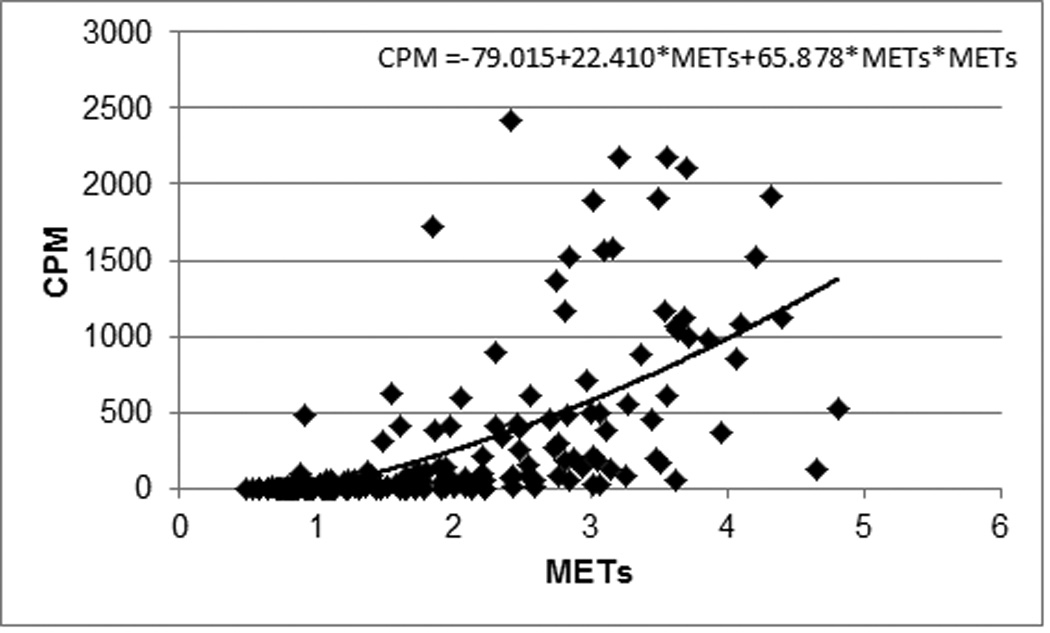
Results: Regression analysis yielded the following new stroke-specific Actical minimum thresholds: 125 counts per minute (cpm) for sedentary/light activity, 667 cpm for light/moderate activity, and 1546 cpm for moderate/vigorous activity.
Conclusion: Our revised cut points better reflect activity levels after stroke and suggest significantly lower thresholds relative to those observed for the general population of healthy individuals. We conclude that the standard, commonly applied Actical thresholds are inappropriate for this unique population.
Trial registration: ClinicalTrials.gov NCT00891514.
Keywords: Accelerometry; Chronic stroke; Physical activity.
Conflict of interest statement
Conflicts of Interest/Disclosures: None.
Figures
References
-
- Sacco RL, Gan R, Boden-Albala B, et al. Leisure-time physical activity and ischemic stroke risk: the Northern Manhattan Stroke Study. Stroke. 1998;29(2):380–387. - PubMed
-
- Thompson PD, Buchner D, Pina IL, et al. Exercise and physical activity in the prevention and treatment of atherosclerotic cardiovascular disease: a statement from the Council on Clinical Cardiology (Subcommittee on Exercise, Rehabilitation, and Prevention) and the Council on Nutrition, Physical Activity, and Metabolism (Subcommittee on Physical Activity) Circulation. 2003;107(24):3109–3116. - PubMed
-
- Macko RF, DeSouza CA, Tretter LD, et al. Treadmill aerobic exercise training reduces the energy expenditure and cardiovascular demands of hemiparetic gait in chronic stroke patients. A preliminary report. Stroke. 1997;28(2):326–330. - PubMed
-
- Billinger SA, Arena R, Bernhardt J, et al. Physical activity and exercise recommendations for stroke survivors: a statement for healthcare professionals from the American Heart Association/American Stroke Association. Stroke. 2014;45(8):2532–2553. - PubMed
-
- The Internet Stroke Center. [Accessed April 10, 2015];Stroke Statistics. http://www.strokecenter.org/patients/about-stroke/stroke-statistics/
Publication types
MeSH terms
Associated data
Grants and funding
LinkOut - more resources
Full Text Sources
Other Literature Sources
Medical
