. 2016 Jun 21:6:27697.
doi: 10.1038/srep27697.

Improvement of the reverse tetracycline transactivator by single amino acid substitutions that reduce leaky target gene expression to undetectable levels

Affiliations

Improvement of the reverse tetracycline transactivator by single amino acid substitutions that reduce leaky target gene expression to undetectable levels

Ian J Roney et al. Sci Rep. .

Abstract

Conditional gene expression systems that enable inducible and reversible transcriptional control are essential research tools and have broad applications in biomedicine and biotechnology. The reverse tetracycline transcriptional activator is a canonical system for engineered gene expression control that enables graded and gratuitous modulation of target gene transcription in eukaryotes from yeast to human cell lines and transgenic animals. However, the system has a tendency to activate transcription even in the absence of tetracycline and this leaky target gene expression impedes its use. Here, we identify single amino-acid substitutions that greatly enhance the dynamic range of the system in yeast by reducing leaky transcription to undetectable levels while retaining high expression capacity in the presence of inducer. While the mutations increase the inducer concentration required for full induction, additional sensitivity-enhancing mutations can compensate for this effect and confer a high degree of robustness to the system. The novel transactivator variants will be useful in applications where tight and tunable regulation of gene expression is paramount.


Figures
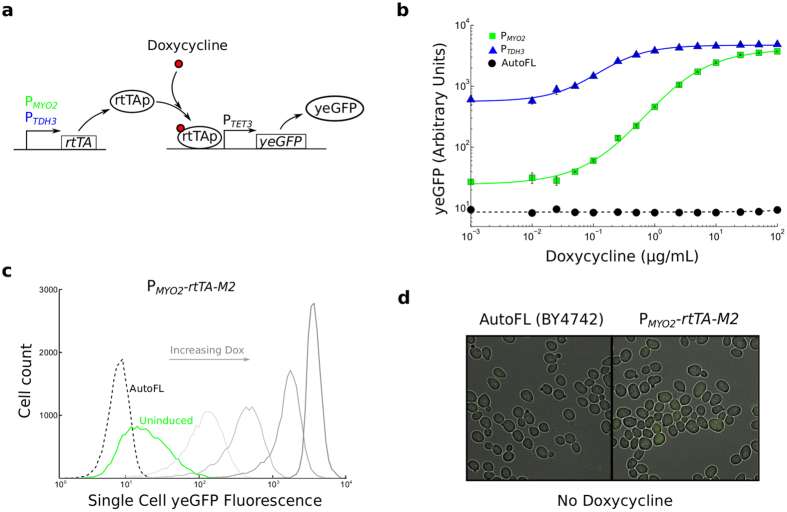
Figure 1
Figure 1. rtTA-M2 has significant activity in the absence of doxycycline induction.
(a) Schematic of the experimental setup where rtTA-M2 is expressed from the PMYO2 or PTDH3 constitutive promoters and yeGFP is expressed from a tet-responsive promoter. (b) Doxycycline dose-dependent activation of rtTA-M2 expressed from either PMYO2 or PTDH3 (mean +/− s.e.m of three technical replicates). AutoFL is wildtype BY4742 yeast cells. (c) Distributions of single-cell fluorescence obtained from cells carrying the PMYO2-rtTA system at different doxycycline concentrations. Progressively darker shades of grey correspond to 0.25, 1, 5, and 100 μg/mL of doxycycline respectively. AutoFL is wildtype BY4742 yeast cells (d) Merged brightfield-fluorescence images of wildtype BY4742 yeast cells or uninduced cells carrying the PMYO2-rtTA system.
Figure 2
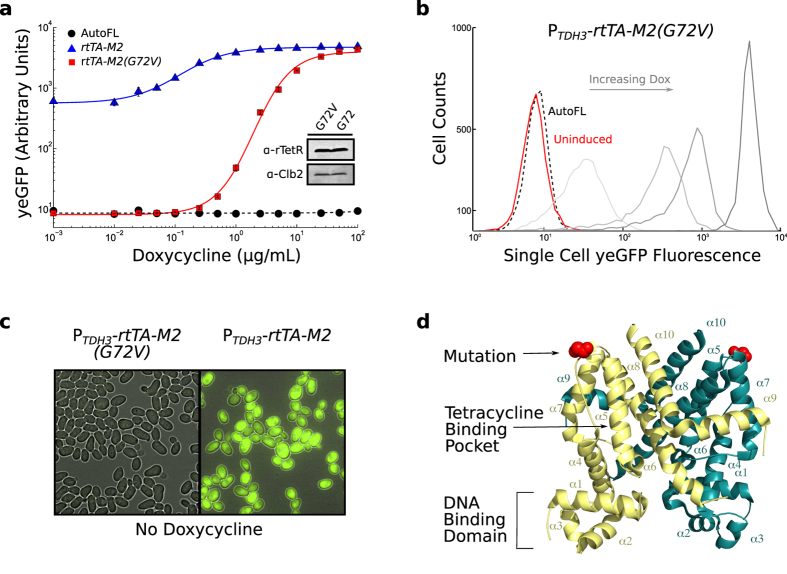
Figure 2. Mutation of glycine 72 in rtTA-M2 diminishes basal activity to undetectable levels.
(a) Doxycycline dose-dependent activation of rtTA-M2 variants expressed from PTDH3 (mean +/− s.e.m of three technical replicates). AutoFL is wildtype BY4742 yeast cells. In the inset, a western blot (cropped) comparing protein abundances of both rtTA-M2 and the G72V mutant. All samples were prepared and run under identical experimental conditions. (b) Distributions of single-cell fluorescence obtained from cells carrying the PTDH3-rtTA(G72V) system at different doxycycline concentrations. AutoFL is wildtype BY4742 yeast cells. Progressively darker shades of grey correspond to 1, 2.5, 5 and 100 μg/mL of doxycycline respectively. (c) Merged brightfield-fluorescence images of uninduced cells carrying the PTDH3-rtTA-M2 or PTDH3-rtTA(G72V) systems. (d) Cartoon representation of TetR dimer in which each protomer is colored different (yellow and turquoise). The secondary structure is labeled and G72 is shown as a sphere.
Figure 3
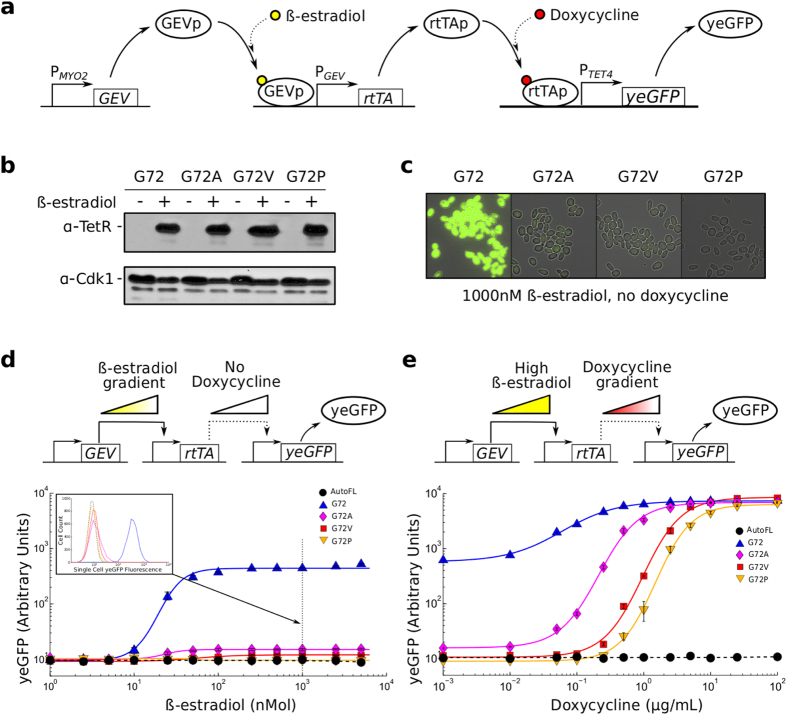
Figure 3. Non-polar side chains at residue 72 is a key determinant of basal activity.
(a) Schematic of the gene network where rtTA-M2 variants are expressed from a β-estradiol inducible promoter and yeGFP is expressed from a tet-responsive promoter. (b) Western blot (cropped) comparing protein abundances of all four rtTA variants when induced by 1000 nM of β-estradiol or no induction. All samples were prepared and run under identical experimental conditions. (c) Merged brightfield-fluorescence images of all four rtTA variants induced by 1000 nM β-estradiol with no doxycycline induction. (d) The basal activity of rtTA variants as a function of their β-estradiol-dependent expression level (mean +/− s.e.m of three technical replicates). In the inset, histograms of reporter expression for the different rtTA variants. (e) Doxycycline dose-dependent activation of rtTA-M2 variants expressed ubiquitously in 1000 nM β-estradiol (mean +/− s.e.m of three technical replicates).
Figure 4
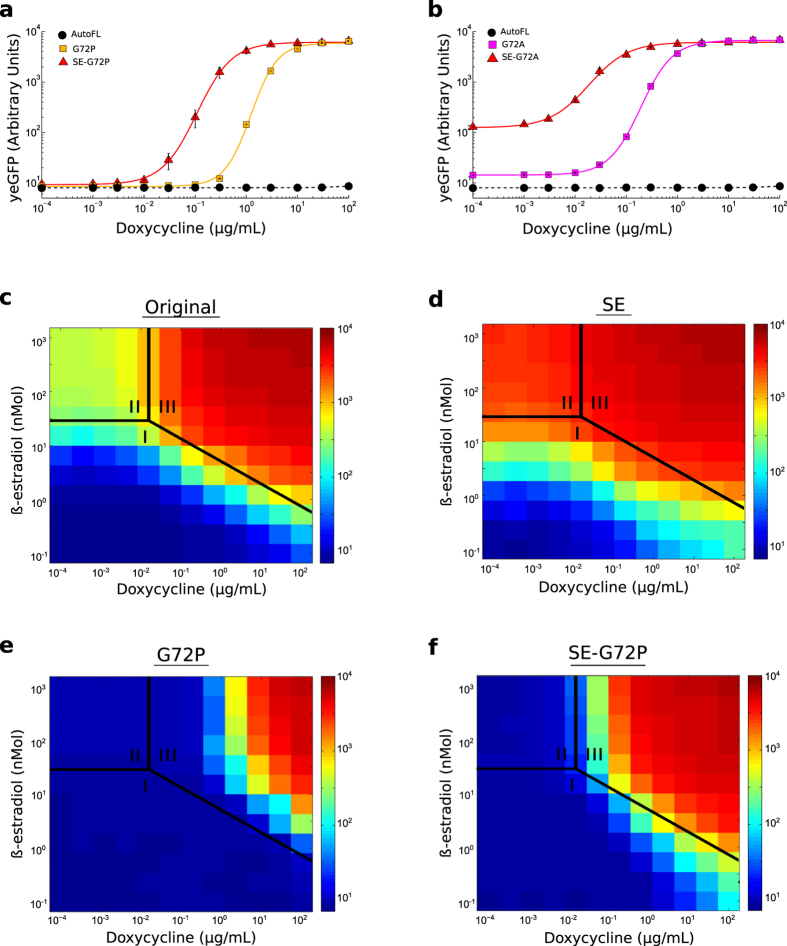
Figure 4. Doxycycline sensitivity of the novel rtTA variants can be improved by the addition of sensitivity enhancing mutations.
(a,b) Doxycycline dose-dependent activation of rtTA variants expressed ubiquitously in 1000 nM β-estradiol (mean +/− s.e.m of three technical replicates). (c–f) Heatmaps displaying reporter expression (Arbitrary units) as a function of β-estradiol-dependent transactivator expression and doxycycline induction.

References

    1. Gossen M. et al. Transcriptional activation by tetracyclines in mammalian cells. Science 268, 1766–1769 (1995). - PubMed
    1. Wishart J. A., Hayes A., Wardleworth L., Zhang N. & Oliver S. G. Doxycycline, the drug used to control thetet-regulatable promoter system, has no effect on global gene expression inSaccharomyces cerevisiae. Yeast 22, 565–569 (2005). - PubMed
    1. Bell G. An activator/repressor dual system allows tight tetracycline-regulated gene expression in budding yeast. Nucleic Acids Research 26, 942–947 (1998). - PMC - PubMed
    1. Hoyng S. A. et al. Developing a potentially immunologically inert tetracycline-regulatable viral vector for gene therapy in the peripheral nerve. Gene Therapy 21, 549–557 (2014). - PubMed
    1. Agha-Mohammadi S. et al. Second-generation tetracycline-regulatable promoter: repositioned tet operator elements optimize transactivator synergy while shorter minimal promoter offers tight basal leakiness. The Journal of Gene Medicine 6, 817–828 (2004). - PubMed

Publication types

MeSH terms