Review
. 2016 Jul;13(7):420-31.
doi: 10.1038/nrurol.2016.103. Epub 2016 Jun 21.

Checkpoint inhibitors and other novel immunotherapies for advanced renal cell carcinoma

Affiliations
Review

Checkpoint inhibitors and other novel immunotherapies for advanced renal cell carcinoma

Maria I Carlo et al. Nat Rev Urol. 2016 Jul.

Abstract

The management of advanced renal cell carcinoma (RCC) has dramatically changed over the past decade. Therapies that target the vascular endothelial growth factor (VEGF) and mammalian target of rapamycin (mTOR) pathways have considerably expanded treatment options; however, most patients with advanced RCC still have limited overall survival. Increased understanding of the mechanisms of T cell-antigen recognition and function has led to the development of novel immunotherapies to treat cancer, chief among them inhibitors of checkpoint receptors - molecules whose function is to restrain the host immune response. In 2015, the FDA approved the first checkpoint inhibitor nivolumab for patients with advanced RCC following treatment with antiangiogenic therapy based on improved overall survival compared with the standard of care. Ongoing phase III trials are comparing checkpoint-inhibitor-based combination regimens with antiangiogenesis agents in the first-line setting. The field is evolving rapidly, with many clinical trials already testing several checkpoint inhibitors alone, in combination, or with other targeted therapies. In addition, different novel immune therapies are being investigated including vaccines, T-cell agonists, and chimeric antigen receptor T cells. Determining which patients will benefit from these therapies and which combination approaches will result in better response will be important as this field evolves.


Conflict of interest statement

Competing interests statement: M.H.V. has been a consultant for Novartis, GlaxoSmithKline, Bayer, Calithera, and Natera and has received honoraria from Novartis and research funding from Brystol-Myers Squibb and Pfizer. R.J.M. has been a consultant for Pfizer, Novartis, and Eisai and has received research funding from Genentech, Brystol-Myers Squibb, Exelixis, Eisai, and GlaxoSmithKline. M.I.C. declares no competing interests.

Figures

Figure 1
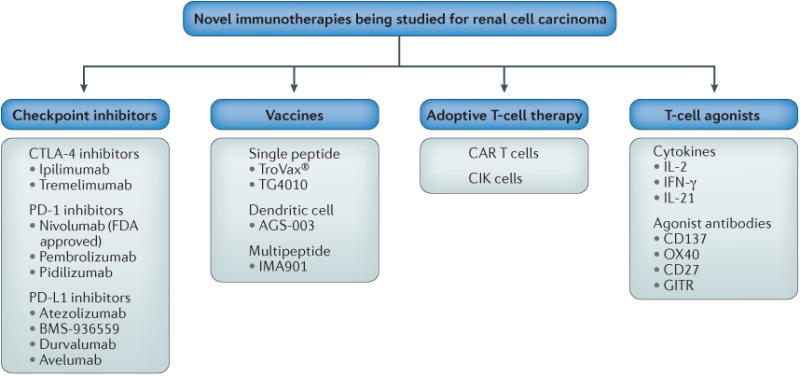
Figure 1. Selected immune therapies under investigation for renal cell carcinoma (RCC)
Checkpoint inhibitors under investigation include the cytotoxic T-lymphocyte-associated antigen 4 (CTLA-4) inhibitors ipiliimumab and tremelimumab, the programmed cell death protein 1 (PD-1) inhibitors nivolumab (which is FDA approved), pembrolizumab and pidilizumab, and the programmed cell death 1 ligand 1 (PD-L1) inhibitors atezolizumab, BMS-936559, durvalumab, and avelumab. Vaccine strategies investigated in RCC include the single peptide vaccines TroVax® and TG4010, the dendritic cell vaccine AGS-003, and the multipeptide vaccine IMA901. Adoptive T-cell therapies such as chimeric antigen receptor (CAR) T cells and cytokine-induced killer (CIK) cells are also being investigated. Multiple T-cell agonists have been or are being studied, including the cytokines IL-2, IFNγ, and IL-21, as well as agonist antibodies to the co-stimulatory molecules CD137, OX40, CD27 and GITR.
Figure 2
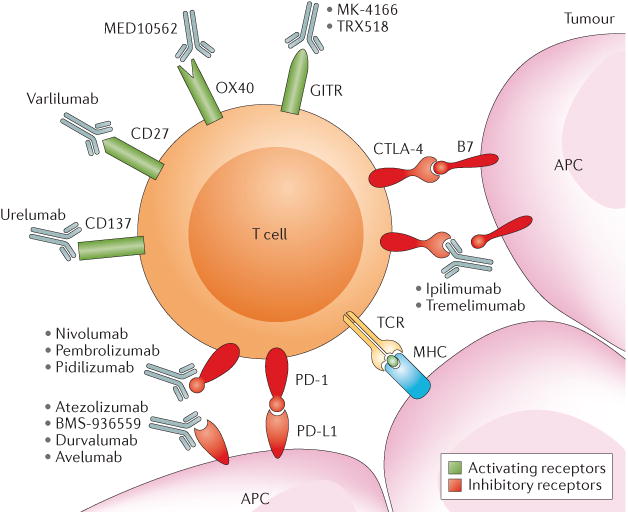
Figure 2. Site of action of checkpoint inhibitors and agonists being tested in advanced renal cell carcinoma (RCC)
T-cell activation is regulated by various co-stimulatory and inhibitory checkpoints. Both agonistic antibodies to activating receptors and blocking antibodies to inhibitory receptors can stimulate T-cell activity and are being tested in advanced renal cell carcinoma and other solid tumours. Activation of T cells first requires an antigen-presenting cell (APC), such as a dendritic cell, to present an antigen. Here, an APC presents a tumour antigen complexed to major histocompatibility complex (MHC) class I to the T cell via the T cell receptor (TCR). Co-stimulatory signals are also needed at this time. At this point, B7 on an APC can bind to cytotoxic T-lymphocyte-associated antigen 4 (CTLA-4) creating an inhibitory signal, but ipilimumab or tremelimumab — CTLA-4 antibodies — can inhibit the inhibitory signal by binding to CTLA-4 and promote T-cell activation. Once the activated T cell is in the tumour environment it can recognize the antigen presented by an APC cell in the tumour. At this time, the programmed cell death protein 1 (PD-1) receptor can also send an inhibitory signal to the T cell when the receptor binds to programmed cell death 1 ligand 1 (PD-L1), which is often expressed on tumour cells. Inhibition of PD-L1 or PD-1 could block that signal. Several PD-1 inhibitors are under investigation for RCC, including pembrolizumab and pidilizumab, and nivolumab was recently FDA approved for patients with RCC who have failed prior antiangiogenic therapy. PD-L1 inhibitors under investigation include atezolizumab, BMS-936559, durvalumab and avelumab. In addition to inhibitory receptors, several activating receptors exist that stimulate T-cell activity, including CD137, CD27, OX40 and GITR. Similarly, several agonist antibodies target these receptors are under investigation for RCC. These include urelumab targeting CD137, varlilumab targeting CD27, MEDI10562 targeting OX40, and MK-4166 and TRX518 targeting GITR.
Figure 3
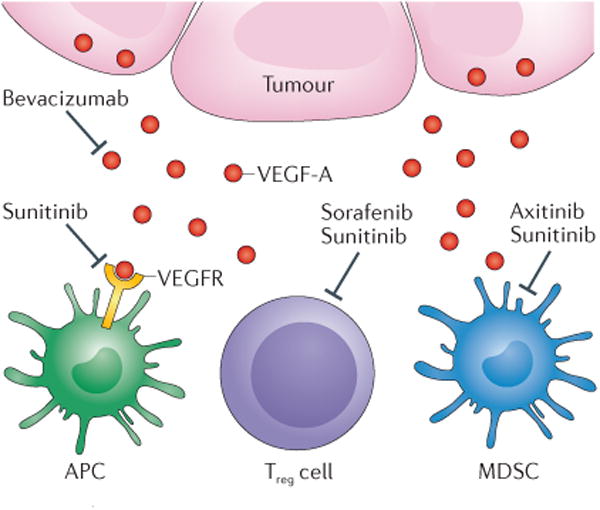
Figure 3. Immunomodulatory effects of targeted therapies for renal cell carcinoma
Tumour cells can secrete vascular endothelial growth factor-A (VEGF-A), which, when it binds to the VEGF receptor (VEGFR), can signal to halt antigen–presenting-cell (APC) maturation. Both bevacizumab — a monoclonal antibody against VEGF-A — and sunitinib — a small-molecule tyrosine kinase inhibitor — can block signalling through this pathway and, therefore, promote maturation of APCs. Both regulatory T (Treg) cells and myeloid-derived suppressor cells (MDSCs) inhibit immune activation. VEGF-blockade with sunitinib or sorafenib can inhibit Treg cell function and treatment with sunitinib or axitinib has been found to inhibit function of MDSCs in preclinical and clinical models.

References

    1. Coley W. The treatment of malignant tumors by repeated inoculations of erysipelas: with a report of ten original cases. Am J Med Sci. 1893;105:487–510. - PubMed
    1. McDermott DF. Immunotherapy of metastatic renal cell carcinoma. Cancer. 2009;115:2298–2305. - PubMed
    1. Fyfe G, et al. Results of treatment of 255 patients with metastatic renal cell carcinoma who received high-dose recombinant interleukin-2 therapy. J Clin Oncol. 1995;13:688–696. - PubMed
    1. Motzer RJ, et al. Sunitinib versus interferon alfa in metastatic renal-cell carcinoma. N Engl J Med. 2007;356:115–124. - PubMed
    1. Hudes G, et al. Temsirolimus, interferon alfa, or both for advanced renal-cell carcinoma. N Engl J Med. 2007;356:2271–2281. - PubMed

Publication types

MeSH terms