


Case Reports
doi: 10.1007/s11046-016-0031-6.
Epub 2016 Jun 21.
The Concept of Ecthyma Gangrenosum Illustrated by a Fusarium oxysporum Infection in an Immunocompetent Individual
Affiliations
- PMID: 27324372
- PMCID: PMC5014892
- DOI: 10.1007/s11046-016-0031-6
Item in Clipboard
Case Reports
The Concept of Ecthyma Gangrenosum Illustrated by a Fusarium oxysporum Infection in an Immunocompetent Individual
Mycopathologia.
2016 Oct.
Abstract
Ecthyma gangrenosum (EG) involves necrotic cutaneous lesions caused by bacteria, mainly Pseudomonas aeruginosa, and is usually seen in immunocompromised patients with septicemia. However, clinically similar infections have been published with fungi as etiologic agents. We present a case of an EG-like lesion due to Fusarium oxysporum confirmed by clinical diagnosis, culture and molecular identification and discuss the definition of EG.
Keywords: Definition; Ecthyma gangrenosum; Fusarium oxysporum; Immunocompetent.
Conflict of interest statement
The authors declare that they have no competing interests.
Figures
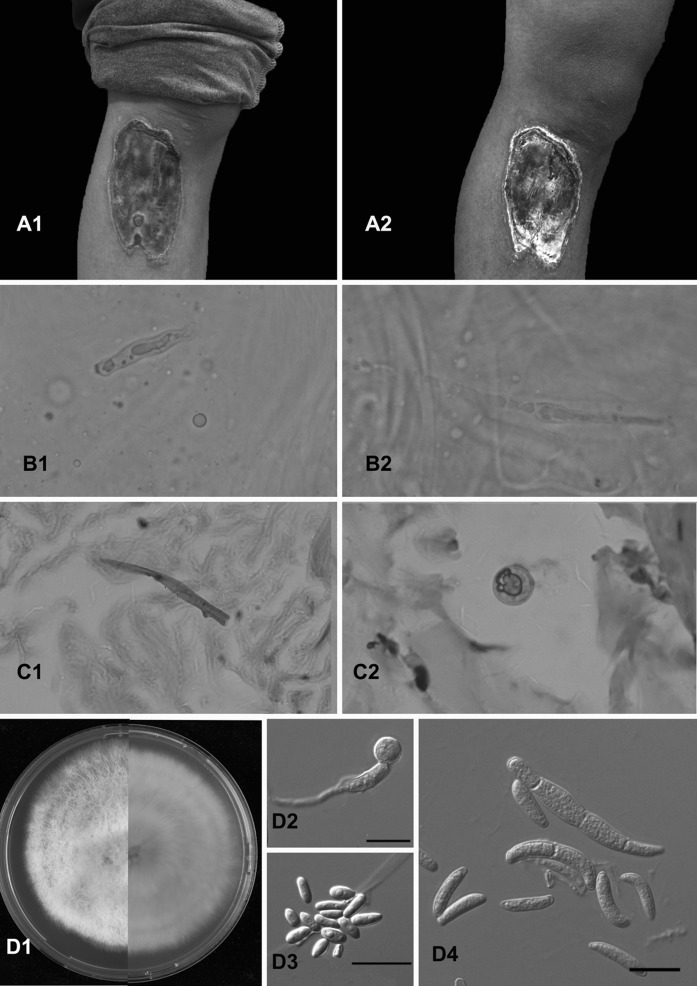
a1 Initial infection; a2 After 2 weeks of treatment; b1, b2 KOH mount of the swab collected from the lesion showing fungal hyaline hyphae (magnification, ×40); c1, c2 fungal hyphae seen with H&E stain from the biopsy; d1 growth of white colonies and purple pigmentation on MEA at 25 °C.; d2–d4 septate macroconidia and microconidia. All scale bars 10 μm
References
-
- Fabrizi G, Pagliarello C. Multiple ecthyma gangrenosum with a favorable course in a nonimmunocompromised child with moyamoya disease. Eur J Dermatol. 2007;17:253–254. - PubMed
-
- Weiel JJ, Zhang CZ, Smith JA, et al. Clinicopathologic aspects of ecthyma gangrenosum in pediatric patients: a case series and review of the literature. J Clin Anat Pathol. 2013;1:1–5.
Publication types
MeSH terms
Substances
LinkOut - more resources
Full Text Sources
Other Literature Sources