


Malignant biliary obstruction: From palliation to treatment
- PMID: 27326319
- PMCID: PMC4909451
- DOI: 10.4251/wjgo.v8.i6.498
Malignant biliary obstruction: From palliation to treatment
Abstract
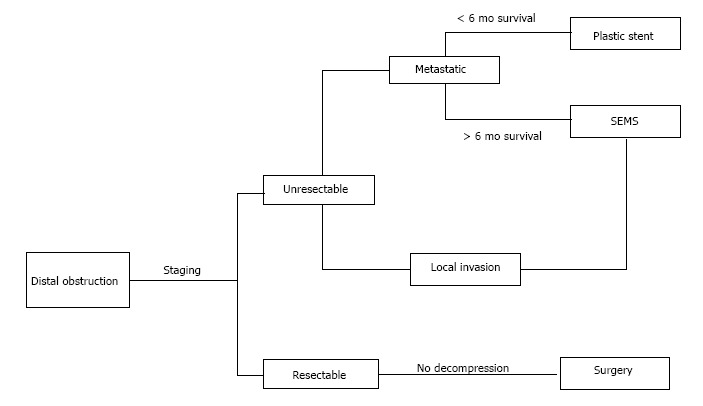
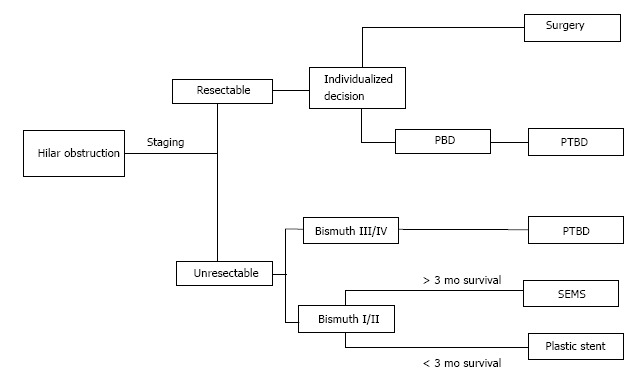
Malignant obstruction of the bile duct from cholangiocarcinoma, pancreatic adenocarcinoma, or other tumors is a common problem which may cause debilitating symptoms and increase the risk of subsequent surgery. The optimal treatment - including the decision whether to treat prior to resection - depends on the type of malignancy, as well as the stage of disease. Preoperative biliary drainage is generally discouraged due to the risk of infectious complications, though some situations may benefit. Patients who require neoadjuvant therapy will require decompression for the prolonged period until attempted surgical cure. For pancreatic cancer patients, self-expanding metallic stents are superior to plastic stents for achieving lasting decompression without stent occlusion. For cholangiocarcinoma patients, treatment with percutaneous methods or nasobiliary drainage may be superior to endoscopic stent placement, with less risk of infectious complications or failure. For patients of either malignancy who have advanced disease with palliative goals only, the choice of stent for endoscopic decompression depends on estimated survival, with plastic stents favored for survival of < 4 mo. New endoscopic techniques may actually extend stent patency and patient survival for these patients by achieving local control of the obstructing tumor. Both photodynamic therapy and radiofrequency ablation may play a role in extending survival of patients with malignant biliary obstruction.
Keywords: Catheter ablation; Cholangiocarcinoma; Extrahepatic cholestasis; Pancreatic neoplasms; Stents.
Figures
References
-
- Kruse EJ. Palliation in pancreatic cancer. Surg Clin North Am. 2010;90:355–364. - PubMed
-
- Kassir R, Barabino G, Bageacu S, Ferrari G, Abboud K, Dumas O, Peoc’h M, Porcheron J. Biliary papillomatosis in the common bile duct. Endoscopy. 2013;45 Suppl 2 UCTN:E197–E198. - PubMed
-
- Sauvanet A, Boher JM, Paye F, Bachellier P, Sa Cuhna A, Le Treut YP, Adham M, Mabrut JY, Chiche L, Delpero JR. Severe Jaundice Increases Early Severe Morbidity and Decreases Long-Term Survival after Pancreaticoduodenectomy for Pancreatic Adenocarcinoma. J Am Coll Surg. 2015;221:380–389. - PubMed
Publication types
LinkOut - more resources
Full Text Sources
Other Literature Sources
Medical
