. 2016 Jun 22:6:28556.
doi: 10.1038/srep28556.

Attenuated viral hepatitis in Trem1-/- mice is associated with reduced inflammatory activity of neutrophils

Affiliations

Attenuated viral hepatitis in Trem1-/- mice is associated with reduced inflammatory activity of neutrophils

Jan-Hendrik Kozik et al. Sci Rep. .

Abstract

TREM1 (Triggering Receptor Expressed on Myeloid Cells 1) is a pro-inflammatory receptor expressed by phagocytes, which can also be released as a soluble molecule (sTREM1). The roles of TREM1 and sTREM1 in liver infection and inflammation are not clear. Here we show that patients with hepatitis B virus (HBV) or hepatitis C virus (HCV) infection manifest elevated serum levels of sTREM1. In mice, experimental viral hepatitis induced by infection with Lymphocytic Choriomeningitis Virus (LCMV)-WE was likewise associated with increased sTREM1 in serum and urine, and with increased TREM1 and its associated adapter molecule DAP12 in the liver. Trem1-/- mice showed accelerated clearance of LCMV-WE and manifested attenuated liver inflammation and injury. TREM1 expression in the liver of wild-type mice was mostly confined to infiltrating neutrophils, which responded to LCMV by secretion of CCL2 and TNF-α, and release of sTREM1. Accordingly, the production of CCL2 and TNF-α was decreased in the livers of LCMV-infected Trem1-/- mice, as compared to LCMV-infected wildtype mice. These findings indicate that TREM1 plays a role in viral hepatitis, in which it seems to aggravate the immunopathology associated with viral clearance, mainly by increasing the inflammatory activity of neutrophils.


Figures
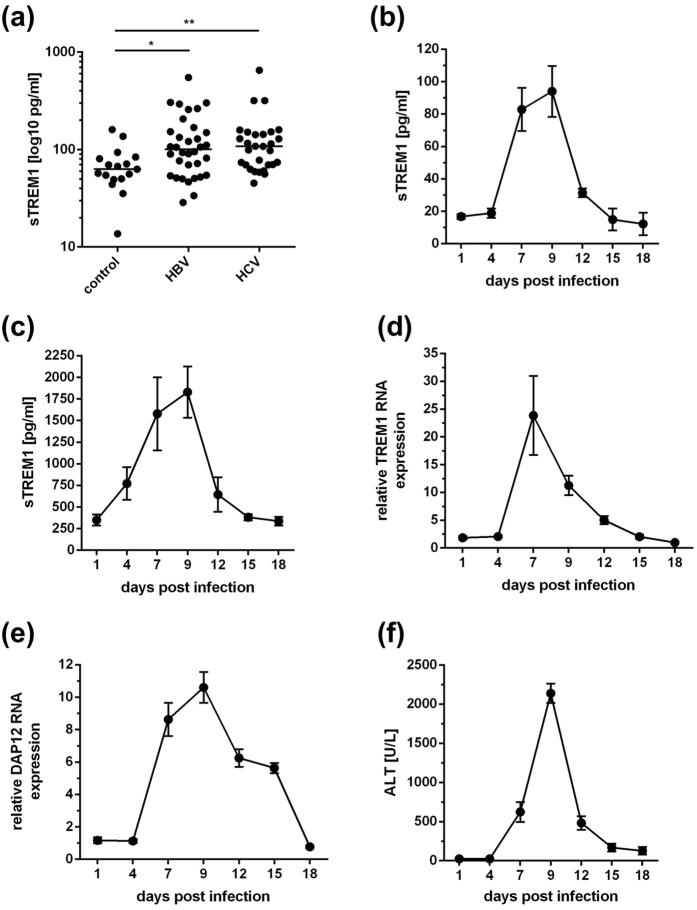
Figure 1
Figure 1. Viral hepatitis is associated with increased TREM1 expression and sTREM1 release.
(A) Increased sTREM1 concentrations in blood plasma from patients with hepatitis B (HBV; n = 34) or hepatitis C virus infection (HCV; n = 29), as compared to healthy control subjects (n = 17). (B) Increased sTREM1 concentrations in blood plasma from C57BL/6 mice during acute hepatitis caused by LCMV-WE infection. (C) Increased sTREM1 concentrations in urine from C57BL/6 mice during acute hepatitis caused by LCMV-WE infection. (D) Increased expression of TREM1 RNA in infected livers of C57BL/6 mice during acute hepatitis caused by LCMV-WE infection. (E) Increased expression of DAP12 RNA in infected livers of C57BL/6 mice during acute hepatitis caused by LCMV-WE infection. (F) Increased alanine aminotransferase (ALT) concentrations in blood plasma of C57BL/6 mice during acute hepatitis caused by LCMV-WE infection. *p < 0.05, **p < 0.01.
Figure 2
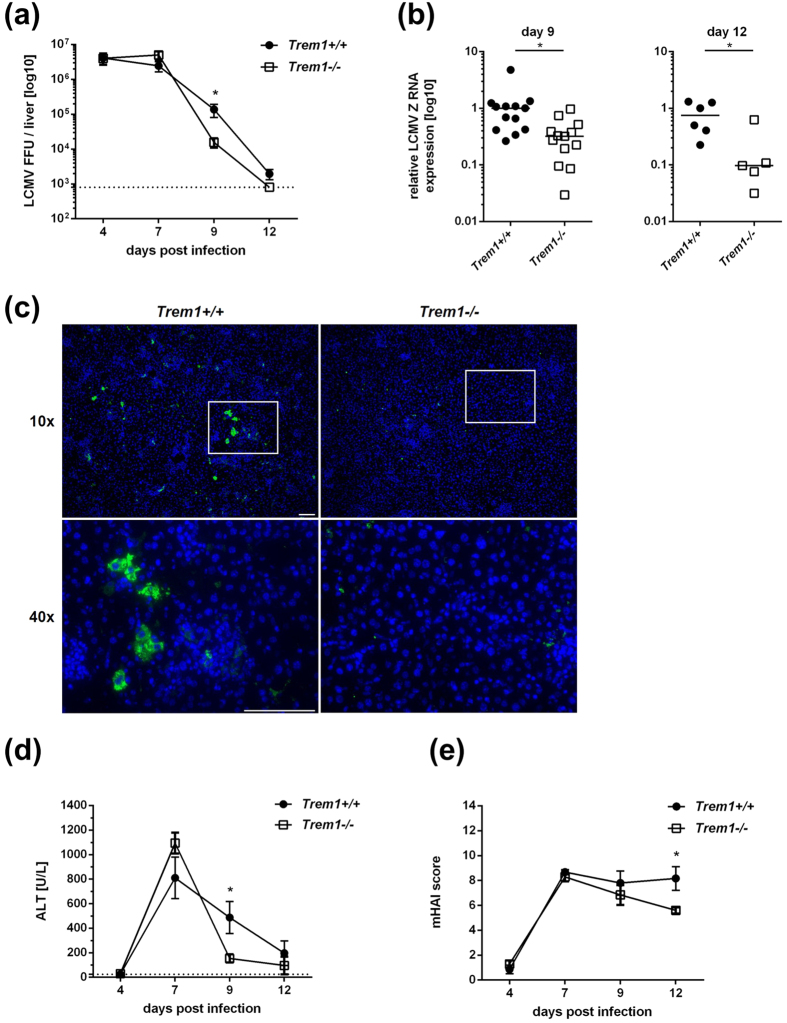
Figure 2. Accelerated viral clearance and reduced liver damage in LCMV-infected Trem1−/− mice.
(A) At the indicated time-points after LCMV inoculation, livers of Trem1+/+ or Trem1−/− mice were homogenized and the virus titer was determined by the Focus Forming Assay. (B) Reduced viral load of Trem1−/− livers at day 9 and 12 after LCMV inoculation was confirmed by quantitative RT-PCR analysis for the LCMV Z RNA. (C) Frozen liver sections taken at day 9 after LCMV inoculation were stained for the LCMV nucleoprotein with VL4 antibody (green); nuclei were stained with Hoechst 33258 (blue). (D) Protracted ALT elevation in blood plasma of Trem1+/+ mice at day 9 after LCMV inoculation, as compared to Trem1−/− mice. (E) Increased histological activity of Trem1+/+ mice at day 12 after LCMV inoculation, as compared to Trem1−/− mice, determined as the modified histological activity index (mHAI) score. *p < 0.05, **p < 0.01.
Figure 3
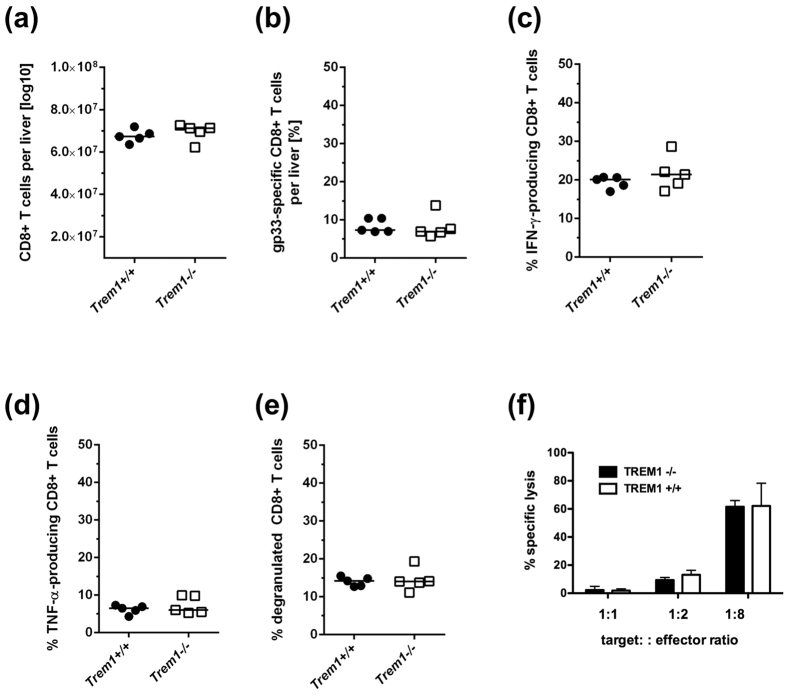
Figure 3. TREM1 deficiency does not influence the anti-viral CD8 T cell response.
(A) Equal numbers of infiltrating CD8 T cells in LCMV-infected livers of Trem1+/+ or Trem1−/− mice at day 9 of infection. Each dot represents the absolute number of liver-infiltrating mononuclear cells of one individual mouse. (B) Equal numbers of LCMV-specific CD8 T cells in LCMV-infected of Trem1+/+ or Trem1−/− mice at day 9 of infection, determined by staining with LCMV-gp33 loaded H-2Db dextramer. Each dot represents the percentage of dextramer+ CD8+ T cells among all CD8+ T cells in the livers of individual mice. (C) Equal numbers of LCMV-responsive CD8 effector T cells in LCMV-infected of Trem1+/+ or Trem1−/− mice at day 9 of infection, determined by intracellular staining of CD8+ T cells for IFN-γ after stimulation with LCMV-gp33 peptide. Each dot represents the percentage of IFN-γ+ CD8+ T cells among all CD8+ T cells in the livers of individual mice. (D) Equal numbers of LCMV-responsive CD8 effector T cells in LCMV-infected of Trem1+/+ or Trem1−/− mice at day 9 of infection, determined by intracellular staining of CD8+ T cells for TNF-α after stimulation with LCMV-gp33 peptide. Each dot represents the percentage of TNF-α+ CD8+ T cells among all CD8+ T cells in the livers of individual mice. (E) Equal degranulation capacity of LCMV-responsive CD8 effector T cells in LCMV-infected of Trem1+/+ or Trem1−/− mice at day 9 of infection, determined by staining for CD107a after stimulation with LCMV-gp33 peptide. Each dot represents the percentage of CD107a+ CD8+ T cells among all CD8+ T cells in the livers of individual mice. (F) Similar LCMV-specific cytotoxic activity of CD8 effector T cells isolated from LCMV-infected Trem1+/+ (white bars) or Trem1−/− mice (black bars) at day 9 of infection, as determined by specific lysis (mean and SEM) of LCMV-infected Hepa1-6 hepatoma cells.
Figure 4
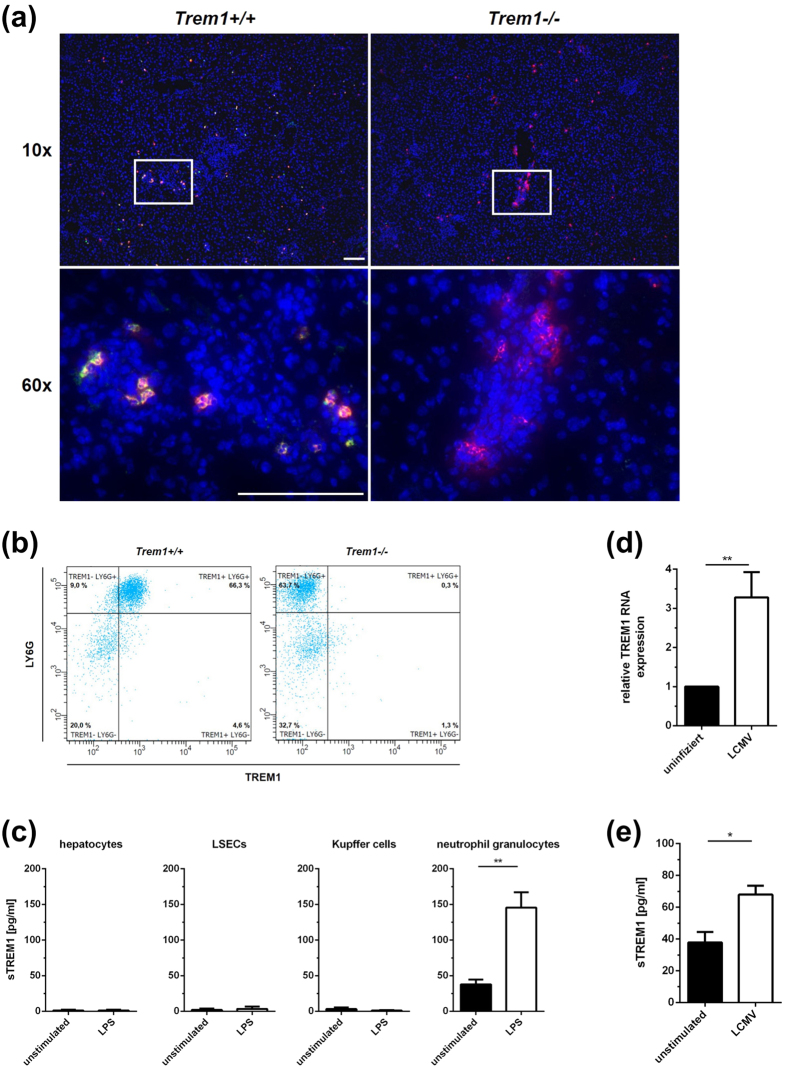
Figure 4. TREM1 expression in LCMV-infected livers of mice by neutrophils.
(A) Frozen liver sections of C57BL/6 mice 9 days after infection with LCMV were stained for TREM1 (green) and Ly6G (red); nuclei were stained with Hoechst 33258 (blue). Co-expression of Ly6G (red) by TREM1-expressing cells (green) in livers of LCMV-infected mice confirmed that TREM1-expressing cells are neutrophils. Scale bar represents 100 μm. (B) Flow cytometric analysis of TREM1 and LY6G expression on neutrophil granulocytes isolated from Trem1+/+ und Trem1−/− C57BL/6 mice 9 days after infection with LCMV. (C) Concentrations of sTREM1 in culture supernatants of primary hepatocytes, liver sinusoidal endothelial cells (LSECs), Kupffer cells or neutrophils 24 hours after isolation from Trem1+/+ C57BL/6 mice and stimulation with LPS (10 ng/ml). Shown are mean values ± SEM. **p < 0.01. (D) Relative TREM1 RNA expression in neutrophils 6 hours after isolation from Trem1+/+ C57BL/6 mice and stimulation with LCMV WE (MOI 5). Shown are mean values ± SEM; **p < 0.01. (E) Release of sTREM1 by neutrophils into cell culture supernatant determined 24 hours after isolation from Trem1+/+ C57BL/6 mice and stimulation with LCMV WE (MOI 5). Shown are mean values ± SEM. **p < 0.01.
Figure 5
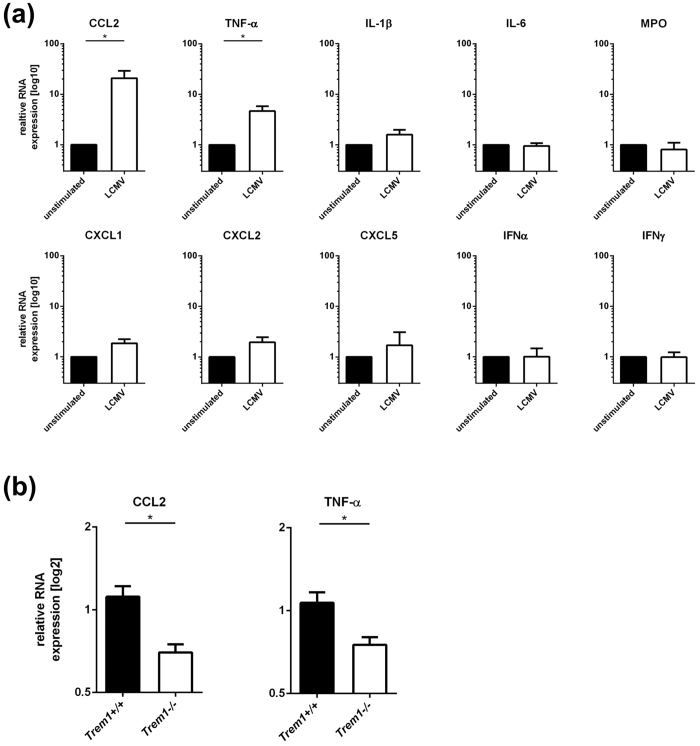
Figure 5. Impaired secretion of CCL2 and TNF-α by TREM1−/− neutrophils in response to LCMV.
(A) Neutrophils were isolated from Trem1+/+ C57BL/6 mice, stimulated with LCMV WE (MOI 5) and, after 6 hours, the expression of CCL2, TNF-α, IL-1β, IL-6, MPO, CXCL1, CXCL2, CXCL5, IFN-α and IFN-γ relative to the HPRT house-keeper were determined by qRT-PCR. Shown are mean values ± SEM. *p < 0.05. (B) Relative CCL2 and TNF-α RNA expression in livers from Trem1+/+ and Trem1−/− C57BL/6 mice, sampled 4 days after infection with LCMV. Shown are mean values ± SEM. *p < 0.05.

References

    1. Iwasaki A. & Medzhitov R. Control of adaptive immunity by the innate immune system. Nat Immunol 16, 343–353 (2015). - PMC - PubMed
    1. Klesney-Tait J., Turnbull I. R. & Colonna M. The TREM receptor family and signal integration. Nat Immunol 7, 1266–1273 (2006). - PubMed
    1. Arts R. J., Joosten L. A., van der Meer J. W. & Netea M. G. TREM-1: intracellular signaling pathways and interaction with pattern recognition receptors. J Leukoc Biol 93, 209–15 (2013). - PubMed
    1. Bouchon A., Dietrich J. & Colonna M. Cutting edge: inflammatory responses can be triggered by TREM-1, a novel receptor expressed on neutrophils and monocytes. J Immunol 164, 4991–4995 (2000). - PubMed
    1. Colonna M. TREMs in the immune system and beyond. Nat Rev Immunol 3, 445–53 (2003). - PubMed

Publication types

MeSH terms

Substances