


Practice and Intention to use long acting and permanent contraceptive methods among married women in Ethiopia: Systematic meta-analysis
- PMID: 27329147
- PMCID: PMC4915059
- DOI: 10.1186/s12978-016-0194-0
Practice and Intention to use long acting and permanent contraceptive methods among married women in Ethiopia: Systematic meta-analysis
Abstract
Background: The long acting and permanent contraceptive methods (LAPCMs) has not used unlike that of short-acting methods in Ethiopia. Ethiopia is the second most populous country in Sub Saharan Africa with a high total fertility rate, and high maternal and child mortality rates. This study summarized the evidence of practice and intention to use long acting and permanent family planning methods among women in Ethiopia using systemic review and meta-analysis.
Methods: A systematic review and meta-analysis of the published and unpublished observational studies were conducted. Original studies were identified using databases of Medline/Pubmed, and Google Scholar. Heterogeneity across studies was checked using Cochrane Q test statistic and I(2)test. The pooled proportion of intention to use and the practice of long acting and permanent contraceptive methods were computed using a/the random effect model.
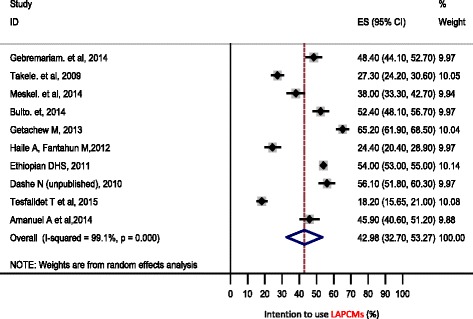
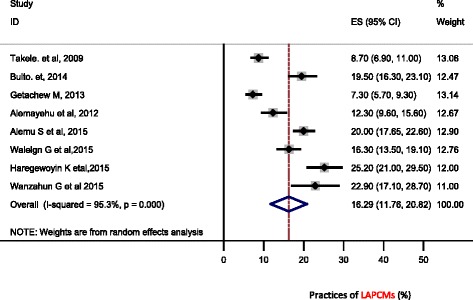
Results: Based on the ten observational studies included in the meta-analysis, the pooled prevalence of intention to use long acting and permanent contraceptive methods among married women according to the random effect model was 42.98 % (95 % CI 32.53, 53.27 %). On the other hand, the pooled practice of long acting and permanent methods of contraceptive among the study participants was 16.64 % (95 % CI 12.4 to 20.87 %).
Conclusion: This meta-analysis revealed that women's intention to use LAPCMs is generally good but their utilization is low. It is recommended, therefore, that LAPMCs must be made more readily available and accessible to women at the lower level of health service delivery who are in need of it.
Keywords: Ethiopia; Intention; LAPCMs; Meta-analysis; Practice; Systematic review.
Figures
References
-
- Bekele D, Fantahun M, Gutema K, Getachew H, Lambiyo T, Yitayal M. Family Planning Module, Ethiopian Health Center Team Hawassa University, USAID. 2003.
-
- Contraceptive security brief hormonal implants. Availableat: URL: http://deliver.jsi.com/dlvr_content/.../logisticsbriefs/CSBrie_HormImpl.pdf. Accessed 20 Sept 2014.
-
- Peterson HB, Curtis KM. Long acting methods of contraception. N Engl J Med 2005;353:2169-75. - PubMed
-
- Bradley S, Croft T, Rutstein S. The Impact of Contraceptive Failure on Unintended Births and Induced Abortions: Estimates and Strategies for Reduction. DHS Analytical Studies No. 22. Calverton: ICF Macro; 2011.
Publication types
MeSH terms
LinkOut - more resources
Full Text Sources
Other Literature Sources
Medical
