


Tranexamic acid in hip fracture patients: a protocol for a randomised, placebo controlled trial on the efficacy of tranexamic acid in reducing blood loss in hip fracture patients
- PMID: 27329438
- PMCID: PMC4916621
- DOI: 10.1136/bmjopen-2015-010676
Tranexamic acid in hip fracture patients: a protocol for a randomised, placebo controlled trial on the efficacy of tranexamic acid in reducing blood loss in hip fracture patients
Abstract
Introduction: There is a high incidence of blood transfusion following hip fractures in elderly patients. Tranexamic acid (TXA) has proven efficacy in decreasing blood loss in general trauma patients as well as patients undergoing elective orthopaedic surgery. A randomised controlled trial will measure the effect of TXA in a population of patients undergoing hip fracture surgery.
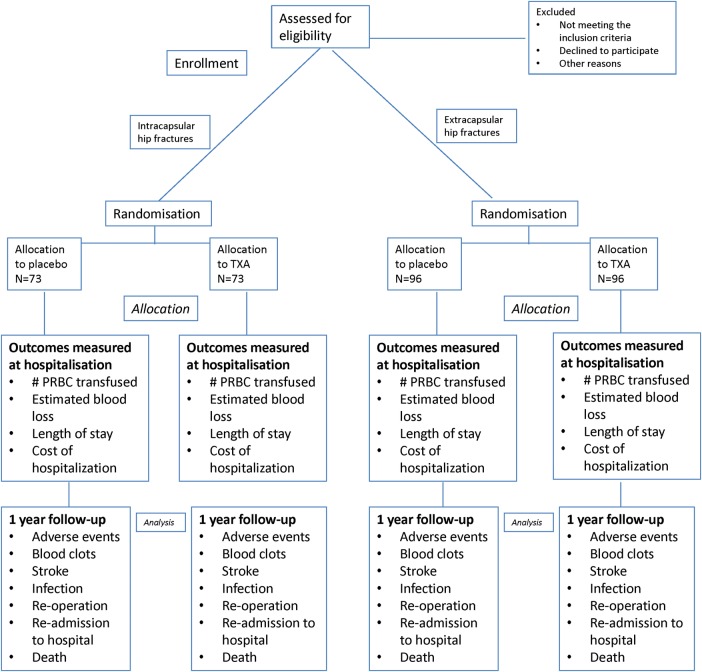
Methods: This is a double-blinded, randomised placebo-controlled trial. Patients admitted through the emergency room that are diagnosed with an intertrochanteric or femoral neck fracture will be eligible for enrolment and randomised to either treatment with 1 g of intravenous TXA or intravenous saline at the time of skin incision. Patients undergoing percutaneous intervention for non-displaced or minimally displaced femoral neck fractures will not be eligible for enrolment. Postoperative transfusion rates will be recorded and blood loss will be calculated from serial haematocrits.
Ethics and dissemination: This protocol was approved by the Institutional Review Board (IRB) and is registered with clinicaltrials.gov. The findings of the trial will be disseminated through peer-reviewed journals and conference presentations.
Trial registration number: NCT01940536.
Keywords: blood transfusion; hip fracture; tranexamic acid.
Published by the BMJ Publishing Group Limited. For permission to use (where not already granted under a licence) please go to http://www.bmj.com/company/products-services/rights-and-licensing/
Figures
References
Publication types
MeSH terms
Substances
Associated data
Grants and funding
LinkOut - more resources
Full Text Sources
Other Literature Sources
Medical
