Comparative evaluation of intrathecal morphine and intrathecal dexmedetomidine in patients undergoing gynaecological surgeries under spinal anaesthesia: A prospective randomised double blind study
- PMID: 27330198
- PMCID: PMC4910476
- DOI: 10.4103/0019-5049.183387
Comparative evaluation of intrathecal morphine and intrathecal dexmedetomidine in patients undergoing gynaecological surgeries under spinal anaesthesia: A prospective randomised double blind study
Abstract
Background and aims: Inrathecal opioids like morphine added to local anaesthetic agents have been found to be effective in achieving prolonged post-operative analgesia. Intrathecal dexmedetomidine may be devoid of undesirable side effects related to morphine and hence, this study was designed to evaluate analgesic efficacy, haemodynamic stability and adverse effects of both these adjuvants in patients undergoing gynaecological surgeries.
Methods: This was a prospective, randomised, double blind study involving 25 patients in each group. Group M received 15 mg of 0.5% hyperbaric bupivacaine with 250 μg of morphine while Group D received 15 mg of 0.5% hyperbaric bupivacaine with 2.5 μg of dexmedetomidine. Characteristics of spinal block, time for first rescue analgesic and total dose of rescue analgesics were noted. Vital parameters and adverse effects were noted perioperatively. Data analysis was done with independent two sample t-test and Mann-Whitney U test.
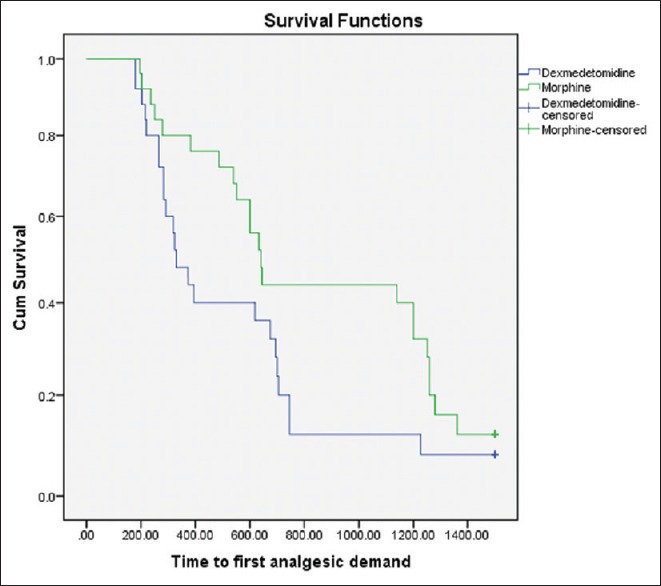
Results: Time for first rescue analgesic (P = 0.056) and total analgesic demand were similar in both groups. Duration of sensory (P = 0.001) and motor (P = 000) block was significantly higher in dexmedetomidine group. Itching was noticed in 36% and nausea in 52% of patients in the morphine group, either of which was not seen in dexmedetomidine group.
Conclusion: Intrathecal dexmedetomidine produces prolonged motor and sensory blockade without undesirable side effects but intraoperative hypotension was more frequent in dexmedetomidine group.
Keywords: Dexmedetomidine; gynaecological surgeries; morphine; post-operative analgesia; spinal anaesthesia.
Figures
References
-
- White PF, Kehlet H. Improving postoperative pain management: What are the unresolved issues? Anesthesiology. 2010;112:220–5. - PubMed
-
- Buvanendran A, Kroin JS. Multimodal analgesia for controlling acute postoperative pain. Curr Opin Anaesthesiol. 2009;22:588–93. - PubMed
-
- Gehling M, Tryba M. Risks and side-effects of intrathecal morphine combined with spinal anaesthesia: A meta-analysis. Anaesthesia. 2009;64:643–51. - PubMed
-
- Hall JE, Uhrich TD, Barney JA, Arain SR, Ebert TJ. Sedative, amnestic, and analgesic properties of small-dose dexmedetomidine infusions. Anesth Analg. 2000;90:699–705. - PubMed
LinkOut - more resources
Full Text Sources
Other Literature Sources