


The Influence of Aggressive Parenteral Nutrition to Preterm and Very Low Birth Weight Infants
- PMID: 27335933
- PMCID: PMC4784588
- DOI: 10.1177/2333794X14567192
The Influence of Aggressive Parenteral Nutrition to Preterm and Very Low Birth Weight Infants
Abstract
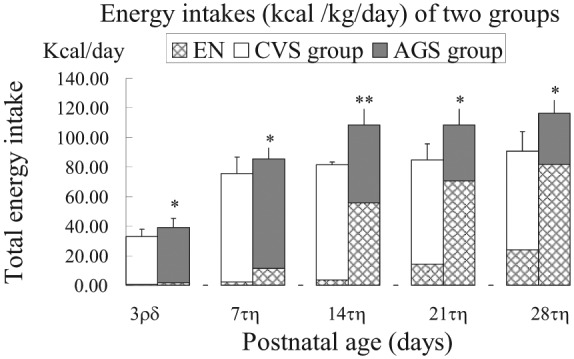
Background. To achieve the weight gain of preterm infants who are appropriate for gestational age without adverse effect, there should be no interruption in delivery of nutrients from time of birth. Methods. Twenty-eight very low birth weight infants were eligible for the study. Those administered conventional nutrition (amino acids 2 g/kg/day started on third day of life) were classified as the conventional support (CVS) group, and those administered aggressive early nutrition (amino acid 2 g/kg/day started on first day of life) were classified as the aggressive support (AGS) group. Results. The days babies took to reach the weight of 2000 g in the AGS group was significantly shorter than for babies in the CVS group, and babies in the AGS group showed better tolerance to enteral nutrition and had shortened neonatal intensive care unit days. Conclusion. The results demonstrated that aggressive early nutrition showed better tolerance to enteral nutrition, higher total calories, and shortened the stay in the neonatal intensive care unit.
Keywords: parenteral nutrition; postnatal growth; very low birth weight infant.
Conflict of interest statement
Figures
References
-
- Ziegler EE, O’Donnell AM, Nelson SE, Fomon SJ. Body composition of the reference fetus. Growth. 1976;40:329-341. - PubMed
-
- Ehrenkranz RA. Early, aggressive nutritional management for very low birth weight infants: what is the evidence? Semin Perinatol. 2007;31(2):48-55. - PubMed
-
- Embleton NE, Pang N, Cooke RJ. Postnatal malnutrition and growth retardation: an inevitable consequence of current recommendations in preterm infants? Pediatrics. 2001;107:270-273. - PubMed
-
- Smallpeice V, Davies PA. Immediate feeding of premature infants with undiluted breast-milk. Lancet. 1964;2:1349-1352. - PubMed
-
- Paranka MS, Yoder BA, Brehm W. Improved outcome of extremely premature infants in the 1990s. Mil Med. 1999;164:568-571. - PubMed
LinkOut - more resources
Full Text Sources
