Follow-up in Head and Neck Cancer: Do More Does It Mean Do Better? A Systematic Review and Our Proposal Based on Our Experience
- PMID: 27337948
- PMCID: PMC5115151
- DOI: 10.21053/ceo.2015.00976
Follow-up in Head and Neck Cancer: Do More Does It Mean Do Better? A Systematic Review and Our Proposal Based on Our Experience
Abstract
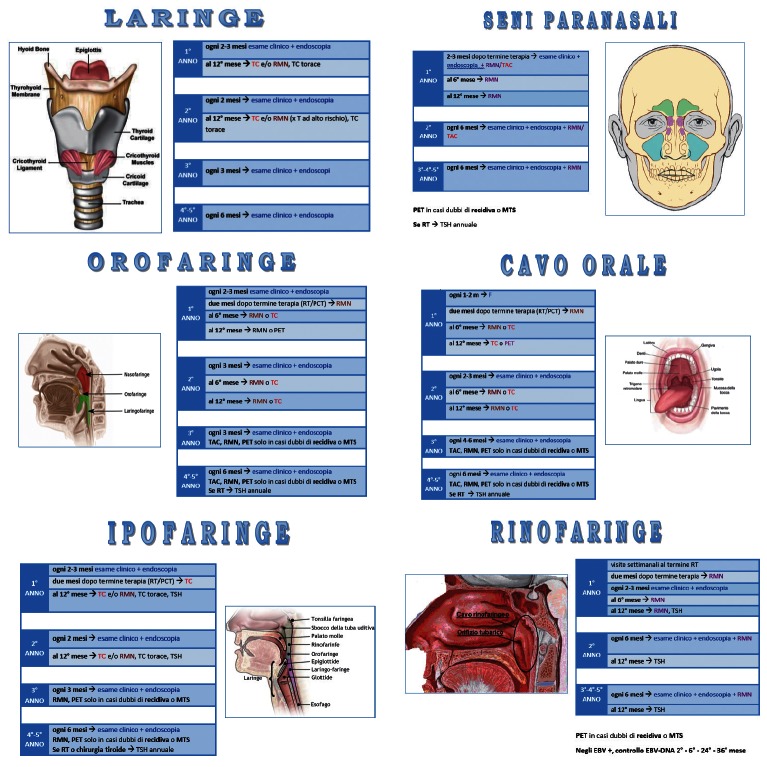
As the patients population ages, cancer screening increases, and cancer treatments improve, millions more head and neck carcinoma (HNC) patients will be classified as cancer survivors in the future. Change in epidemiology with human papillomavirus related HNC leads to a number of young treated patients. After treatment for HNC intensive surveillance, including ear, nose and throat (ENT) endoscopy, imaging, and serology, confers a survival benefit that became less evident in unresectable recurrence. We performed a comprehensive revision of literature and analyzed the experience of our centre. We revised publications on this topic and added data derived from the interdisciplinary work of experts within medical oncology, ENT, and radiation oncology scientific societies. We retrospectively collected local and distant recurrence of chemoradiation treated patients at Santa Croce and Carle University Hospital. A HNC follow-up program is not already codified and worldwide accepted. There is a need of scheduled follow-up. We suggest adopting a standardized follow-up guideline, although a multidisciplinary approach is frequently requested to tailor surveillance program and treatment on each patient.
Keywords: Head and Neck Neoplasms; Human Papillomavirus; Imaging; Second Primary Tumor; Surveillance.
Conflict of interest statement
No potential conflict of interest relevant to this article was reported.
Figures
References
-
- Gregoire V, Lefebvre JL, Licitra L, Felip E, EHNS-ESMO-ESTRO Guidelines Working Group Squamous cell carcinoma of the head and neck: EHNS-ESMO-ESTRO Clinical Practice Guidelines for diagnosis, treatment and follow-up. Ann Oncol. 2010 May;21 Suppl 5:v184–6. - PubMed
-
- Sturgis EM, Miller RH. Second primary malignancies in the head and neck cancer patient. Ann Otol Rhinol Laryngol. 1995 Dec;104(12):946–54. - PubMed
-
- Roman BR, Goldenberg D, Givi B, Education Committee of American Head and Neck Society (AHNS) AHNS Series-Do you know your guidelines?: guideline recommended follow-up and surveillance of head and neck cancer survivors. Head Neck. 2016 Feb;38(2):168–74. - PubMed
-
- Digonnet A, Hamoir M, Andry G, Vander Poorten V, Haigentz M, Jr, Langendijk JA, et al. Follow-up strategies in head and neck cancer other than upper aerodigestive tract squamous cell carcinoma. Eur Arch Otorhinolaryngol. 2013 Jul;270(7):1981–9. - PubMed
-
- Hermans R, Pameijer FA, Mancuso AA, Parsons JT, Mendenhall WM. Laryngeal or hypopharyngeal squamous cell carcinoma: can follow-up CT after definitive radiation therapy be used to detect local failure earlier than clinical examination alone? Radiology. 2000 Mar;214(3):683–7. - PubMed
Publication types
LinkOut - more resources
Full Text Sources
Other Literature Sources
Medical
Research Materials
Miscellaneous