


Synthesis, Anti-HCV, Antioxidant and Reduction of Intracellular Reactive Oxygen Species Generation of a Chlorogenic Acid Analogue with an Amide Bond Replacing the Ester Bond
- PMID: 27338318
- PMCID: PMC6273953
- DOI: 10.3390/molecules21060737
Synthesis, Anti-HCV, Antioxidant and Reduction of Intracellular Reactive Oxygen Species Generation of a Chlorogenic Acid Analogue with an Amide Bond Replacing the Ester Bond
Abstract
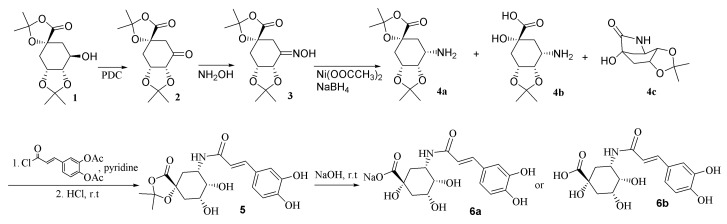
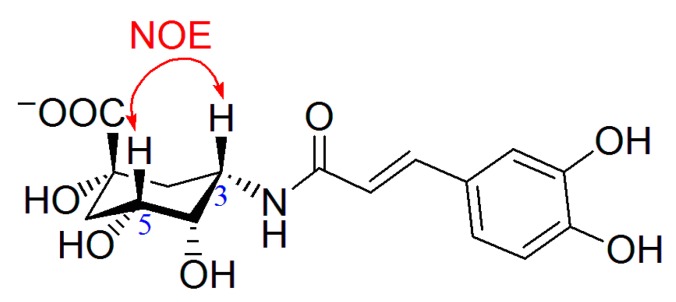
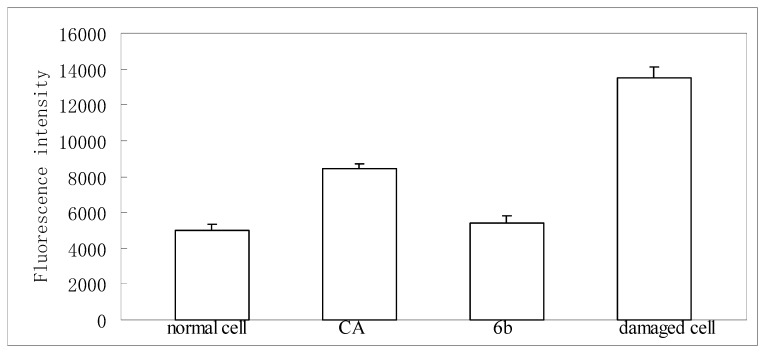
Chlorogenic acid is a well known natural product with important bioactivities. It contains an ester bond formed between the COOH of caffeic acid and the 3-OH of quinic acid. We synthesized a chlorogenic acid analogue, 3α-caffeoylquinic acid amide, using caffeic and quinic acids as starting materials. The caffeoylquinc acid amide was found to be much more stable than chlorogenic acid and showed anti-Hepatitis C virus (anti-HCV) activity with a potency similar to chlorogenic acid. The caffeoylquinc acid amide potently protected HepG2 cells against oxidative stress induced by tert-butyl hydroperoxide.
Keywords: 3-caffeoylquinic acid amide; anti-HCV; anti-oxidant; cellular oxidative stress; synthesis.
Conflict of interest statement
The authors declare no conflict of interest.
Figures
References
-
- Johnston K.L., Clifford M.N., Morgan L.M. Coffee acutely modifies gastrointestinal hormone secretion and glucose tolerance in humans: Glycemic effects of chlorogenic acid and caffeine. Am. J. Clin. Nutr. 2003;78:728–733. - PubMed
-
- Feng Y., Yu Y.H., Wang S.T., Ren J., Camer D., Hua Y.Z., Zhang Q., Huang J., Xue D.L., Zhang X.F., et al. Chlorogenic acid protects d-galactose-induced liver and kidney injury via antioxidation and anti-inflammation effects in mice. Pharm. Boil. 2016;1:1027–1034. doi: 10.3109/13880209.2015.1093510. - DOI - PMC - PubMed
MeSH terms
Substances
LinkOut - more resources
Full Text Sources
Other Literature Sources
Medical
