


Compassion Fatigue among Healthcare, Emergency and Community Service Workers: A Systematic Review
- PMID: 27338436
- PMCID: PMC4924075
- DOI: 10.3390/ijerph13060618
Compassion Fatigue among Healthcare, Emergency and Community Service Workers: A Systematic Review
Abstract
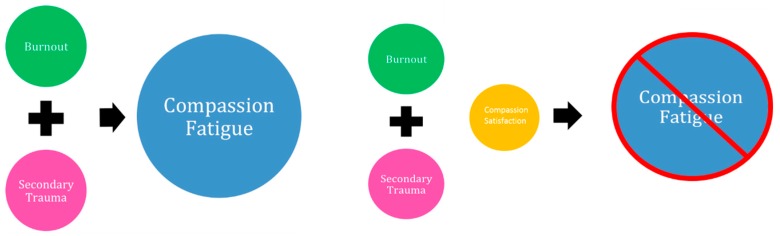
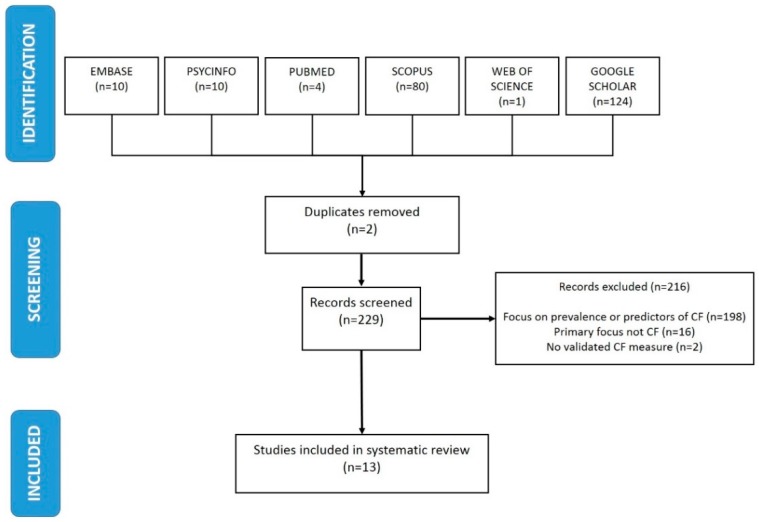
Compassion fatigue (CF) is stress resulting from exposure to a traumatized individual. CF has been described as the convergence of secondary traumatic stress (STS) and cumulative burnout (BO), a state of physical and mental exhaustion caused by a depleted ability to cope with one's everyday environment. Professionals regularly exposed to the traumatic experiences of the people they service, such as healthcare, emergency and community service workers, are particularly susceptible to developing CF. This can impact standards of patient care, relationships with colleagues, or lead to more serious mental health conditions such as posttraumatic stress disorder (PTSD), anxiety or depression. A systematic review of the effectiveness of interventions to reduce CF in healthcare, emergency and community service workers was conducted. Thirteen relevant studies were identified, the majority of which were conducted on nurses (n = 10). Three included studies focused on community service workers (social workers, disability sector workers), while no studies targeting emergency service workers were identified. Seven studies reported a significant difference post-intervention in BO (n = 4) or STS (n = 3). This review revealed that evidence of the effectiveness of CF interventions in at-risk health and social care professions is relatively recent. Therefore, we recommend more research to determine how best to protect vulnerable workers at work to prevent not only CF, but also the health and economic consequences related to the ensuing, and more disabling, physical and mental health outcomes.
Keywords: community service workers; compassion fatigue; emergency; health; interventions; risk factors; secondary trauma.
Figures
References
-
- Figley C. Compassion Fatigue: Coping with Secondary Stress Disorder in Those Who Treat the Traumatised. Brunner/Mazel; Bristol, UK: 1995. Compassion fatigue as secondary traumatic stress disorder: An overview in CR Figley.
-
- Figley C.R. Secondary Traumatic Stress: Self-Care Issues for Clinicians, Researchers, and Educators. The Sidran Press; Baltimore, MD, USA: 1995. Compassion fatigue: Toward a new understanding of the costs of caring; pp. 3–28.
-
- Baranowsky A., Gentry J. Workbook/Journal for a Compassion Fatigue Specialist. Psych Ink Resources; Toronto, ON, Canada: 1999.
-
- Figley C.R., Kleber R.J. Beyond Trauma. Springer; Boston, MA, USA: 1995. Beyond the “victim”; pp. 75–98.
Publication types
MeSH terms
LinkOut - more resources
Full Text Sources
Other Literature Sources
Medical
