


The Relationship between Metabolic Syndrome and Osteoporosis: A Review
- PMID: 27338453
- PMCID: PMC4924188
- DOI: 10.3390/nu8060347
The Relationship between Metabolic Syndrome and Osteoporosis: A Review
Abstract
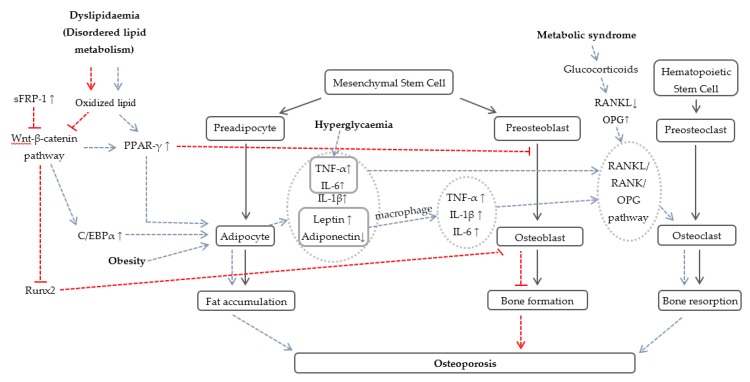
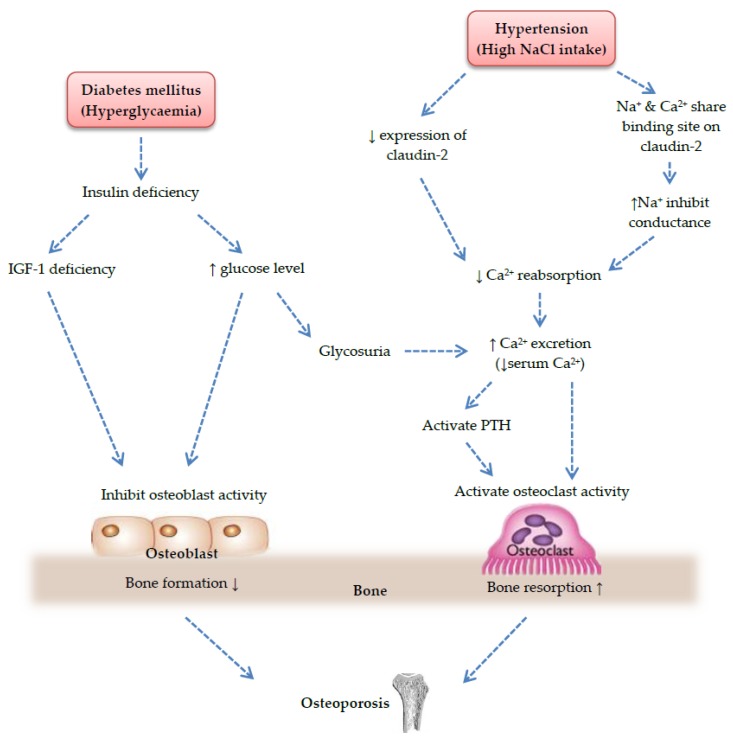
Metabolic syndrome (MetS) and osteoporosis are two major healthcare problems worldwide. Metabolic syndrome is a constellation of medical conditions consisting of central obesity, hyperglycemia, hypertension, and dyslipidemia, in which each acts on bone tissue in different ways. The growing prevalence of MetS and osteoporosis in the population along with the controversial findings on the relationship between both conditions suggest the importance for further investigation and discussion on this topic. This review aims to assess the available evidence on the effects of each component of MetS on bone metabolism from the conventional to the contemporary. Previous studies suggested that the two conditions shared some common underlying pathways, which include regulation of calcium homeostasis, receptor activator of NF-κB ligand (RANKL)/receptor activator of the NF-κB (RANK)/osteoprotegerin (OPG) and Wnt-β-catenin signaling pathways. In conclusion, we suggest that MetS may have a potential role in developing osteoporosis and more studies are necessary to further prove this hypothesis.
Keywords: bone; dyslipidaemia; hyperglycaemia; hypertension; obesity; osteoporosis.
Figures
References
-
- Alberti K.G., Eckel R.H., Grundy S.M., Zimmet P.Z., Cleeman J.I., Donato K.A., Fruchart J.C., James W.P., Loria C.M., Smith S.C., Jr. Harmonizing the metabolic syndrome: A joint interim statement of the International Diabetes Federation Task Force on Epidemiology and Prevention; National Heart, Lung, and Blood Institute; American Heart Association; World Heart Federation; International Atherosclerosis Society; and International Association for the Study of Obesity. Circulation. 2009;120:1640–1645. - PubMed
-
- Nestel P., Lyu R., Low L.P., Sheu W.H., Nitiyanant W., Saito I., Tan C.E. Metabolic syndrome: Recent prevalence in East and Southeast Asian populations. Asia Pac. J. Clin. Nutr. 2007;16:362–367. - PubMed
-
- Pan W.H., Yeh W.T., Weng L.C. Epidemiology of metabolic syndrome in Asia. Asia Pac. J. Clin. Nutr. 2008;17:37–42. - PubMed
Publication types
MeSH terms
LinkOut - more resources
Full Text Sources
Other Literature Sources
Medical
