


Salience Network Connectivity in Autism Is Related to Brain and Behavioral Markers of Sensory Overresponsivity
- PMID: 27343889
- PMCID: PMC4924541
- DOI: 10.1016/j.jaac.2016.04.013
Salience Network Connectivity in Autism Is Related to Brain and Behavioral Markers of Sensory Overresponsivity
Abstract
Objective: The salience network, an intrinsic brain network thought to modulate attention to internal versus external stimuli, has been consistently found to be atypical in autism spectrum disorders (ASD). However, little is known about how this altered resting-state connectivity relates to brain activity during information processing, which has important implications for understanding sensory overresponsivity (SOR), a common and impairing condition in ASD related to difficulty downregulating brain responses to sensory stimuli. This study examined how SOR in youth with ASD relates to atypical salience network connectivity and whether these atypicalities are associated with abnormal brain response to basic sensory information.
Method: Functional magnetic resonance imaging was used to examine how parent-rated SOR symptoms related to salience network connectivity in 61 youth (aged 8-17 years; 28 with ASD and 33 IQ-matched typically developing youth). Correlations between resting-state salience network connectivity and brain response to mildly aversive tactile and auditory stimuli were examined.
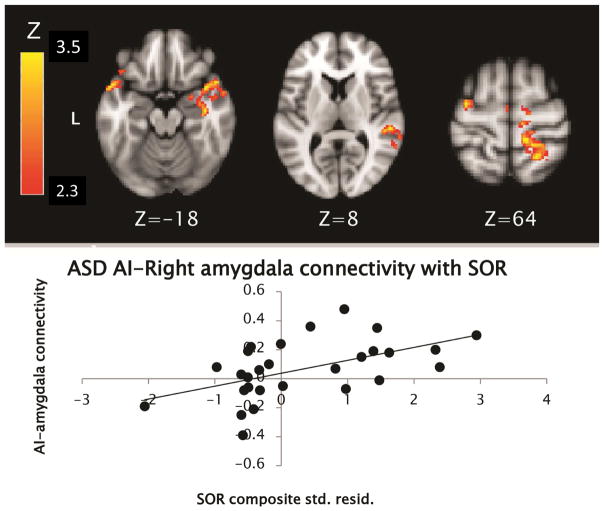
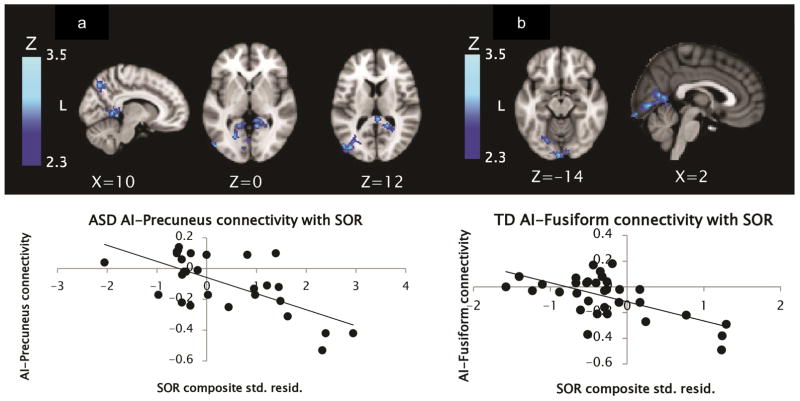
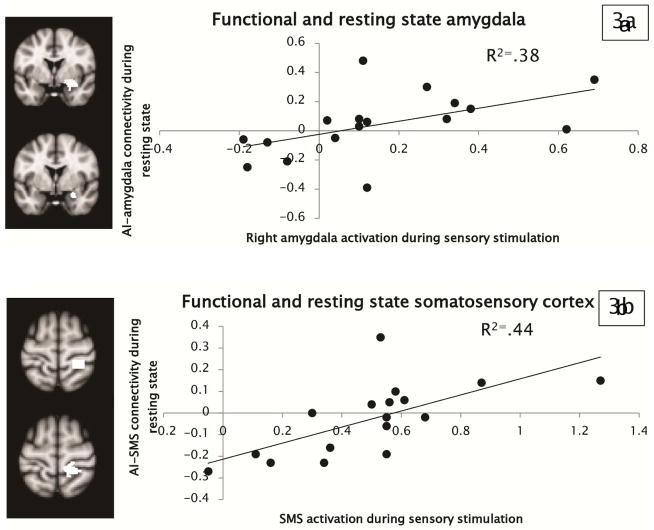
Results: SOR in youth with ASD was related to increased resting-state functional connectivity between salience network nodes and brain regions implicated in primary sensory processing and attention. Furthermore, the strength of this connectivity at rest was related to the extent of brain activity in response to auditory and tactile stimuli.
Conclusion: Results support an association between intrinsic brain connectivity and specific atypical brain responses during information processing. In addition, findings suggest that basic sensory information is overly salient to individuals with SOR, leading to overattribution of attention to this information. Implications for intervention include incorporating sensory coping strategies into social interventions for individuals with SOR.
Keywords: autism spectrum disorders; fMRI; resting state; salience network; sensory overresponsivity.
Copyright © 2016 American Academy of Child and Adolescent Psychiatry. Published by Elsevier Inc. All rights reserved.
Figures
References
-
- Wass S. Distortions and disconnections: Disrupted brain connectivity in autism. Brain Cogn. 2011;75:18–28. - PubMed
-
- Greicius M. Resting-state functional connectivity in neuropsychiatric disorders. Curr Opin Neurol. 2008;24:424–430. - PubMed
-
- Fox MD, Raichle ME. Spontaneous fluctuations in brain activity observed with functional magnetic resonance imaging. Nat Rev Neurosci. 2007;8:700–711. - PubMed
Publication types
MeSH terms
Grants and funding
LinkOut - more resources
Full Text Sources
Other Literature Sources
Medical
