. 2016 Jun 27:6:28541.
doi: 10.1038/srep28541.

Two types of soybean diacylglycerol acyltransferases are differentially involved in triacylglycerol biosynthesis and response to environmental stresses and hormones

Affiliations

Two types of soybean diacylglycerol acyltransferases are differentially involved in triacylglycerol biosynthesis and response to environmental stresses and hormones

BeiBei Chen et al. Sci Rep. .

Abstract

Diacylglycerol acyltransferases (DGATs) play a key role in plant triacylglycerol (TAG) biosynthesis. Two type 1 and 2 DGATs from soybean were characterized for their functions in TAG biosynthesis and physiological roles. GmDGAT1A is highly expressed in seeds while GmDGAT2D is mainly expressed in flower tissues. They showed different expression patterns in response to biotic and abiotic stresses. GmDGAT2D was up-regulated by cold and heat stress and ABA signaling, and repressed by insect biting and jasmonate, whereas GmDGAT1A show fewer responses. Both GmDGAT1A and GmDGAT2D were localized to the endoplasmic reticulum and complemented the TAG deficiency of a yeast mutant H1246. GmDGAT2D-transgenic hairy roots synthesized more 18:2- or 18:1-TAG, whereas GmDGAT1A prefers to use 18:3-acyl CoA for TAG synthesis. Overexpression of both GmDGATs in Arabidopsis seeds enhanced the TAG production; GmDGAT2D promoted 18:2-TAG in wild-type but enhanced 18:1-TAG production in rod1 mutant seeds, with a decreased 18:3-TAG. However, GmDGAT1A enhanced 18:3-TAG and reduced 20:1-TAG contents. The different substrate preferences of two DGATs may confer diverse fatty acid profiles in soybean oils. While GmDGAT1A may play a role in usual seed TAG production and GmDGAT2D is also involved in usual TAG biosynthesis in other tissues in responses to environmental and hormonal cues.


Figures
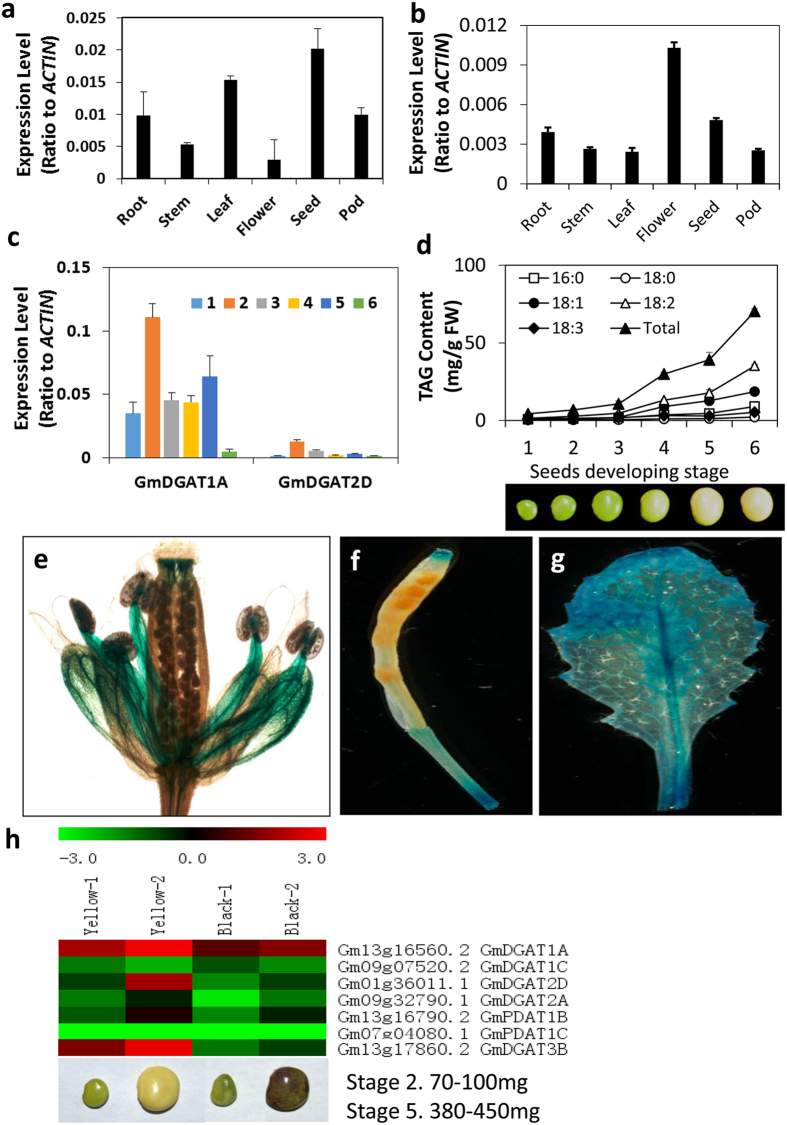
Figure 1
Figure 1. GmDGAT1A and GmDGAT2D expression pattern.
The tissue expression patterns of GmDGAT1A and GmDGAT2D in nodule, root, stem, leaf, flower, pod, seed was tested by qRT-PCR with actin as internal standard. Seeds at different development stages were harvested. Six developmental stages are: stage 1. 40–70 mg; stage 2. 80–100 mg; stage 3.150–200 mg; stage 4. 250–300 mg; stage 5. 350–430 mg; stage 6. 320–350 mg. (a) Tissue specific expression of GmDGAT2D. (b) Tissue specific expression of GmDGAT1A. (c) GmDGAT1A and GmDGAT2D expression at various seed developmental stages. (d) TAG accumulation and fatty acid composition changes in various seed developmental stages (e–g) GmDGAT2D promoter-driven GUS expression in Arabidopsis flower (e), GmDGAT2D promoter-driven GUS expression in Arabidopsis silique (f) and leaf (g). (h) GmDGAT2D and GmDGAT1A expression patterns in comparison of other DAGT genes. Soybean Illumina expression data obtained from developing seeds of two varieties with PI 84970 (Hokkaido, seed with a black seed coat) and PI 518671 (Williams 82, seed with yellow seed coat) at the developmental stages of 2 and 5. Data are presented as averages of three biological replicates ± SD.
Figure 2
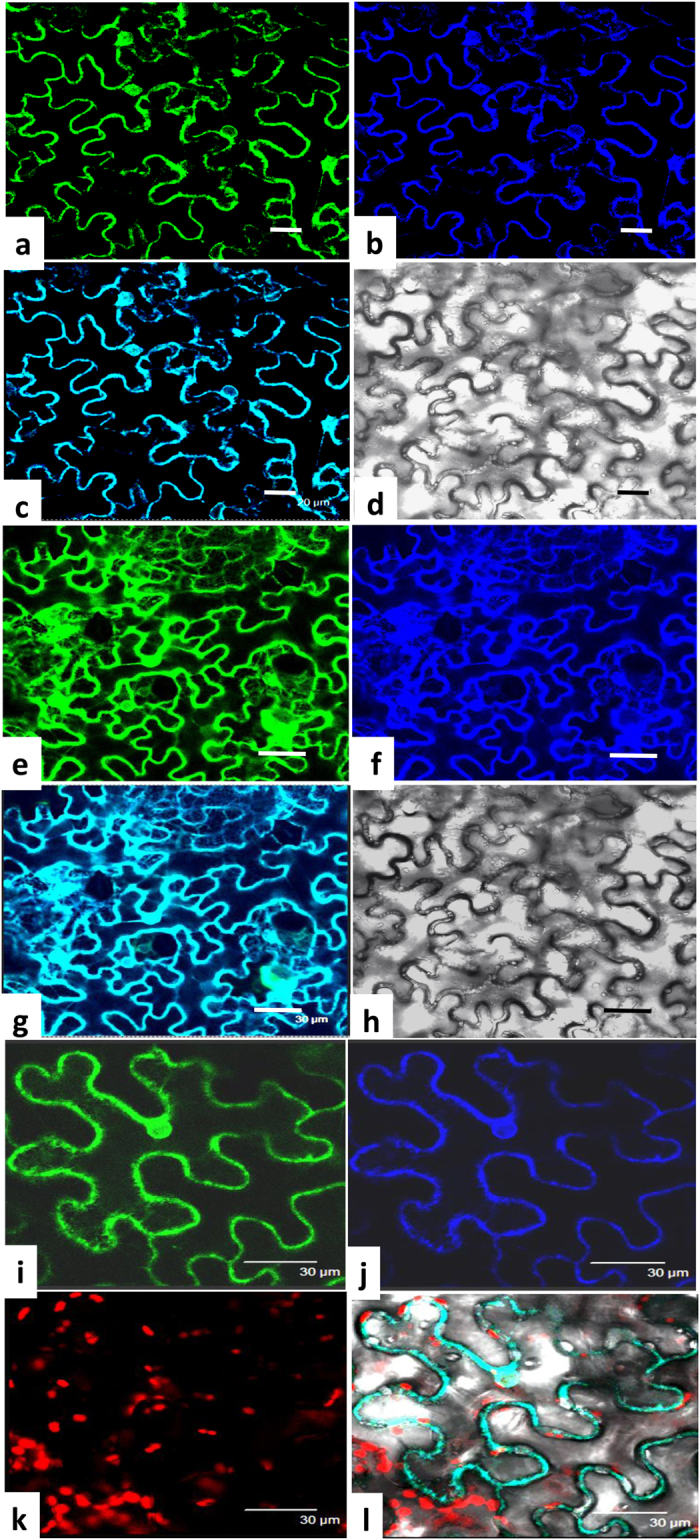
Figure 2. Subcellular localization of GmDGAT-1A and -2D.
GmDGAT1A-GFP, GmDGAT2D-GFP, and a ER marker CD3-959-mCherry, driven by the cauliflower mosaic virus 35S promoter, were transiently expressed in tobacco leaf epidermal cells. Materials were viewed by confocal microscopy. Represatative photos were shown. (a–d) Localization of GmDGAT1A-GFP. Image of GmDGAT1A-GFP (a), the blue fluorescence image of ER marker CD3-959-mCherry (b), and the merged image of GmDGAT1A-GFP and CD3-959-mCherry (c), and the bright field image (d). Bars = 20 μm. (e–h) Localization of GmDGAT2D-GFP. Image of GmDGAT2D-GFP (e), image of ER marker CD3-959-mCherry (f), the merged image of GmDGAT2D-GFP and ER marker CD3-959-mCherry (g), and the bright field image of cells (h). Bars = 30 μm. (i–l) Enlarged image of GmDGAT2D-GFP (i), image of ER marker (j), the chloroplast autofluorescence images (k), and merged image of GmDGAT2D-GFP, ER marker, and chloroplast autofluorescence in a bright field (l). Bars = 30 μm.
Figure 3
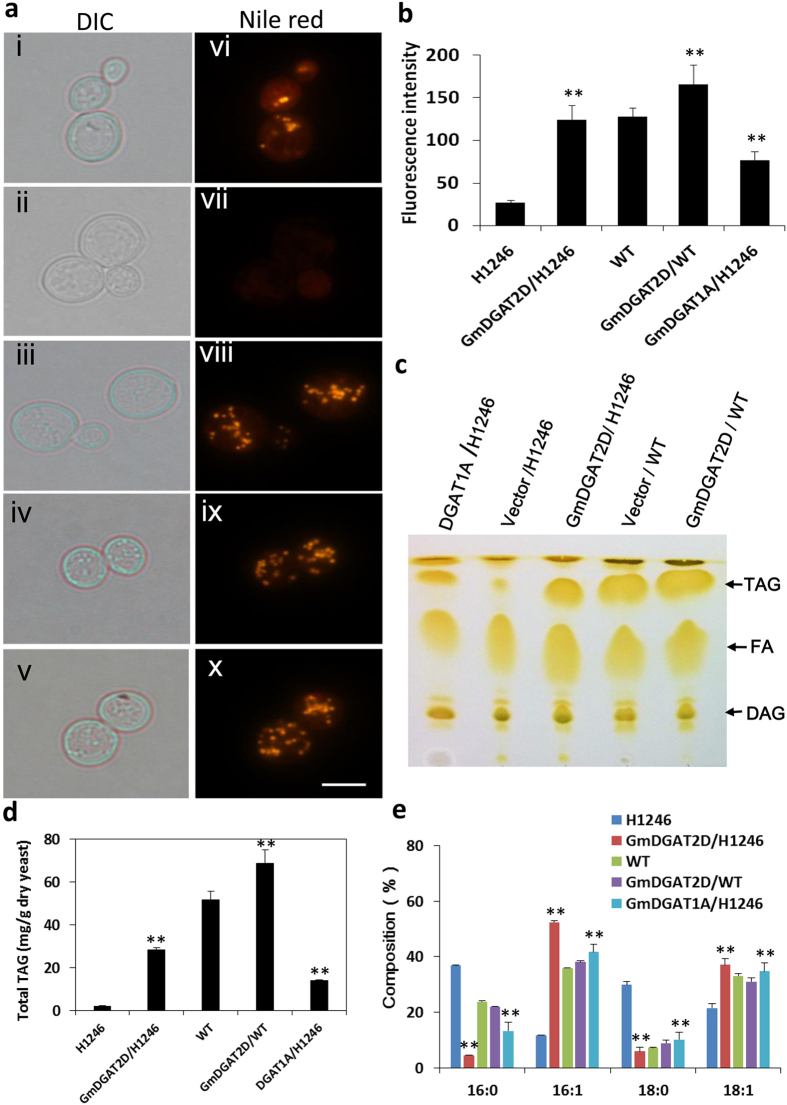
Figure 3. Functional expression of GmDGATs in yeast cells.
The quadruple mutant Saccharomyces cerevisiae strain H1246 and the wild-type strain YPH499a were transformed with GmDGAT genes and vector control. (a) Nile red staining of oil drops in GmDGAT1A (i, vi)- and 2D (iii, viii)- or pYESDEST52 vector (ii, vii)-expressing yeast mutant strain H1246, and vector (iv, ix) and GmDGAT2D (v, x expressed in wild-type strain YPH499a cells. TAG was extracted and separated by thin-layer chromatography and TAG spots were scraped for analyzing compositions of fatty acids by GC. (b) Nile Red Assay on oil drops and fluorescence-based TAG content. (c) Thin-layer chromatography of lipids extracted from yeast transformants. DAG, fatty acids (FAs), and TAG spots were labeled out. TAG spots were scraped off from the thin-layer chromatography (TLC) plates and were extracted for analysis of TAG contents and compositions with GC. (d) Total TAG production in yeast mutant strain H1246 and wild-type strain YPH499a, Total TAG was measured by GC. (e) Fatty acid compositions of TAG produced in GmDGAT2D- or pYESDEST52 empty vector-expressing yeast mutant strain H1246 and wild-type strain YPH499a. All data are presented by mean of at least three biological replicates ± SD. *P < 0.05 and **P < 0.01 by Student’s t test for significant difference.
Figure 4
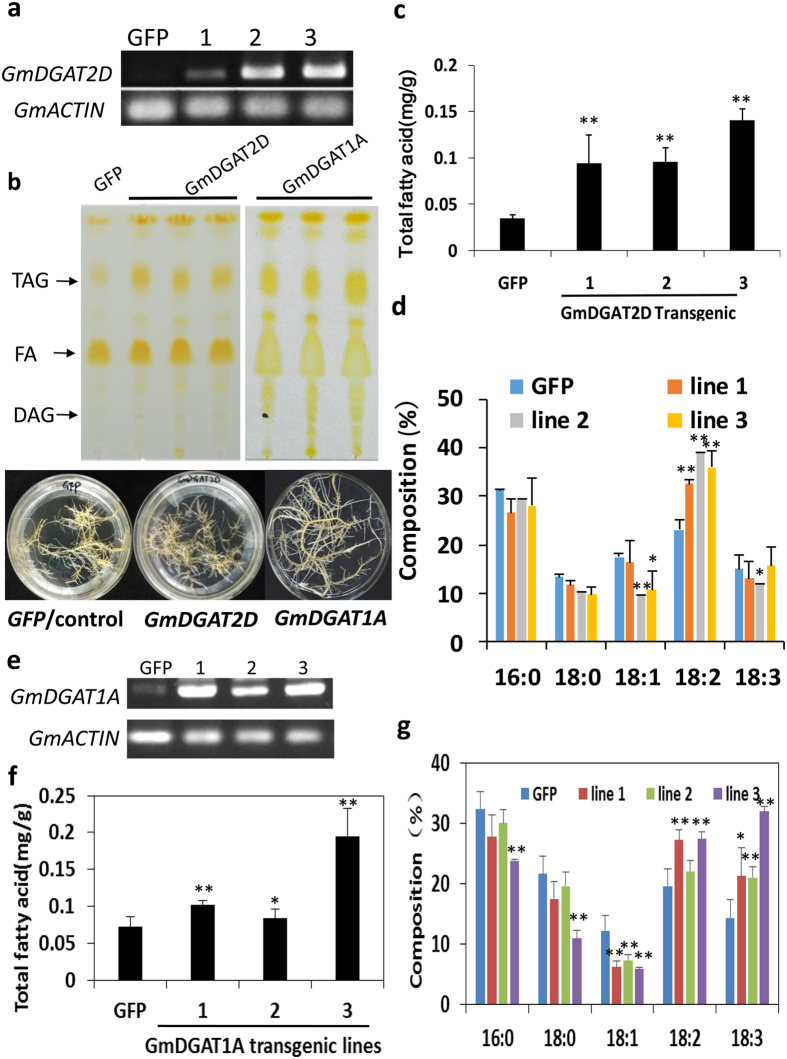
Figure 4. Ectopic expression of GmDGATs in soybean hairy roots.
The cotyledons of germinating soybean seeds were used for infection by Agrobacteria K599 harboring pB2GW7-GmDGAT2D or –GmDGAT1A. Generated transgenic hairy roots selected on ppt-medium were confirmed by qRT-PCR for target gene expression, and analyzed for TAG production, as compared with GFP-expressing hairy roots as control. Total neutral lipids were extracted and separated by TLC. TAG spots were scraped off from TLC plates and extracted for determination of total contents and compositions by using GC. (a) qRT-PCR confirmation of GmDGAT2D expression in soybean transgenic hairy roots. (b) TLC analysis of neutral lipids extracted from hairy root transformants. DAG, fatty acids (FAs), and TAG spots were labeled out. Bottom panel shows the photos of soybean transgenic hairy roots. Hairy roots expressing free GFP vector were used as a control. (c) Quantification of total TAGs from hairy roots ectopically expressing GmDGAT2D compared with GFP control. (d) Fatty acid composition of TAGs from hairy roots expressing GmDGAT2D and GFP control. (e) qRT-PCR confirmation of GmDGAT1A expression in soybean transgenic hairy roots. (f) Total TAGs in GmDGAT1A-expressing hairy roots, GFP-hairy roots are used as a control. (g) Fatty acid composition of TAGs from hairy roots expressing GmDGAT1A and GFP control. All data are expressed as mean ± SD (n > 4); three lines are representative of more than 10 transgenic hairy root lines were analyzed. *P < 0.05 and **P < 0.01 by Student’s t test for significant difference.
Figure 5
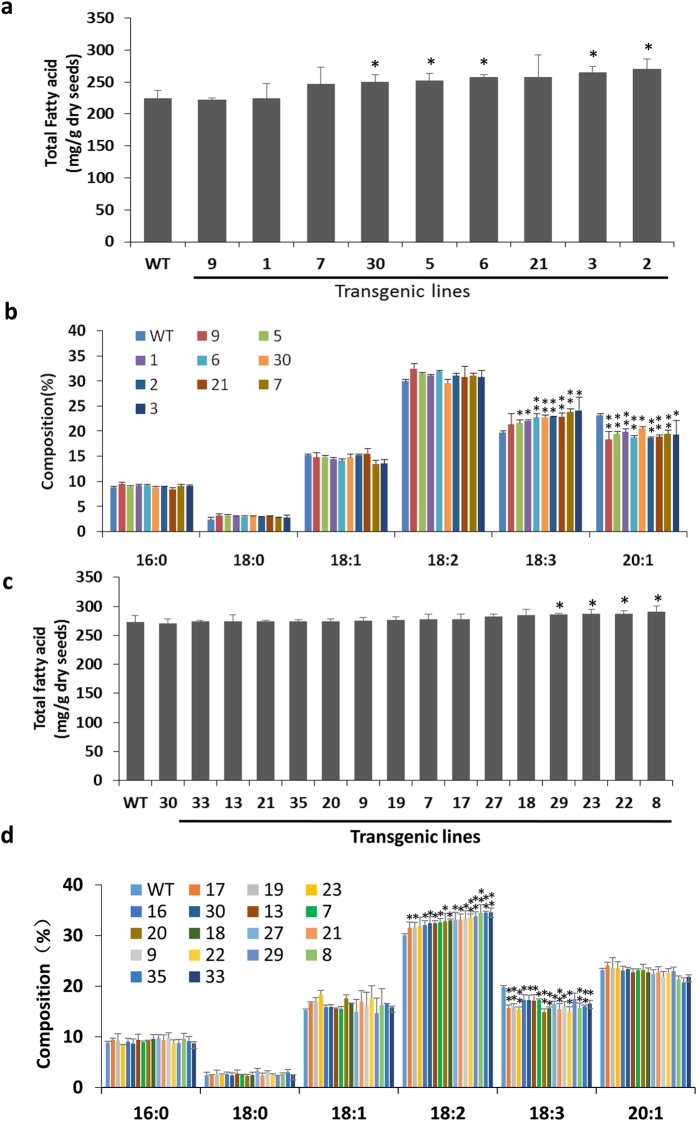
Figure 5. Functional expression of GmDGAT-1A and -2D in Arabidopsis thaliana seeds.
(a) Total TAGs in GmDGAT1A-expressing Arabidopsis seeds. (b) Fatty acid composition of TAGs from Arabidopsis seeds expressing GmDGAT1A. (c) Total TAGs in GmDGAT2D-expressing Arabidopsis seeds. (d) Fatty acid composition of TAGs from Arabidopsis seeds expressing GmDGAT2D. All data are expressed as mean ± SD from at least three biological duplicates. *P < 0.05 and **P < 0.01 by Student’s t test for significant difference. T2 transgenic Arabidopsis seeds were used for analysis.
Figure 6
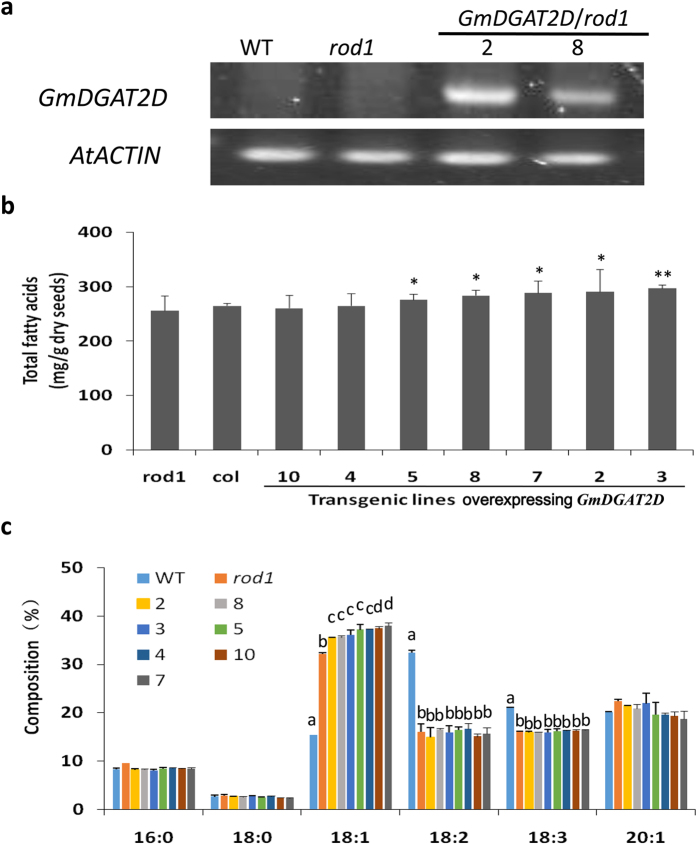
Figure 6. Effects of GmDGAT2D overexpression on TAG production in rod1 mutant seeds.
(a) Expression of GmDGAT2D in rod1 mutants, as confirmed by semi-quantitative PCR. (b) Total TAGs in GmDGAT2D-expressing Arabidopsis rod1 mutant seeds. *P < 0.05 by Student’s t test (n > 3) for the significant difference. (c) Fatty acid composition of TAGs from Arabidopsis wild-type (Col-0) seeds, rod1, and rod1 expressing GmDGAT2D. Different letters in a group indicate sample with significant differences (p < 0.05) from each other. Data are expressed as mean ± SD from at least three biological duplicates. T3 transgenic Arabidopsis seeds were used for analysis.
Figure 7
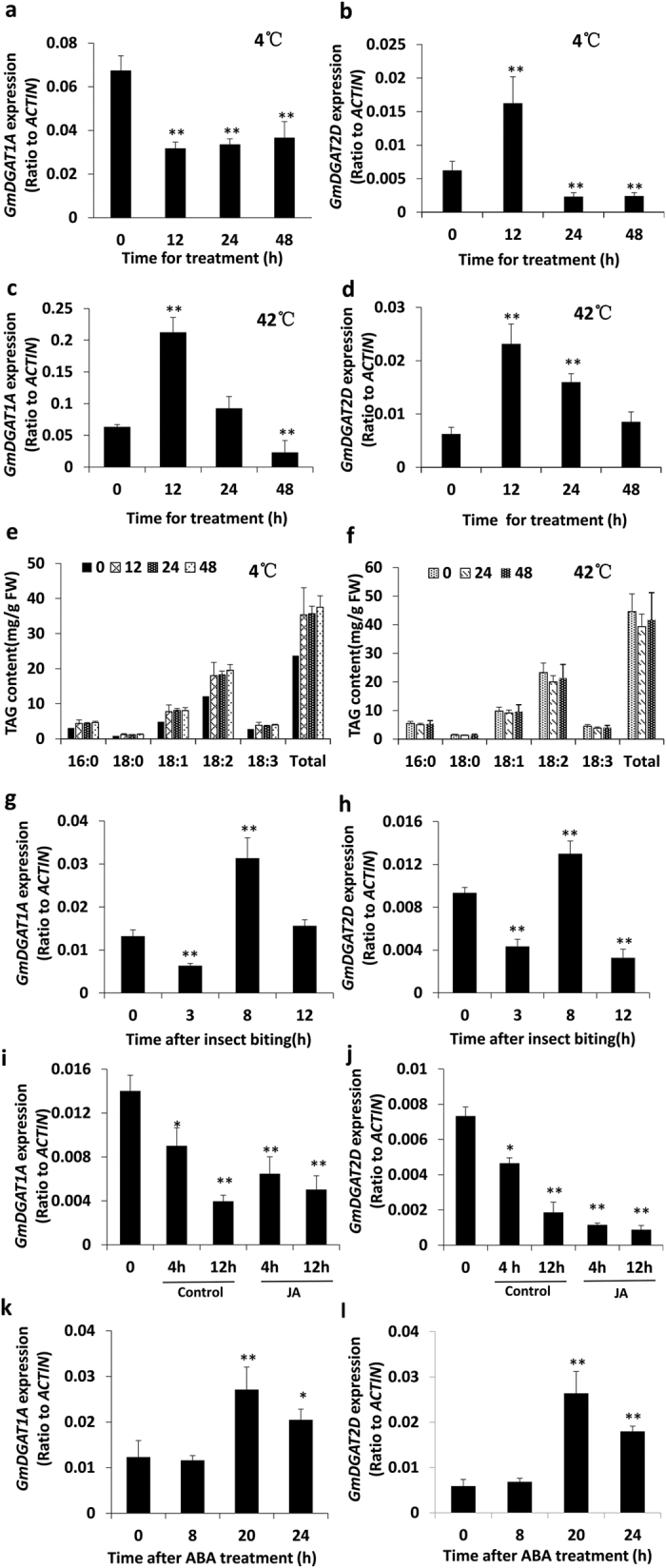
Figure 7. Expression of GmDGATs in response to hormonal and environmental stresses.
Soybean seedlings with 9 trifoliate (4 weeks old) were subject to insect biting, spraying with hormones (100 μM ABA), or their detached leaves were floating on 50 μM MeJA solution and water (control). Eight-week old soybean plant bearing pods were moved into a cold (4 °C) or heat (42 °C) stress in incubator for indicated time. Leaf samples or pods were harvested at the indicated time. qRT-PCR analysis of GmDGAT1A (a,c,e,g,i,k) and GmDGAT2D (b,d,f,h,j,l) expression under abiotic and biotic stresses. Soybean developing seeds treated under 4 °C (a,b) or 42 °C (c,d) stresses. Total TAG contents and fatty acid composition of soybean seeds exposured to 4 °C (e) or 42 °C (f) for the indicated time. Soybean seedlings were subject to insect biting (g,h), JA treatment (i,j), ABA treatment (k,l). Data are expressed as mean ± SD (n > 3). *P < 0.05 and **P < 0.01 by Student’s t test for significant difference.

References

    1. Wilson R. F. The role of genomics and biotechnology in achieving global food security for high-oleic vegetable oil. Journal of oleo science 61, 357–367 (2012). - PubMed
    1. Singer S. D., Zou J. & Weselake R. J. Abiotic factors influence plant storage lipid accumulation and composition. Plant Sci 243, 1–9 (2016). - PubMed
    1. Clemente T. E. & Cahoon E. B. Soybean oil: genetic approaches for modification of functionality and total content. Plant Physiol 151, 1030–1040 (2009). - PMC - PubMed
    1. Moellering E. R., Muthan B. & Benning C. Freezing tolerance in plants requires lipid remodeling at the outer chloroplast membrane. Science 330, 226–228 (2000). - PubMed
    1. Yang Y., Yu X., Song L. & An C. ABI4 activates DGAT1 expression in Arabidopsis seedlings during nitrogen deficiency. Plant Physiol 156, 873–883 (2011). - PMC - PubMed

Publication types

MeSH terms

LinkOut - more resources