


Mechanisms of protein balance in skeletal muscle
- PMID: 27345321
- PMCID: PMC4926040
- DOI: 10.1016/j.domaniend.2016.02.012
Mechanisms of protein balance in skeletal muscle
Abstract
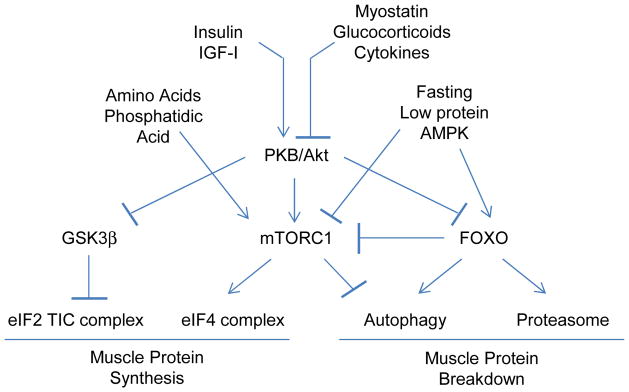
Increased global demand for adequate protein nutrition against a backdrop of climate change and concern for animal agriculture sustainability necessitates new and more efficient approaches to livestock growth and production. Anabolic growth is achieved when rates of new synthesis exceed turnover, producing a positive net protein balance. Conversely, deterioration or atrophy of lean mass is a consequence of a net negative protein balance. During early life and periods of growth, muscle mass is driven by increases in protein synthesis at the level of mRNA translation. Throughout life, muscle mass is further influenced by degradative processes such as autophagy and the ubiquitin proteasome pathway. Multiple signal transduction networks guide and coordinate these processes alongside quality control mechanisms to maintain protein homeostasis (proteostasis). Genetics, hormones, and environmental stimuli each influence proteostasis control, altering capacity and/or efficiency of muscle growth. An overview of recent findings and current methods to assess muscle protein balance and proteostasis is presented. Current efforts to identify novel control points have the potential through selective breeding design or development of hormetic strategies to better promote growth and health span during environmental stress.
Keywords: Muscle protein degradation; Muscle protein synthesis; Proteolysis; Proteostasis; mRNA translation.
Copyright © 2016 Elsevier Inc. All rights reserved.
Figures
References
-
- WHO. Availability and changes in consumption of animal products. Nutrition health topics: Global and regional food consumption patterns and trends. 2015 http://www.who.int/nutrition/topics/3_foodconsumption/en/index4.html.
-
- Post MJ. Cultured meat from stem cells: Challenges and prospects. Meat science. 2012;92:297–301. - PubMed
-
- Humane Society of the United States. An HSUS report: Welfare issues with selective breeding for rapid growth in broiler chickens and turkeys. :1–9. http://www.humanesociety.org/assets/pdfs/farm/welfiss_breeding_chickens_....
-
- Bassett A. Welfare and belgian blue cattle. Animal Welfare Approved Technical Advice Fact Sheet, Animal Welfare Approved. 2009:1–8. http://animalwelfareapproved.org/wp-content/uploads/2013/07/TAFS-1-Welfa....
-
- Zuo J, Xu M, Abdullahi YA, Ma L, Zhang Z, Feng D. Constant heat stress reduces skeletal muscle protein deposition in broilers. J Sci Food Agric. 2015;95:429–436. - PubMed
Publication types
MeSH terms
Substances
Grants and funding
LinkOut - more resources
Full Text Sources
Other Literature Sources
Medical
