


Characterizing absolute lymphocyte count profiles in dimethyl fumarate-treated patients with MS: Patient management considerations
- PMID: 27347439
- PMCID: PMC4909524
- DOI: 10.1212/CPJ.0000000000000238
Characterizing absolute lymphocyte count profiles in dimethyl fumarate-treated patients with MS: Patient management considerations
Abstract
Background: Delayed-release dimethyl fumarate (DMF), indicated for the treatment of patients with relapsing-remitting multiple sclerosis (MS), is a disease-modifying therapy with potential immunomodulatory and neuroprotective effects. In clinical trials, DMF was associated with reduced white blood cell and absolute lymphocyte counts. Current US prescribing information recommends obtaining a complete blood count, including absolute lymphocyte count (ALC), before initiating and during DMF treatment.
Methods: We conducted an integrated analysis of phase 2b/3/long-term extension studies of DMF in MS (N = 2,470) to characterize ALC profiles.
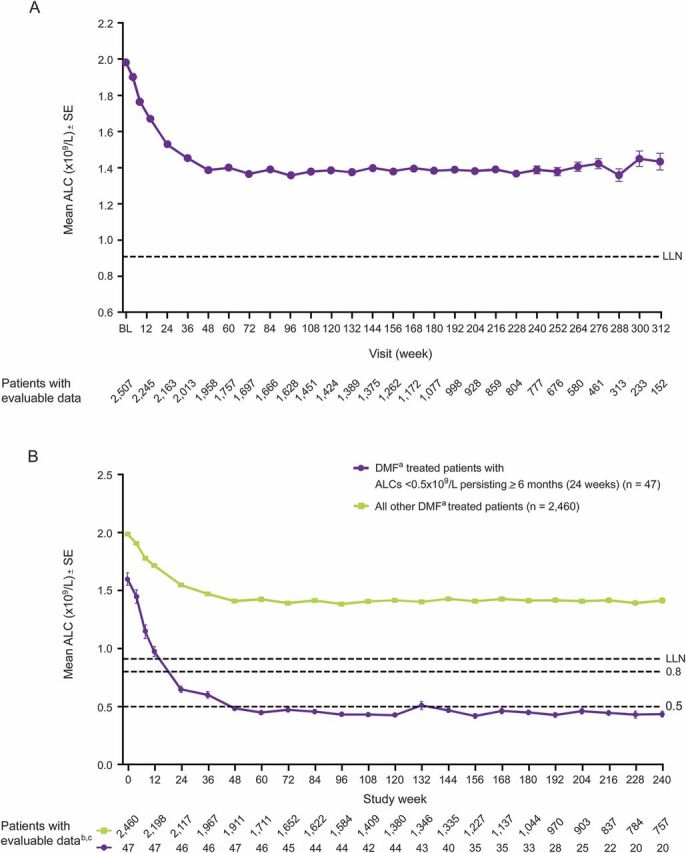
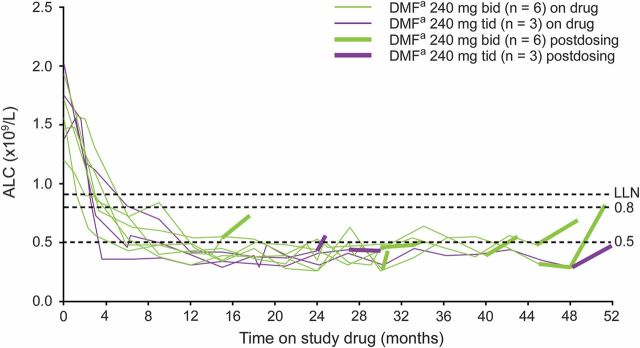
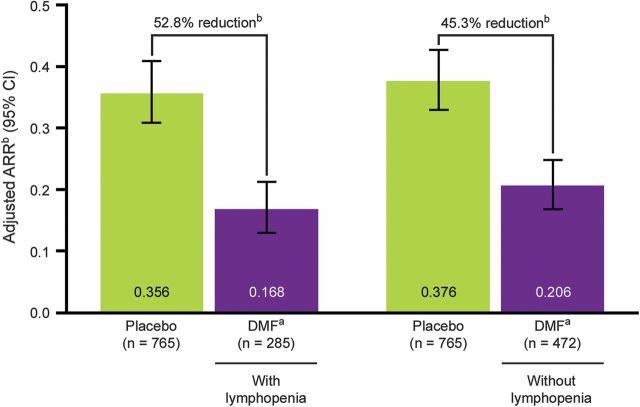
Results: Mean ALCs decreased by 30% during the first year and then plateaued, remaining above the lower limit of normal (LLN). Among patients treated ≥6 months (N = 2,099), 2.2% experienced ALCs <500 mm3 persisting ≥6 months. ALCs remained ≥LLN in 84% and 76% of patients during the first 6 and 12 months, respectively; of these, 0.1% and 0%, respectively, developed ALCs <500 mm3 persisting ≥6 months at any time. Evidence of ALC improvement following DMF discontinuation was observed. DMF efficacy was not substantially different in patients with and without lymphopenia.
Conclusion: Lymphocyte monitoring provides effective means for early identification of patients at risk for developing severe, prolonged lymphopenia.
Figures
References
-
- Goodin DS, Frohman EM, Garmany GP Jr, et al. Disease modifying therapies in multiple sclerosis: report of the Therapeutics and Technology Assessment Subcommittee of the American Academy of Neurology and the MS Council for Clinical Practice Guidelines. Neurology 2002;58:169–178. - PubMed
-
- Rio J, Comabella M, Montalban X. Multiple sclerosis: current treatment algorithms. Curr Opin Neurol 2011;24:230–237. - PubMed
-
- Linker RA, Lee DH, Ryan S, et al. Fumaric acid esters exert neuroprotective effects in neuroinflammation via activation of the Nrf2 antioxidant pathway. Brain 2011;134:678–692. - PubMed
-
- Tecfidera [package insert]. Cambridge, MA: Biogen, Inc; 2014.