


The course of major depressive disorder from childhood to young adulthood: Recovery and recurrence in a longitudinal observational study
- PMID: 27347807
- PMCID: PMC4975998
- DOI: 10.1016/j.jad.2016.05.042
The course of major depressive disorder from childhood to young adulthood: Recovery and recurrence in a longitudinal observational study
Abstract
Background: The episodic nature of major depressive disorder (MDD) in clinically referred adults has been well-characterized, particularly by the NIMH Collaborative Depression Study. Previous work has established that MDD also is episodic prior to adulthood, but no study has yet provided comprehensive information on the actual course of MDD in clinically referred juveniles. Thus, the present investigation sought to characterize recovery, recurrence, and their predictors across multiple episodes of MDD in initially 8- to 13-year-old outpatients (N=102), and to estimate freedom from morbidity ("well-time") across the years.
Method: Clinically referred youngsters with MDD were repeatedly assessed in an observational study across two decades (median follow up length: 15 years). Survival analytic techniques served to model recovery from the 1st, 2nd and 3rd lifetime episodes of MDD, the risk of developing the 2nd, 3rd, and 4th episodes, and the effects of traditional psychosocial and clinical predictors of outcomes. "Well-time" across the follow-up and its predictors also were examined.
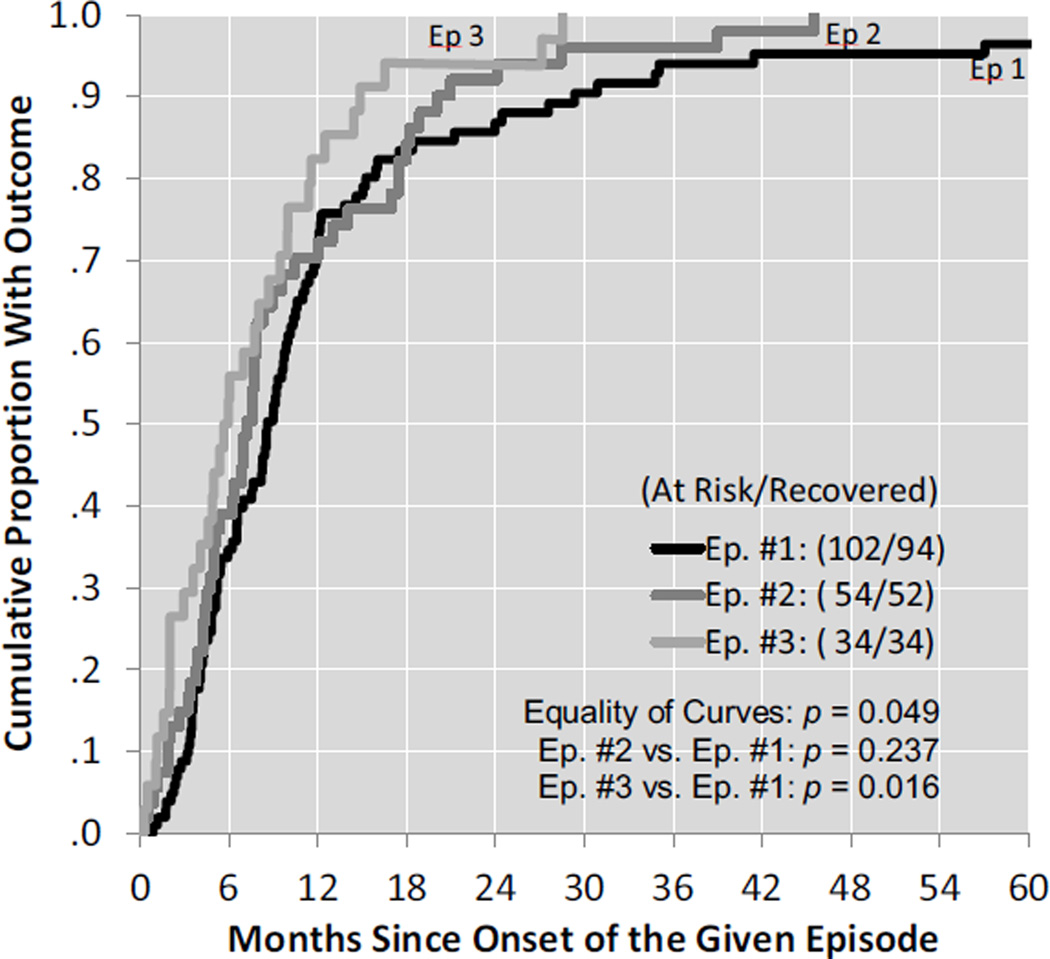
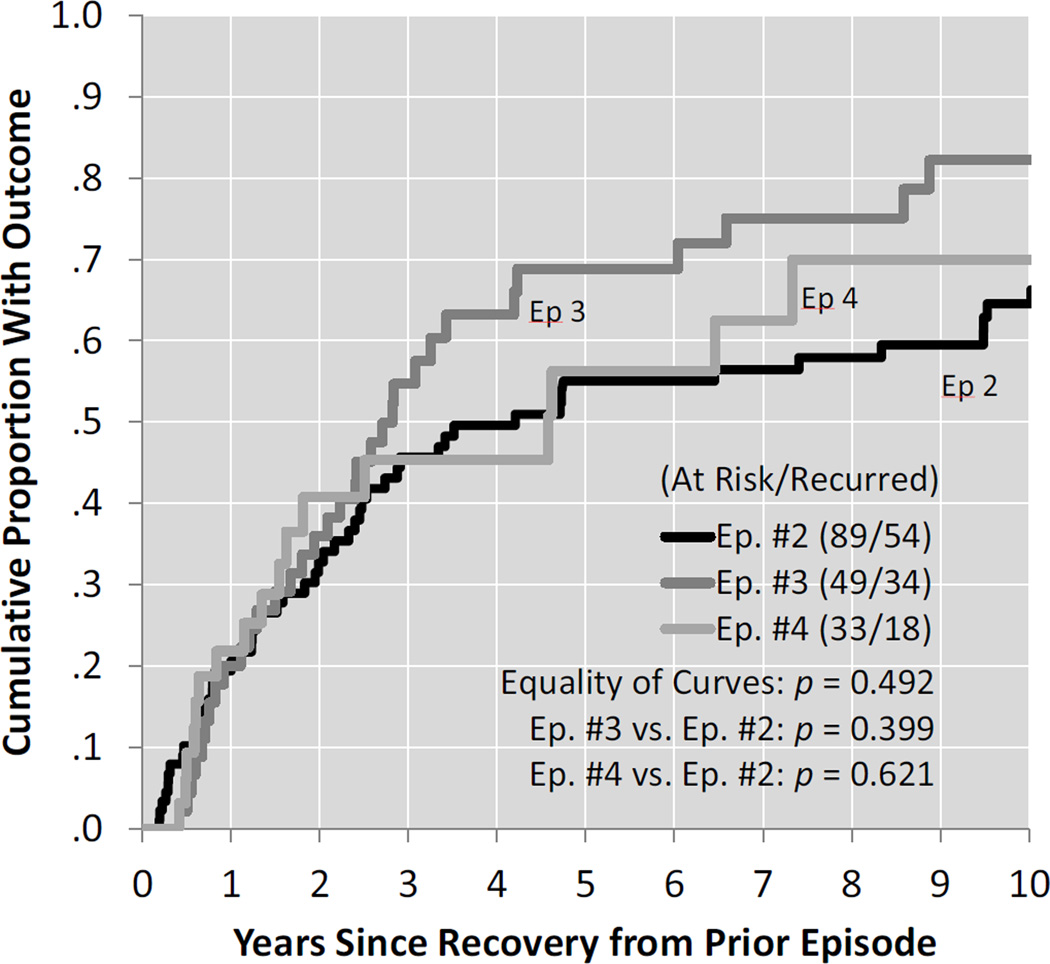
Results: Recovery rates ranged from 96% to 100% across MDD episodes; episode lengths ranged from 6 to 7 months. Up to 72% of those recovered from the first episode of MDD had a further episode; median inter-episode intervals were about 3-5 years. No single demographic, social, or clinical variable, nor treatment, consistently predicted recovery/recurrence. Psychiatric morbidity over time derived mostly from non-affective disorders, which, however, did not alter the course of MDD.
Limitations: The sample was relatively small and power to detect small effects further declined with each MDD episode recurrence.
Conclusions: Echoing findings on adults, the course of pediatric-onset MDD in this clinical sample was unequivocally episodic. Traditional course predictors had limited temporal stability, highlighting the need to examine novel predictor variables. The ongoing risk of depression episodes into the second and third decades of life suggests that prevention efforts should start in late childhood.
Keywords: Childhood depression; Clinical course; Course predictors; Longitudinal follow-up; Major depressive disorder/episode; Recovery and recurrence.
Copyright © 2016 Elsevier B.V. All rights reserved.
Conflict of interest statement
Conflict of Interest: Dr. Kovacs receives royalties from Multi-Health Inc., a test publisher. The other authors have no disclosure to report.
Figures
References
-
- American Psychiatric Association. Diagnostic and Statistical Manual of Mental Disorders. third. Washington, DC: Author; 1980.
-
- Beck AT, Steer RA, Brown GK. Beck Depression Inventory – II (BDI-II) San Antonio, TX: Pearson; 1996.
-
- Beshai S, Dobson KS, Bockting CLH, Quigley L. Relapse and recurrence prevention in depression: Current research and future prospects. Clin Psychol Rev. 2011;31:1349–1360. - PubMed
-
- Birmaher B, Brent DA, Kolko D, Baugher M, Bridge J, Holder D, Iyengar S, Ulloa RE. Clinical outcome after short-term psychotherapy for adolescents with major depressive disorder. Arch Gen Psychiatry. 2000;57:29–36. - PubMed
-
- Birmaher B, Williamson DE, Dahl RE, Axelson DA, Kaufman J, Dorn LD, Ryan ND. Clinical presentation and course of depression in youth: Does onset in childhood differ from onset in adolescence? J Am Acad Child Adolesc Psychiatry. 2004;43:63–70. - PubMed
Publication types
MeSH terms
Grants and funding
LinkOut - more resources
Full Text Sources
Other Literature Sources
