


Blood lipids influence DNA methylation in circulating cells
- PMID: 27350042
- PMCID: PMC4922056
- DOI: 10.1186/s13059-016-1000-6
Blood lipids influence DNA methylation in circulating cells
Abstract
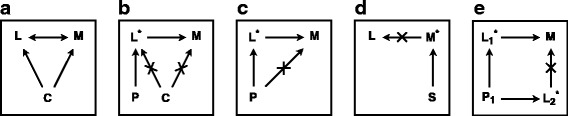
Background: Cells can be primed by external stimuli to obtain a long-term epigenetic memory. We hypothesize that long-term exposure to elevated blood lipids can prime circulating immune cells through changes in DNA methylation, a process that may contribute to the development of atherosclerosis. To interrogate the causal relationship between triglyceride, low-density lipoprotein (LDL) cholesterol, and high-density lipoprotein (HDL) cholesterol levels and genome-wide DNA methylation while excluding confounding and pleiotropy, we perform a stepwise Mendelian randomization analysis in whole blood of 3296 individuals.
Results: This analysis shows that differential methylation is the consequence of inter-individual variation in blood lipid levels and not vice versa. Specifically, we observe an effect of triglycerides on DNA methylation at three CpGs, of LDL cholesterol at one CpG, and of HDL cholesterol at two CpGs using multivariable Mendelian randomization. Using RNA-seq data available for a large subset of individuals (N = 2044), DNA methylation of these six CpGs is associated with the expression of CPT1A and SREBF1 (for triglycerides), DHCR24 (for LDL cholesterol) and ABCG1 (for HDL cholesterol), which are all key regulators of lipid metabolism.
Conclusions: Our analysis suggests a role for epigenetic priming in end-product feedback control of lipid metabolism and highlights Mendelian randomization as an effective tool to infer causal relationships in integrative genomics data.
Keywords: DNA methylation; Gene expression; Lipids; Mendelian randomization.
Figures
Comment in
-
Mendelian randomization in (epi)genetic epidemiology: an effective tool to be handled with care.Genome Biol. 2016 Jul 14;17(1):156. doi: 10.1186/s13059-016-1018-9. Genome Biol. 2016. PMID: 27418254 Free PMC article.
References
-
- Bekkering S, Quintin J, Joosten LA, van der Meer JW, Netea MG, Riksen NP. Oxidized low-density lipoprotein induces long-term proinflammatory cytokine production and foam cell formation via epigenetic reprogramming of monocytes. Arterioscler Thromb Vasc Biol. 2014;34:1731–8. doi: 10.1161/ATVBAHA.114.303887. - DOI - PubMed
MeSH terms
Substances
LinkOut - more resources
Full Text Sources
Other Literature Sources
