


Patterns of Acute Poisoning in Childhood in Zagazig, Egypt: An Epidemiological Study
- PMID: 27351009
- PMCID: PMC4897492
- DOI: 10.1155/2014/245279
Patterns of Acute Poisoning in Childhood in Zagazig, Egypt: An Epidemiological Study
Abstract
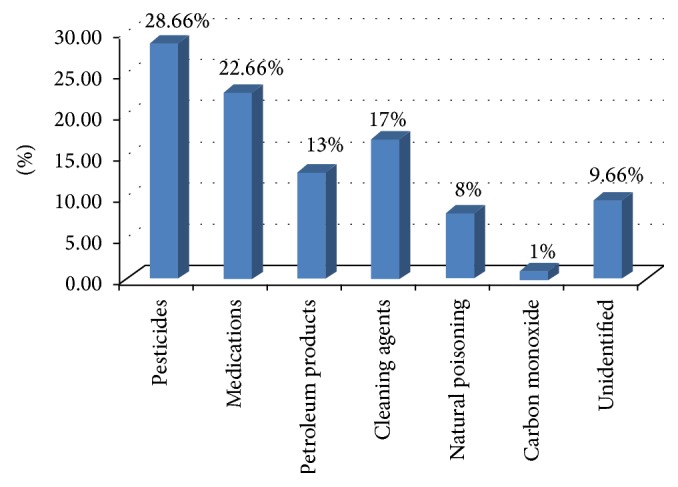
Background. Acute poisoning represents one of the most common medical emergencies in childhood. In view of paucity of literature on accidental poisoning among children in Egypt, this study was designed to describe the pattern of childhood poisoning in Zagazig University Hospitals. Patients and Methods. This retrospective study included 300 children up to 12 years with acute poisoning admitted to the Pediatric Department and Poisoning Treatment Unit, Zagazig University Hospitals, from January 2011 to August 2012. Complete epidemiological and clinical data were recorded and analyzed. Results. Three hundred of poisoned children were enrolled in this study. Children from 1 to 6 years were more liable to poisoning (81%). More boys than girls were poisoned at all age groups. The majority of all cases (99%) were due to accidental poisoning. Overall, 32% of the poisoned cases were living in Zagazig city while 68% were living in the rural areas. The presenting symptoms were classic in 60% of the cases. Pesticides, therapeutic drugs, and cleaning and disinfectant agents were the most frequent poisoning agents (28.7%, 22.7%, and 17.0%, resp.). In 86.0% of cases, observation with or without supportive measures together with decontamination and specific antidote therapy whenever needed was sufficient. Conclusion. Most of the poisonings were due to accidental ingestions by infants and young children. Pesticides and medications were the most commonly involved agents.
Figures
References
-
- Steele P., Spyker D. A. Poisonings. Pediatric Clinics of North America. 1985;32(1):77–85. - PubMed
-
- Rodgers G. C., Jr., Condurache T., Reed M. D., Bestic M., Gal P. Poisonings. In: Kliegman R. M., Behrman R. E., Jenson H. B., Stanton B. F., editors. Nelson’s Textbook of Pediatrics. New York, NY, USA: Saunders: Elsevier; 2007. pp. 689–732.
-
- Peden M., Oyegbite K., Ozanne-Smith J., et al. World Report on Child Injury Prevention. Geneva, Switzerland: WHO; 2013. - PubMed
-
- Central Agency for Public Mobilization and Statistics (CAPMAS) Popular, Housing, and Establishments Census. 2006, http://www.capmas.gov.eg.
-
- Lamireau T., Llanas B., Kennedy A., et al. Epidemiology of poisoning in children: a 7-year survey in a paediatric emergency care unit. European Journal of Emergency Medicine. 2002;9(1):9–14. - PubMed
LinkOut - more resources
Full Text Sources
Other Literature Sources
