


Urinary albumin-to-creatinine ratio is associated with endothelial dysfunction in HIV-infected patients receiving antiretroviral therapy
- PMID: 27353425
- PMCID: PMC4926110
- DOI: 10.1038/srep28741
Urinary albumin-to-creatinine ratio is associated with endothelial dysfunction in HIV-infected patients receiving antiretroviral therapy
Abstract
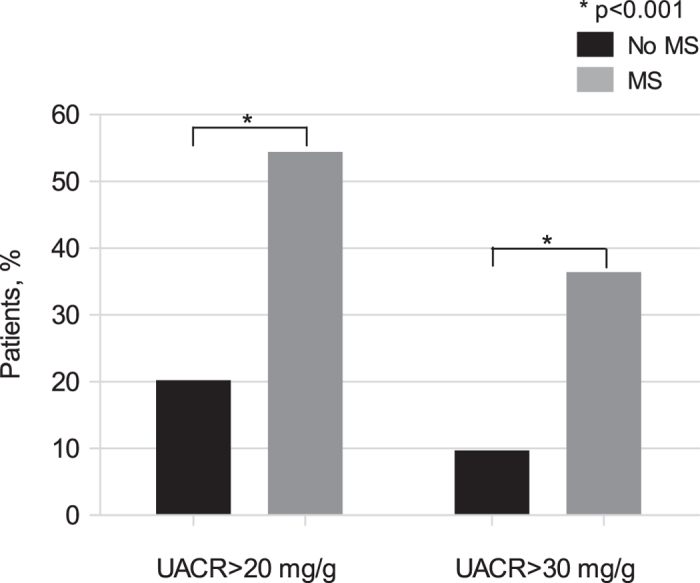
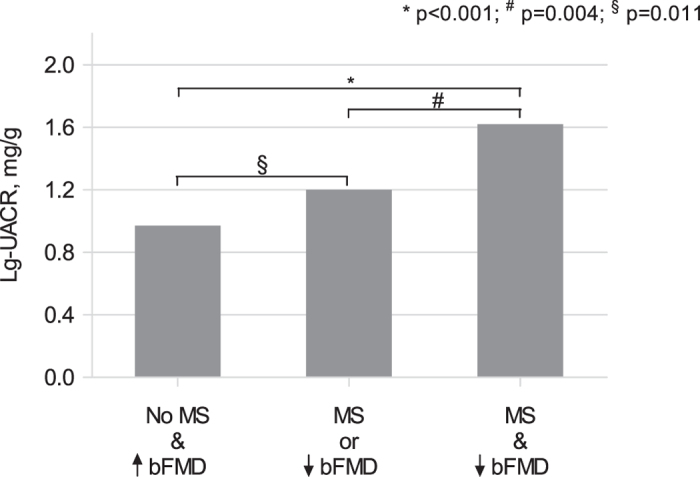
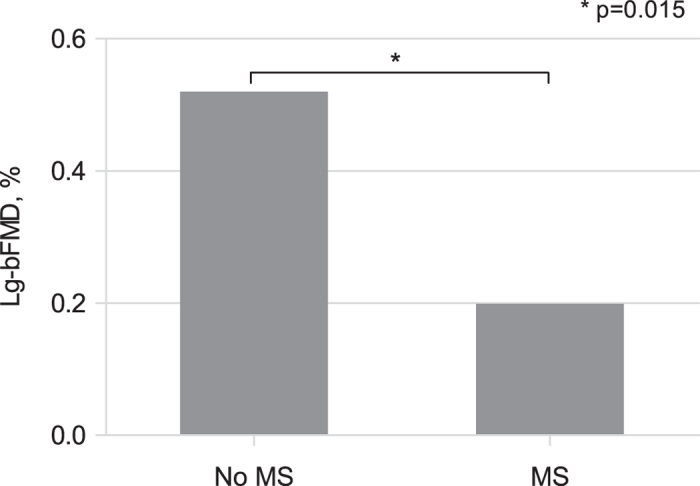
Endothelial dysfunction, a marker of cardiovascular (CV) risk, is common in human immunodeficiency virus (HIV)-infected patients. Microalbuminuria is frequent in HIV-infected patients, and is a predictor of renal impairment and CV risk. We investigated the association between microalbuminuria and endothelial dysfunction among HIV-infected patients receiving highly-active antiretroviral therapy (HAART). Endothelial function, measured by brachial artery flow-mediated dilatation (bFMD), and urine albumin-to-creatinine ratio (UACR), were measured in 170 HAART-treated HIV-infected adults. The relationship between UACR and bFMD was evaluated. The prevalence of increased UACR, defined by two cut-off levels (20 mg/g and 30 mg/g), was 29% and 17%. UACR was significantly higher while bFMD was lower among patients with metabolic syndrome (MS). UACR was associated with bFMD (r = -0.31; p < 0.001). This association was stronger in MS-patients (r = -0.44; p = 0.003). UACR above 20 mg/g was associated with an increased risk (OR 2.37, 95% CI 1.15-4.89, p = 0.020) of severely impaired bFMD (bFMD ≤ 2.1%). Patients with MS and increased UACR had the lowest bFMD compared with those with none or one of the two conditions. Microalbuminuria and endothelial dysfunction are positively associated in HIV-infected patients regardless of known confounders. The coexistence of microalbuminuria and MS amplifies their deleterious influence on endothelial function.
Figures
References
-
- Stein J. H. et al.. Use of human immunodeficiency virus 1 protease inhibitors is associated with atherogenic lipoprotein changes and endothelial dysfunction. Circulation. 104(3), 257–62 (2001). - PubMed
-
- Wolf K. et al.. Antiretroviral therapy reduces markers of endothelial and coagulation activation in patients infected with human immunodeficiency virus type 1. J. Infect. Dis. 185, 456–462 (2002). - PubMed
-
- Francisci D. et al.. HIV type 1 infection, and not short-term HAART, induces endothelial dysfunction. AIDS. 23, 589–596 (2009). - PubMed
Publication types
MeSH terms
Substances
LinkOut - more resources
Full Text Sources
Other Literature Sources
Medical
