Enhancing the Supervision of Community Health Workers With WhatsApp Mobile Messaging: Qualitative Findings From 2 Low-Resource Settings in Kenya
- PMID: 27353623
- PMCID: PMC4982254
- DOI: 10.9745/GHSP-D-15-00386
Enhancing the Supervision of Community Health Workers With WhatsApp Mobile Messaging: Qualitative Findings From 2 Low-Resource Settings in Kenya
Abstract
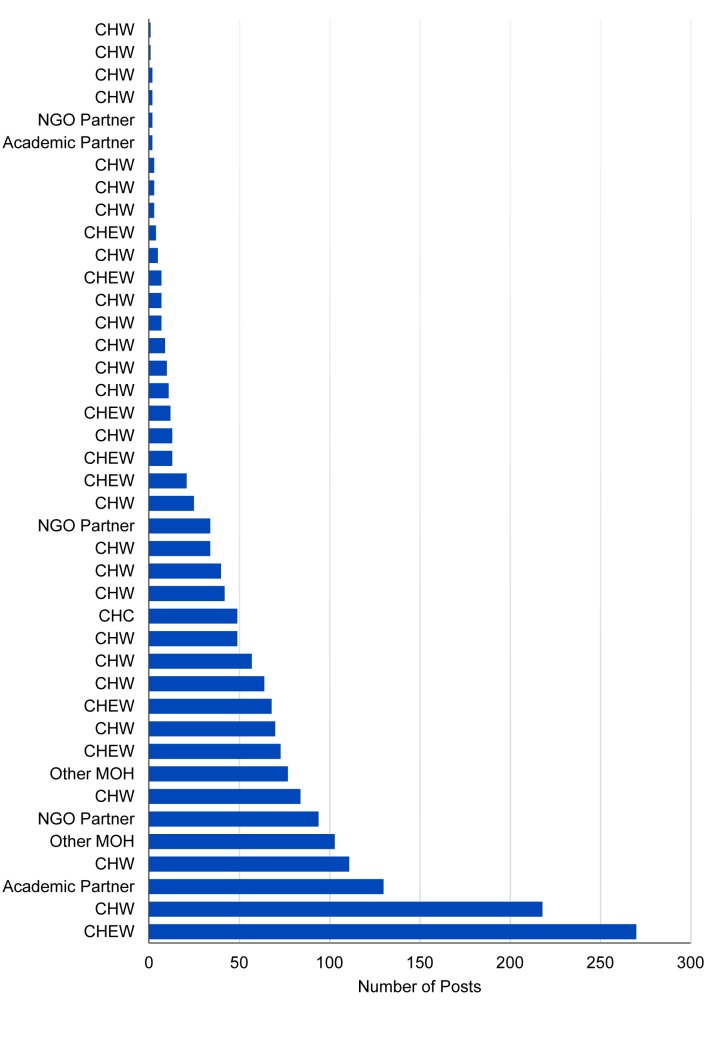
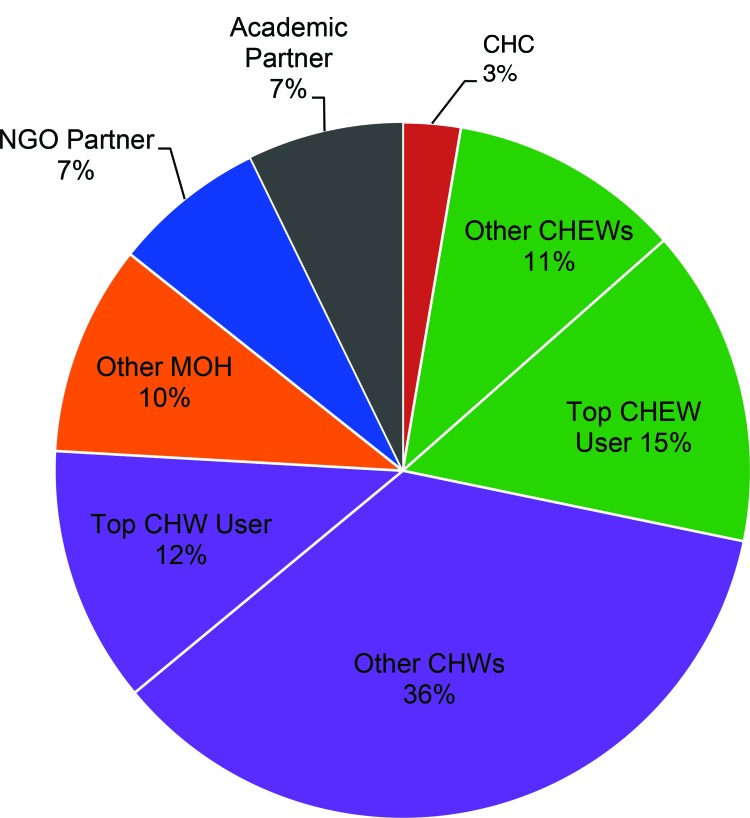
An estimated half of all mobile phone users in Kenya use WhatsApp, an instant messaging platform that provides users an affordable way to send and receive text messages, photos, and other media at the one-to-one, one-to-many, many-to-one, or many-to-many levels. A mobile learning intervention aimed at strengthening supervisory support for community health workers (CHWs) in Kibera and Makueni, Kenya, created a WhatsApp group for CHWs and their supervisors to support supervision, professional development, and team building. We analyzed 6 months of WhatsApp chat logs (from August 19, 2014, to March 1, 2015) and conducted interviews with CHWs and their supervisors to understand how they used this instant messaging tool. During the study period, 1,830 posts were made by 41participants. Photos were a key component of the communication among CHWs and their supervisors: 430 (23.4%) of all posts contained photos or other media. Of the remaining 1,400 text-based posts, 87.6% (n = 1,227) related to at least 1 of 3 defined supervision objectives: (1) quality assurance, (2) communication and information, or (3) supportive environment. This supervision took place in the context of posts about the roll out of the new mobile learning intervention and the delivery of routine health care services, as well as team-building efforts and community development. Our preliminary investigation demonstrates that with minimal training, CHWs and their supervisors tailored the multi-way communication features of this mobile instant messaging technology to enact virtual one-to-one, group, and peer-to-peer forms of supervision and support, and they switched channels of communication depending on the supervisory objectives. We encourage additional research on how health workers incorporate mobile technologies into their practices to develop and implement effective supervisory systems that will safeguard patient privacy, strengthen the formal health system, and create innovative forms of community-based, digitally supported professional development for CHWs.
© Henry et al.
Figures
References
-
- World Health Organization (WHO). The world health report 2006: working together for health. Geneva: WHO; 2006. Available from: http://www.who.int/whr/2006/en/
Publication types
MeSH terms
LinkOut - more resources
Full Text Sources
Other Literature Sources
Medical