


Predictors of Cognitive Functions in Children With Sturge-Weber Syndrome: A Longitudinal Study
- PMID: 27353695
- PMCID: PMC4983234
- DOI: 10.1016/j.pediatrneurol.2016.05.012
Predictors of Cognitive Functions in Children With Sturge-Weber Syndrome: A Longitudinal Study
Abstract
Background: Sturge-Weber syndrome is often accompanied by seizures and neurocognitive deterioration, although previous studies have suggested that early functional brain reorganization may diminish the cognitive sequelae in some children with unilateral Sturge-Weber syndrome. The "rules" governing these plasticity mechanisms are poorly understood. In this study, we evaluated longitudinal changes of cognitive functioning (intelligence quotient [IQ]) and assessed the performance of clinical, electroencephalography (EEG), and magnetic resonance imaging (MRI) variables for predicting IQ in children with Sturge-Weber syndrome.
Methods: Thirty-three young children (mean age: 3.3 years at baseline) with unilateral Sturge-Weber syndrome underwent MRI, scalp EEG, and neuropsychology evaluation twice, with a median follow-up of 2 years. None of the children had epilepsy surgery. Longitudinal IQ changes were calculated. Seizure variables, interictal EEG abnormalities, and extent and location of MRI brain involvement were correlated with IQ assessed at follow-up.
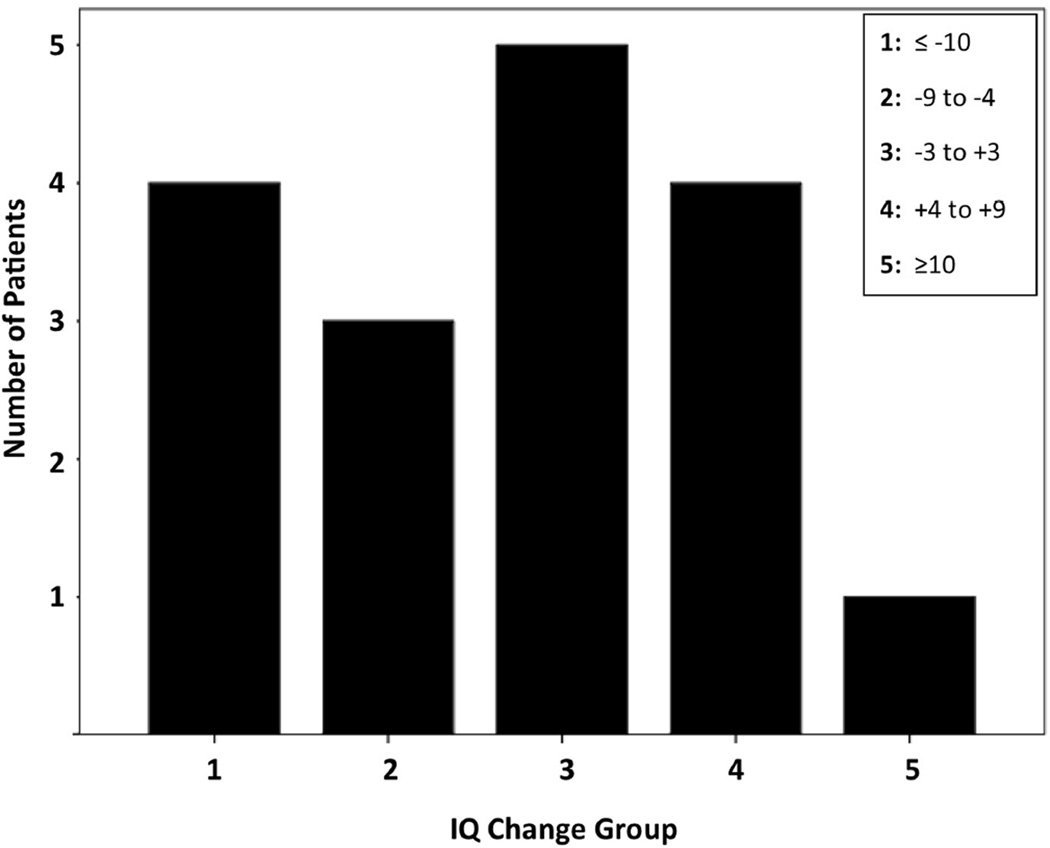
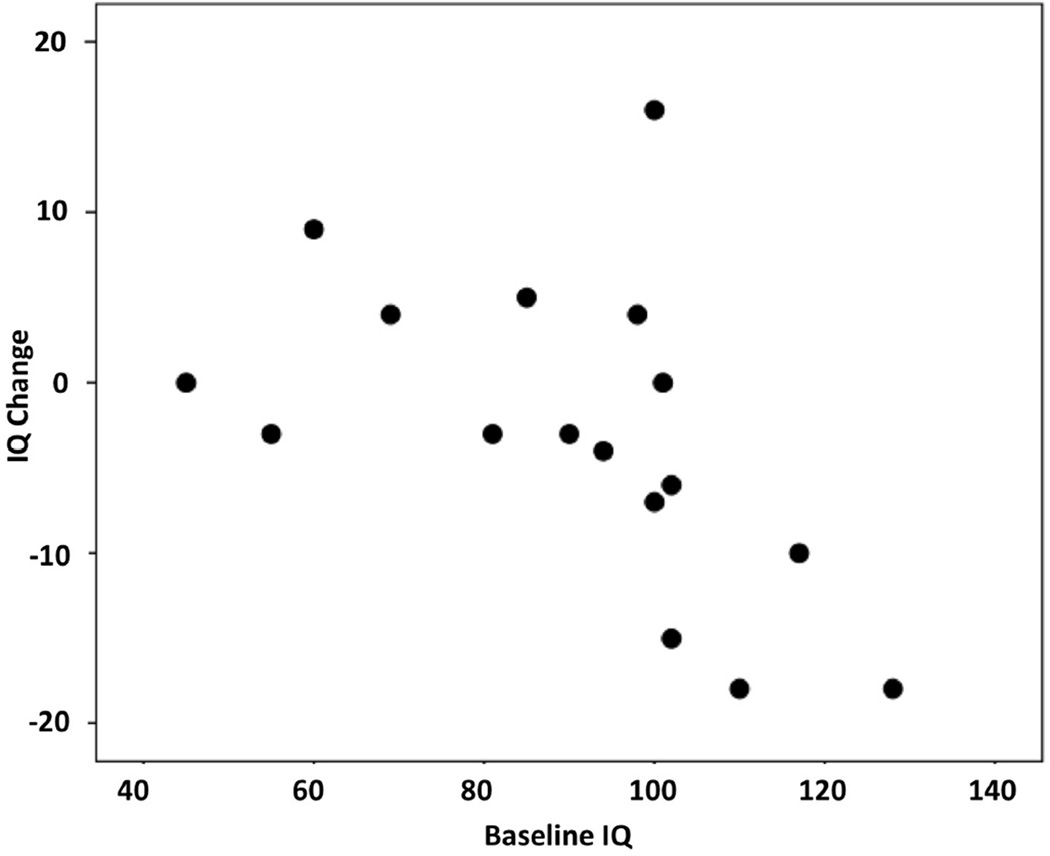
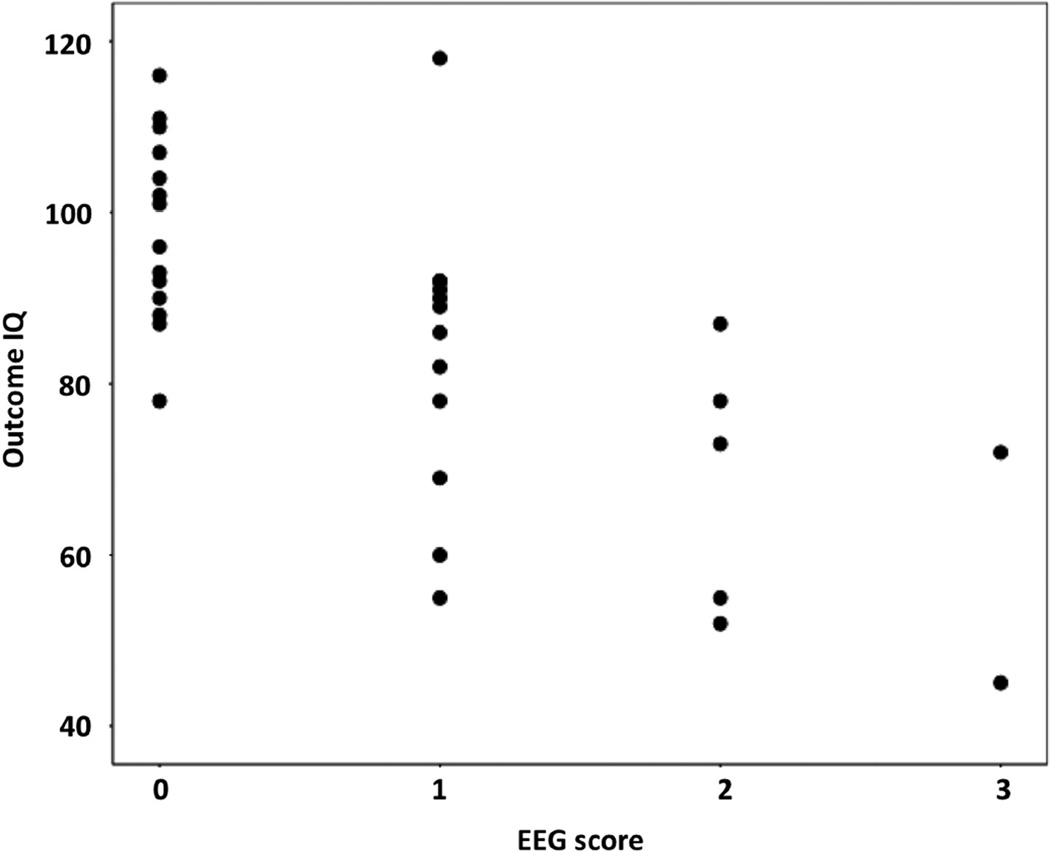
Results: Global IQ showed a highly variable course with both increases and decreases over time. Lower IQ at baseline was associated with interval IQ increase. In univariate analyses, lower outcome IQ was associated with baseline EEG abnormalities (P < 0.001), young age at seizure onset (P = 0.001), high seizure frequency (P = 0.02), and early frontal-lobe involvement on MRI (P = 0.01). In multivariate analysis, EEG abnormalities at baseline remained a robust, independent predictor of outcome IQ.
Conclusions: The early trajectory of cognitive changes in children with unilateral Sturge-Weber syndrome is highly variable; children with improving IQ likely undergo effective unimpeded functional reorganization. Early onset, frequent seizures, and interictal epileptiform abnormalities on EEG likely interfere with this process resulting in poor cognitive functions. Future studies assessing interventions should target this high-risk subgroup to optimize cognitive outcome in Sturge-Weber syndrome.
Keywords: EEG; MRI; Sturge–Weber syndrome; cognitive functions; epilepsy; longitudinal study.
Copyright © 2016 Elsevier Inc. All rights reserved.
Figures
References
-
- Bodensteiner JB, Roach ES. Overview of Sturge-Weber syndrome. In: Bodensteiner JB, Roach ES, editors. Sturge-Weber syndrome. Mt Freedom, NJ: The Sturge-Weber Foundation; 2010. pp. 19–32.
-
- Comi A, Roach ES, Bodensteiner JB. Neurological manifestations of Sturge-Weber syndrome. In: Bodensteiner JB, Roach ES, editors. Sturge-Weber syndrome. Mt Freedom, NJ: The Sturge-Weber Foundation; 2010. pp. 69–93.
-
- Peterman AF, Hayles AB, Dockerty MB, Love JG. Encephalotrigeminal angiomatosis (Sturge–Weber disease); clinical study of thirty-five cases. JAMA. 1958;30:2169–2176. - PubMed
-
- Aicardi J, Arzimanoglou A. Sturge–Weber syndrome. Int Pediatr. 1991;6:129–134.
Publication types
MeSH terms
Grants and funding
LinkOut - more resources
Full Text Sources
Other Literature Sources
